


Classes Still Create Hoosier Hysteria
July 27, 2017
By Rob Kaminski
MHSAA benchmarks editor
This is the fourth part in a series on MHSAA tournament classification, past and present, that will be published over the next two weeks. This series originally ran in this spring's edition of MHSAA benchmarks.
Twenty years ago, Bloomington North High School won the Indiana High School Athletic Association boys basketball championship, defeating Delta 75-54 at the RCA Dome in Indianapolis.
The date, March 22, 1997, is at the same time revered and disdained by traditionalists in the state who saw it as the last schoolboy championship game the state would ever host.
That’s how devout the game of basketball, particularly interscholastic basketball, had become in the Hoosier state during the 87 years a state champion – one state champion, to be precise – was crowned.
Following that 1997 season, the IHSAA moved to a four-class system for its roundball tournaments, like so many of its state association counterparts had done years earlier.
It would be shocking to find more than a small percentage of current high school basketball players around the country unfamiliar with the iconic movie Hoosiers, even though the film is now more than 30 years old.
And, the storyline for that blockbuster unfolded more than 30 years prior to its release, when small-town, undermanned Milan High School defeated Muncie Central High School 32-30 in the 1954 IHSAA title game.
Perhaps it’s because of the David vs Goliath notion, or the fame of the movie that replaced Milan with the fictional Hickory and real-life star Bobby Plump with Hollywood hero Jimmy Chitwood, or the simple fact that Indiana had something other states didn’t.
Whatever the reason, plenty of opposition remains to this day to basketball classification in the state.
The fact is, the small rural schools were regularly being beaten handily by the much larger suburban and city schools as the tournament progressed each season.
Small schools also were closing at a rapid rate following the state’s School Reorganization Act in 1959, as students converged on larger, centralized county schools. From 1960 to 2000, the number of schools entering the tournament dropped from 694 to 381, and in 1997 a total of 382 schools and 4,584 athletes began competition at the Sectional level (the first level of the IHSAA Basketball Tournament).
It was at the entry level of the tournament where school administrators felt the pain of the new class system, but not necessarily for the same nostalgic reasons as the fans who either attended or boycotted the tournament.
At the Sectional round of the tournament, the IHSAA was culling just 2 percent of the revenue, with the participating schools splitting the balance. So, when Sectional attendance dropped by 14 percent in that first year of class basketball, many schools realized a financial loss. It was money they had grown to count on in prior years to help fund various aspects of the department.
Schools cumulatively received more than $900,000 from Sectional competition in 1998, but that total was down from more than $1 million in the last year of the single-class tournament.
Yet, the current format provides a great deal more opportunity and realistic chances at championship runs for schools of all enrollments.
To date, 60 additional teams have championship or runner-up trophies on display in school trophy cases around Indiana.
That was the mission in front of then-IHSAA commissioner Bob Gardner (now National Federation executive director) once the board made its decision: to give thousands more student-athletes the opportunity for once-in-a-lifetime experiences.
As any statistician knows, figures can be manipulated to tell any side of a story. Declining attendance in year one of class basketball is such a number.
The truth is tournament attendance had been on a steady downward spiral since its peak of just over 1.5 million in 1962. By the last single-class event in 1997, the total attendance was half that.
The challenge then and today, as it is for all state associations, is to find that delicate balance for those holding onto tradition, those holding onto trophies, and the number of trophies to hand out.
Editor’s Note: Stories from the Fort Wayne Journal Gazette in 1998 and from a 2007 issue of Indianapolis Monthly provided facts in this article.
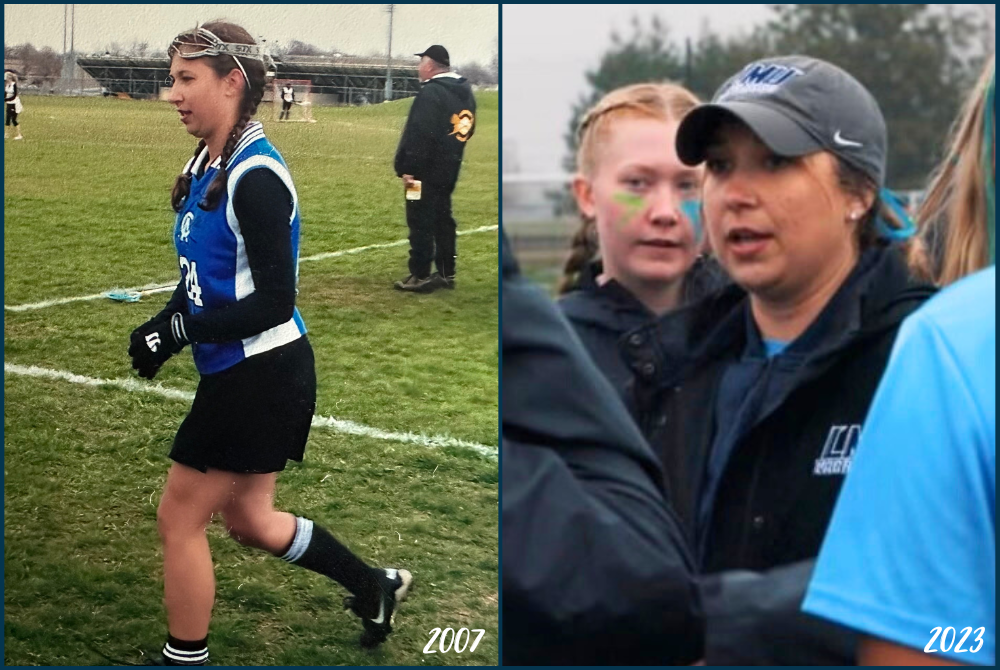
Carman-Ainsworth Grad Shaver Pioneering Programs in 2 College Sports
By
Paul Costanzo
Special for MHSAA.com
August 8, 2023
Alyssa Shaver has made a habit of getting women’s lacrosse programs off the ground.
 Her first year in the sport was the first year of the program at Flint Carman-Ainsworth. Her collegiate career involved playing in the inaugural seasons for both University of Detroit Mercy and Lawrence Tech University.
As a coach, she led the first team at Urbana University in Ohio.
When she left Urbana for Lincoln Memorial University, a Division II program in Tennessee, she had an opportunity to take over an established – albeit still relatively new – program.
Two years in, another chance to start a program arose, and she once again stepped up.
However, this was not a different school – but in a different sport.
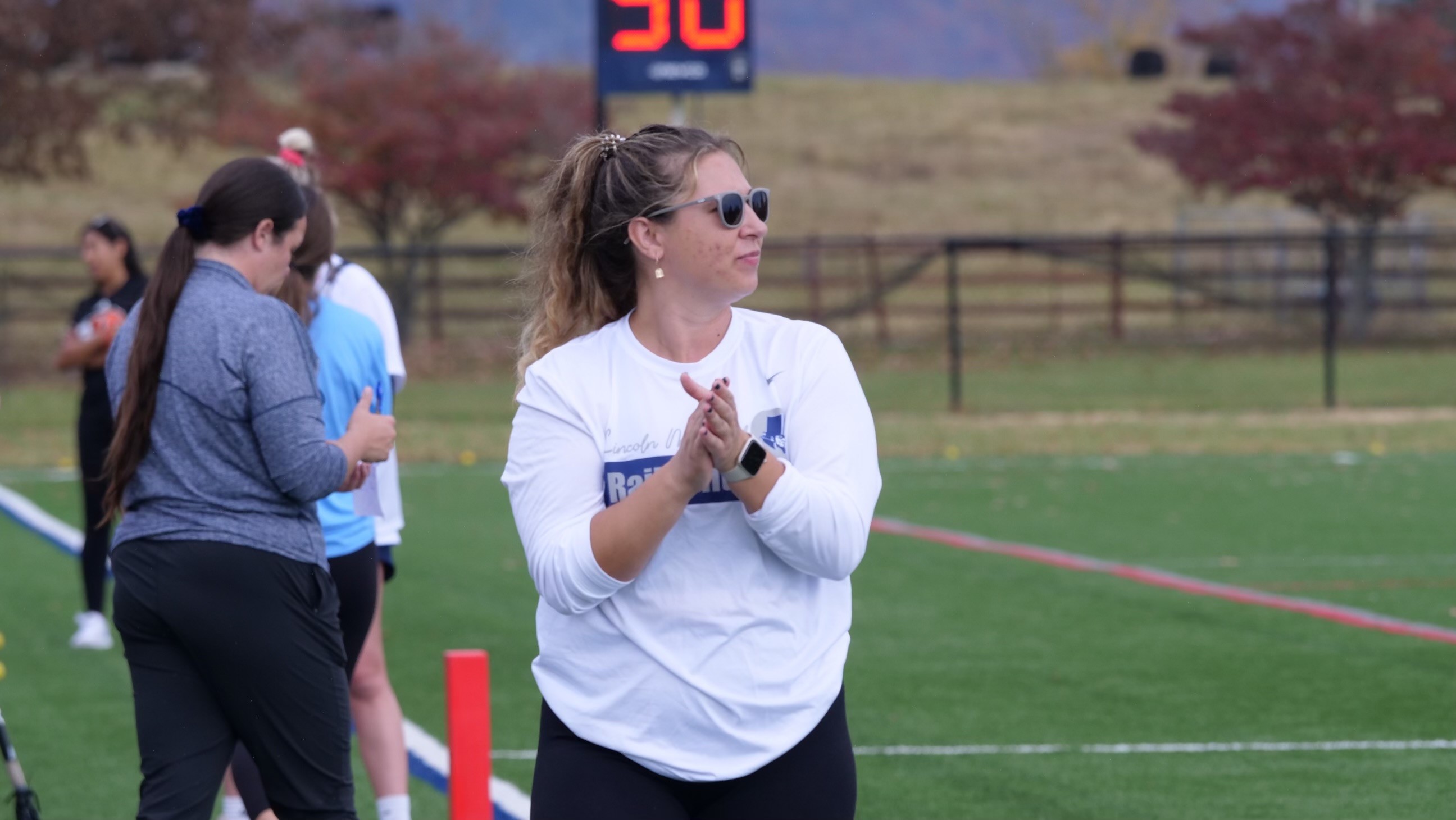
The 2008 Carman-Ainsworth graduate recently finished her third year in charge of the LMU women’s lacrosse program, and is now preparing for Year 2 in charge of the women’s field hockey program at the school – coaching a sport she had never played and rarely seen.
“I had not watched ‘Ted Lasso’ but when people figured out what I was doing, they told me about it,” Shaver said. “Last fall I started watching it and I was like, ‘Oh God, this is my life right now.’”
Starting with a new sport was how Shaver’s athletic career got jump-started in the first place.
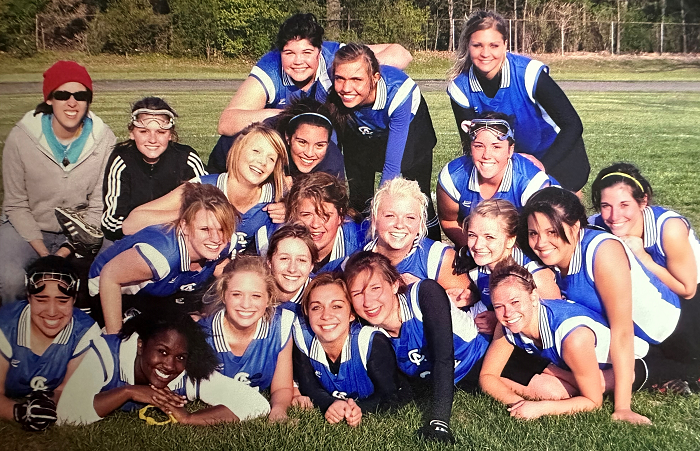
She was a volleyball, basketball and softball player prior to high school, but when her basketball coach brought up the idea of starting a lacrosse program at Carman-Ainsworth, she decided to give it a try. The connection was almost immediate.
“I didn’t know what (lacrosse) was,” she said. “But I put a stick in my hand, and it felt like the most natural thing. I was a point guard in basketball, and I had played basketball since I could walk. I think in lacrosse, the footwork, defense, concepts and ideas are similar to basketball. But when I picked up a stick, it was like, ‘I get to carry this ball around? I don’t have to dribble it?’ From there, it kind of clicked.”
Shaver was a remarkable scorer at Carman-Ainsworth, racking up 226 goals during her four-year career. That included 81 goals her senior season.
 While at Carman-Ainsworth, she also continued playing basketball and volleyball.
“As a point guard in basketball, I didn’t really care about scoring,” she said. “In lacrosse, I was really good at offense and scoring. I was a setter in volleyball, so my other sports I was always setting other people up.”
Her success at Carman-Ainsworth and at the club level led to an opportunity to play for U-D Mercy’s new program, led by coach Mary Ann Meltzer. Shaver was an academic all-conference selection during her time there and played for two years before coming back home.
While she was no longer playing, she continued to coach, something she had started while a freshman at Mercy.
It was while coaching a club team that the opportunity to return to playing at Lawrence Tech presented itself.
“It was terrifying,” Shaver said of returning to the game after two years away. “I would play in summer league, and I always had a stick in my hand because I was coaching, but I hadn’t really played competitively. I was 23 and most of my teammates were 18-year-old freshmen. I always joke with them now – some of them are my best friends – but the first couple years, they didn’t want to talk with me and I thought they didn’t like me. It turns out, they were scared of me.”
Shaver played three seasons at Lawrence Tech, earning All-America honorable mention from the National Women’s Lacrosse League in 2014 and first-team NWLL All-America honors in 2015 and 2016. She also was named an All-American by the NAIA as a senior.
Prior to her third season, with Lawrence Tech in need of a coach, Shaver reached out to Meltzer, who had recently retired from U-D Mercy. The two were reunited at LTU, and Shaver and her teammates reaped the benefits, reaching the NWLL championship game, which they lost 9-8 in overtime. Shaver was the NWLL National Offensive Player of the Year.
In 2017, with Shaver on the coaching staff, Lawrence Tech advanced to the NAIA national title game.
“She’s pretty much responsible for a lot of our program at Lawrence Tech,” Meltzer said. “She was the driving force in recruiting kids. She had taken a couple years off, and I think when she came here she was that responsible and was kind of the go-getter in getting players and getting people interested in LTU for quite a while. Fortunately, we’ve done well.”
 In 2018, Shaver took over at Lourdes (Ohio), leading the program to its first winning season in her first year.
After two years at Lourdes, she took over Urbana, building the program from scratch. She took over the LMU program prior to the 2021 season. The Lady Railsplitters were 2-5 her first season, but have gone 12-7 and 10-9 in the two seasons since.
Shaver taking over the field hockey program alongside her lacrosse duties wasn’t the original plan. But after things fell through with the coach originally hired for the job, and with some of her lacrosse players signed on to play both as well, the LMU administration turned to her.
“I have a lot of experience with new programs with lacrosse, and the girls were so great and super appreciative,” she said. “My lacrosse players have some experience, and a lot of the field hockey girls were just awesome and understanding, and helping me learn.”
Shaver is learning the game and was able to get some help from volunteer assistant Khotsofalo Pheko, a former runner at LMU who played field hockey in South Africa before coming to Tennessee.
Meltzer has faith in her former player to navigate all of it and find success, even if she told Shaver she was crazy for taking on the field hockey job initially.
“Obviously she has the work ethic, and she’s going to do what she needs to do to be successful,” Meltzer said. “As coaches, especially younger coaches, when things aren’t going well they think that more is better when sometimes less is better. I think she just needs to be patient; we all do. That’s the biggest thing. With her, starting so many programs – we’re all competitive, we all want to be successful really quick – it is going to take time.
“She’s an incredible person. She has a heart of gold.”
2023 Made In Michigan
August 3: Traverse Bay Reps Teammates Unite to Take on Great Lakes Paddle Board Pursuit - Read
August 1: Vast Experience Shapes Retired MLB-er Gates Into 3-Time Finals-Winning Coach - Read
July 25: After All-American Career, Rockford's Bennett Making Impact as Mat Mentor - Read
July 20: Oakridge 3-Sport Star Potts Applying Lessons to 'Second Chapter' in Sales - Read
July 18: Frankfort Hoops Staff Bolstered by Past Stars Giving Back in Banktson, Kreski - Read
July 12: Championship Memories, High School Tennis' Impact Stick with Hackett Pair - Read
July 6: Brother Rice Finals Hero Aiming to Ace Family Life, Financial World - Read
July 5: Lapeer West 4-Time Finals Winner Set to Build Champions at Oklahoma - Read
PHOTOS (Top) At left, Alyssa Shaver takes the field for Flint Carman-Ainsworth, and at right she coaches at Lincoln Memorial University. (Middle) Shaver just finished her third season leading LMU women's lacrosse. (Below) Shaver (bottom row, fifth from left) was a four-year player at Carman-Ainsworth, including on this 2007 team. (Photos courtesy of Alyssa Shaver and Lincoln Memorial's athletic department.)