


Classes Still Create Hoosier Hysteria
July 27, 2017
By Rob Kaminski
MHSAA benchmarks editor
This is the fourth part in a series on MHSAA tournament classification, past and present, that will be published over the next two weeks. This series originally ran in this spring's edition of MHSAA benchmarks.
Twenty years ago, Bloomington North High School won the Indiana High School Athletic Association boys basketball championship, defeating Delta 75-54 at the RCA Dome in Indianapolis.
The date, March 22, 1997, is at the same time revered and disdained by traditionalists in the state who saw it as the last schoolboy championship game the state would ever host.
That’s how devout the game of basketball, particularly interscholastic basketball, had become in the Hoosier state during the 87 years a state champion – one state champion, to be precise – was crowned.
Following that 1997 season, the IHSAA moved to a four-class system for its roundball tournaments, like so many of its state association counterparts had done years earlier.
It would be shocking to find more than a small percentage of current high school basketball players around the country unfamiliar with the iconic movie Hoosiers, even though the film is now more than 30 years old.
And, the storyline for that blockbuster unfolded more than 30 years prior to its release, when small-town, undermanned Milan High School defeated Muncie Central High School 32-30 in the 1954 IHSAA title game.
Perhaps it’s because of the David vs Goliath notion, or the fame of the movie that replaced Milan with the fictional Hickory and real-life star Bobby Plump with Hollywood hero Jimmy Chitwood, or the simple fact that Indiana had something other states didn’t.
Whatever the reason, plenty of opposition remains to this day to basketball classification in the state.
The fact is, the small rural schools were regularly being beaten handily by the much larger suburban and city schools as the tournament progressed each season.
Small schools also were closing at a rapid rate following the state’s School Reorganization Act in 1959, as students converged on larger, centralized county schools. From 1960 to 2000, the number of schools entering the tournament dropped from 694 to 381, and in 1997 a total of 382 schools and 4,584 athletes began competition at the Sectional level (the first level of the IHSAA Basketball Tournament).
It was at the entry level of the tournament where school administrators felt the pain of the new class system, but not necessarily for the same nostalgic reasons as the fans who either attended or boycotted the tournament.
At the Sectional round of the tournament, the IHSAA was culling just 2 percent of the revenue, with the participating schools splitting the balance. So, when Sectional attendance dropped by 14 percent in that first year of class basketball, many schools realized a financial loss. It was money they had grown to count on in prior years to help fund various aspects of the department.
Schools cumulatively received more than $900,000 from Sectional competition in 1998, but that total was down from more than $1 million in the last year of the single-class tournament.
Yet, the current format provides a great deal more opportunity and realistic chances at championship runs for schools of all enrollments.
To date, 60 additional teams have championship or runner-up trophies on display in school trophy cases around Indiana.
That was the mission in front of then-IHSAA commissioner Bob Gardner (now National Federation executive director) once the board made its decision: to give thousands more student-athletes the opportunity for once-in-a-lifetime experiences.
As any statistician knows, figures can be manipulated to tell any side of a story. Declining attendance in year one of class basketball is such a number.
The truth is tournament attendance had been on a steady downward spiral since its peak of just over 1.5 million in 1962. By the last single-class event in 1997, the total attendance was half that.
The challenge then and today, as it is for all state associations, is to find that delicate balance for those holding onto tradition, those holding onto trophies, and the number of trophies to hand out.
Editor’s Note: Stories from the Fort Wayne Journal Gazette in 1998 and from a 2007 issue of Indianapolis Monthly provided facts in this article.
1st & Goal: 2026 Week 5 Review
By
Geoff Kimmerly
MHSAA.com senior editor
September 28, 2026
We’ve passed the midway point of the 2026 football regular season, and it’s already trophy time for several teams across Michigan.

Week 5 saw a few outright conference champions crowned, several claim shares of league titles, and many more continue to close in as October prepares to greet us this weekend.
Bay & Thumb
HEADLINER Marine City 57, St. Clair 36 Marine City pulled within one more win of clinching a share of the Macomb Area Conference Silver title by claiming this matchup of co-leaders entering the weekend. The Mariners can clinch that repeat title this week against Hazel Park. Click for more from the Port Huron Times Herald.
Watch list Flushing 28, Linden 20 This could go a long way toward the Raiders (3-2) returning to the playoffs after missing last season, but also sets them up to potentially earn a share of the Flint Metro League Stripes title if Linden (4-1) can take down first-place Fenton in two weeks.
On the move Millington 27, Cass City 7 The Cardinals (5-0) clinched a share of the Big Thumb Conference White title by handing Cass City (4-1) its lone defeat – and after falling to Cass City 17-14 last season. Almont 37, Imlay City 20 These Raiders (5-0) whittled the Blue Water Area Conference race potentially down to two, handing Imlay City (4-1) its only loss to stay atop the standings tied now with only Macomb Lutheran North. Gladwin 14, Clare 13 This paired with Shepherd’s win over Ogemaw Heights put the Flying Gs (4-1) into first place alone in the Jack Pine Conference Division 1.
Greater Detroit
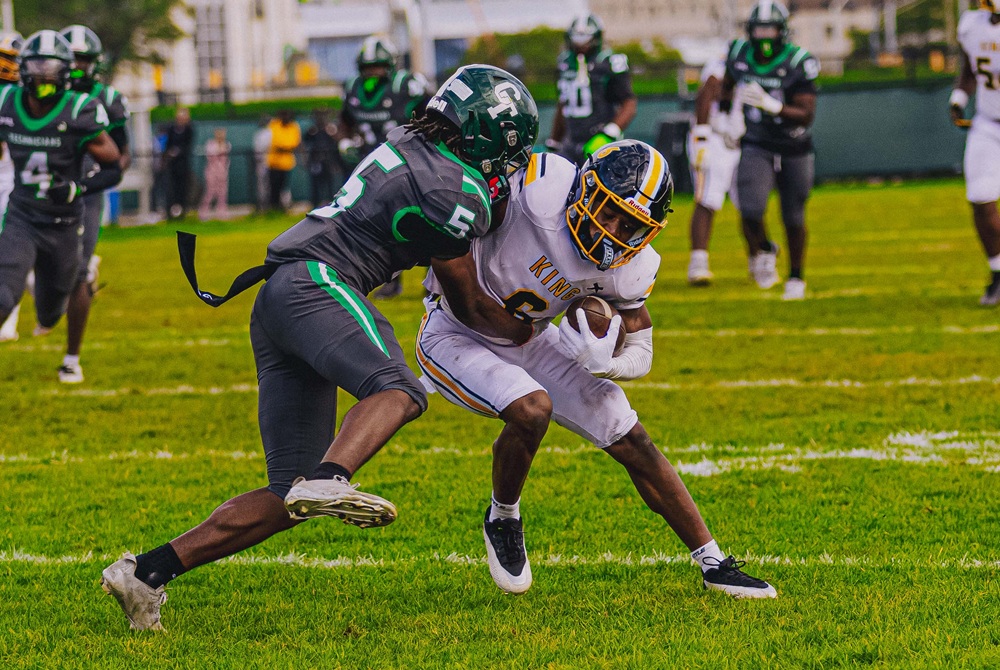
HEADLINER Detroit Cass Tech 20, Detroit Martin Luther King 7 Cass Tech’s defense continued to excel and Julian Taylor ran for two touchdowns as the Technicians (5-0) extended their winning steak over the Crusaders (4-1) to four. Cass has now given up only 28 points over five games, but King also did the job defensively keeping the Technicians well below their 52-ppg average heading into the weekend. Click for more from the Detroit News.
JULIAN TAYLOR × 2️⃣🏈🔥
Two touchdown runs for Cass Tech standout @TM_Ju7 in last night’s @MHSAA win over Detroit King. pic.twitter.com/mS1qM6NQPe— STATE CHAMPS! Michigan (@statechampsmich) September 26, 2026
Watch list Ecorse 40, Romulus Summit Academy North 33 The Red Raiders are off to a 5-0 start for the second straight season, and by downing annual contender Summit (3-2) remained tied for first in the Charter School Conference Gold with Detroit Edison.
On the move Orchard Lake St. Mary’s 48, Bloomfield Hills Brother Rice 20 St. Mary’s (4-1) remains one of three teams undefeated in Catholic High School League Central play after handing Rice (4-1) its only loss. Romeo 28, Grosse Pointe South 26 The Bulldogs (5-0) can clinch a share of the Macomb Area Conference Red title this week after handing South (4-1) its only defeat and after losing to South the last three seasons. St. Clair Shores Lakeview 29, Utica 28 Lakeview (4-1) pulled into first alone in the MAC White after also avenging a 2025 loss to the Chieftains (4-1).
Mid-Michigan
HEADLINER Portland 23, Lake Odessa Lakewood 20 The Raiders’ 30-game winning streak in the Capital Area Activities Conference White rested on the leg of Chase Fullet with a second left on the clock, and his 25-yard field goal made it 31 straight wins and put Portland at 5-0 with Lakewood falling to 4-1. Click for more from the Lansing State Journal.
Watch list Shepherd 14, Ogemaw Heights 12 The Bluejays (3-2) were coming off two losses to start the JPC1 schedule, but surely made those disappointments fade a bit with this stunner after falling to Ogemaw Heights (4-1) by 42 and 35 points the last two years. Shepherd is seeking its first playoff berth since 2022.
On the move Pewamo-Westphalia 59, Bark River-Harris 14 The Pirates (5-0) won this matchup between returning Division 7 and 8 semifinalists, respectively, handing Bark River-Harris (4-1) its only loss this fall. Ovid-Elsie 30, Durand 27 After opening with a pair of losses, Ovid-Elsie (3-2) still controls its destiny in the Mid-Michigan Activities Conference with the two other top contenders coming up over the next two weeks. Mason 21, St. Johns 9 The Bulldogs (5-0) pulled within a win of clinching a share of the CCAAC Red title by holding back a St. Johns offense that had reached 28 points during every game of a 3-1 start.
Northern Lower Peninsula
HEADLINER Cadillac 22, Petoskey 20 Four of seven teams in the Big North Conference are 3-0, 3-1 or 2-1 in league play, including both of these contenders. Cadillac (3-2) has a loss to Marquette and will now hope for help from Petoskey (3-2), which faces the Sentinels in Week 8. The Vikings’ last two league games are against opponents that are a combined 2-8. Click for more from the Cadillac News.
Watch list Kingsley 42, Elk Rapids 22 The Stags (5-0) have a week off with a forfeit win coming from Cheboygan but will be in position to clinch the Northern Shores Conference title – at least a share – when they host second-place Boyne City in Week 7. Elk Rapids (3-2) remains in the Division 6 playoff hunt tied for No. 31 in Division 6 playoff-point average.
On the move McBain 28, Charlevoix 27 The Ramblers (4-2) came back from two touchdowns down to win this District Semifinal rematch from a year ago by the same score. Traverse City West 36, Midland 7 The Titans (3-2) bounced back from a Week 4 loss to keep pace near the top of the Saginaw Valley League North and send Midland (3-2) a game back of the lead. Traverse City St. Francis 42, Mount Pleasant Sacred Heart 14 After a couple of losses to title contenders early, the Gladiators made the midseason turn with a second-straight win to move up to No. 28 in Division 6 playoff-point average.
Southeast & Border
HEADLINER Hanover-Horton 49, Brooklyn Columbia Central 48 Hanover-Horton (4-1) clinched a share of the Cascades Conference South championship by handing the lone league loss to an opponent for the second-straight week, this time Columbia Central (4-1) after doing the same to Napoleon in Week 4. The league title is the Comets’ third consecutive and the win extended their conference winning streak to 13. Click for more from WLNS.
Watch list Ida 41, Adrian Madison 20 Four teams in the Lenawee County Athletic Association are 4-0 or 3-1 in league play, with Ida (5-0) now sharing the top spot with Clinton but Madison (4-1) and Hudson certainly still in the mix with three weeks of LCAA games remaining.
On the move Vandercook Lake 21, Michigan Center 12 Vandercook Lake (2-3) is seeking its first 11-player postseason appearance since 2015, and if the Jayhawks make it this win over the Cardinals (2-3) surely will have played a part. Manchester 52, Jonesville 22 A Week 3 loss to Michigan Center threw a wrench into Manchester’s Cascades Conference North title pursuit, but the Flying Dutchmen (4-1) still have a shot and will be coming off scoring their season high when they host leader Leslie on Friday. Monroe Jefferson 28, Flat Rock 26 Jefferson (5-0) kept pace with Monroe St. Mary atop the Huron League standings by surviving a close one with Flat Rock (2-3).
Southwest Corridor
HEADLINER Vicksburg 26, Three Rivers 21 Vicksburg held off Three Rivers to maintain its co-lead with Edwardsburg in the Wolverine Conference. The Bulldogs and Wildcats have developed a nice matchup over the last three seasons, with all four meetings – including in last year’s District Final – decided by 3-5 points. Ja’Kobi Reed scored the go-ahead touchdown in the fourth quarter of this one. Click for more from the Kalamazoo Gazette.
Watch list Galesburg-Augusta 12, Centreville 8 Galesburg-Augusta (5-0) already has matched its winningest season since 2016, and one more victory (assured at this point by a forfeit coming from White Pigeon in Week 7) will give them their most since 1997.
On the move St. Joseph 49, Battle Creek Central 19 The Bears (4-1) finished an outright league championship in the four-team Southwestern Michigan Athletic Conference small-schools division, winning their three league games by a combined score of 137-29. Portage Central 43, Kalamazoo Loy Norrix 0 The Mustangs (4-1) clinched a share of the SMAC big-schools division title and can finish it outright this week against Battle Creek Lakeview. Decatur 38, Galesburg-Augusta 12 Decatur (5-0), like Galesburg-Augusta, is undefeated in Southwest 10 Conference play heading into this week’s potential title decider.
Upper Peninsula
HEADLINER Kingsford 37, Calumet 19 The Western Peninsula Athletic Conference Copper race is all but down to two teams, thanks to undefeated Kingsford (5-0) handing Calumet (3-2) a second league loss and Menominee also remaining unbeaten in league play. The Flivvers and Maroons face off in Week 8. Click for more from the Houghton Daily Mining Gazette.
Watch list Ishpeming Westwood 20, Gladstone 0 The Patriots (2-3) haven’t reached four wins in a season since their most recent playoff run in 2021, but despite a loaded schedule this fall have picked up some momentum with two straight wins including this one avenging a 59-22 loss from a year ago.
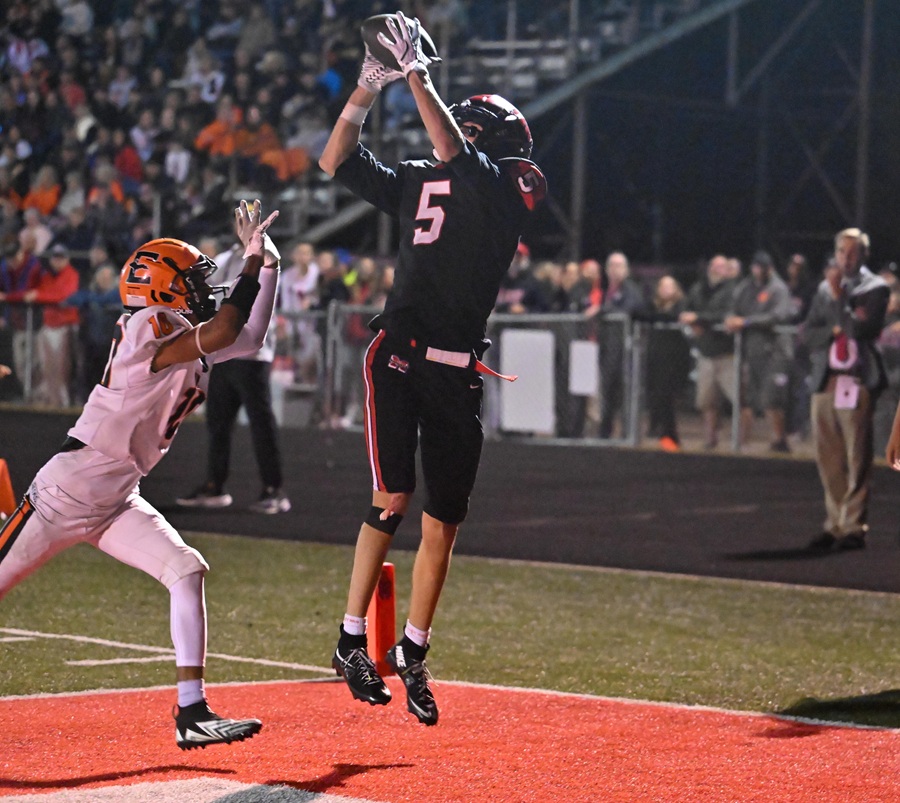
On the move Iron Mountain 25, Manistique 8 Winning the West-PAC Iron will take some help after a Week 3 loss to Bark River-Harris, but the Mountaineers (3-2) have bounced back from two early defeats. Negaunee 40, Hancock 0 The Miners (3-2) bounced back from two straight losses to stifle a Hancock team (3-2) enjoying its best season over the last five. Marquette 48, Escanaba 10 The Sentinels (3-2) have won three straight to move into first place alone in the Big North Conference, this victory avenging a 2025 defeat as well.
West Michigan
HEADLINER Grand Rapids South Christian 19, Zeeland West 16 Four of six teams in the Ottawa-Kent Conference Gold are 4-1 or 3-2 and a fifth team is tied for first early while 2-3 overall. But while there are four weeks to go, this early matchup between the Sailors (4-1) and Dux (4-1) might end up the eventual title decider. This one also came down to a field goal during the final seconds, nailed by South Christian’s Hudson Kerstetter from 19 yards out. Click for more from the Grand Rapids Press.
Watch list Sparta 20, Marshall 14 The Spartans (3-2) are pursuing a first playoff appearance since 2022 and already have tied last year’s win total thanks to this one over the Interstate 8 Athletic Conference-leading Redhawks (4-1).
On the move Coopersville 14, Lowell 13 Coopersville (5-0) and Grand Rapids Kenowa Hills are the only two teams left without a loss in River Cities Alliance play; they face off Week 9. Caledonia 13, Hudsonville 7 Caledonia (4-1) and East Kentwood top the list in the O-K Red after the Fighting Scots ended Hudsonville’s league winning streak at 16 covering the last three seasons. Grand Rapids West Catholic 22, Hamilton 14 The Falcons (4-1) quickly are the only team left without a league loss in the O-K White, thanks to wins the last two weeks over contenders Forest Hills Eastern and Hamilton (3-2).
8-Player
HEADLINER Mendon 38, Colon 16 The Hornets (5-0) took a 14-8 lead into halftime and broke away with the first two scores of the third quarter against the previously undefeated Magi (4-1). Logan Stuart ran for 217 yards and all three of Mendon’s second-half scores. Click for more from the Sturgis Journal.
Watch list Dryden 44, Deckerville 38 After going four seasons without football, Dryden (5-0) came back in 2023 and quickly has climbed, with this fast start now including a defining win as the Cardinals had fallen to Deckerville (4-1) by 56 last season and 48 and 76 the two years before that.
On the move Grand Rapids Sacred Heart 56, Bridgman 28 These two and Marcellus are the top contenders in the Southwest Michigan 8-Man Football League Red, and this result made it so with Sacred Heart (3-1) bouncing back from a Week 4 loss to Marcellus by handing the Bees (4-1) their only defeat. Crystal Falls Forest Park 59, Felch North Dickinson 52 The Trojans (4-1) also bounced back from a Week 4 loss and on the whole are rebounding from a 1-8 season in 2025 that included a 51-point defeat against the Nordics (3-2). Rogers City 37, St. Helen Charlton Heston 19 Rogers City (4-1) broke a two-game losing streak against Heston (2-1), after falling 36-0 a year ago, and also pulled within one more win of clinching a share of the North Star League Big Dipper championship.
MHSAA.com's weekly “1st & Goal” previews and reviews are powered by MI Student Aid, a division within the Department of Lifelong Education, Advancement, and Potential (MiLEAP). MI Student Aid encourages students to pursue postsecondary education by providing access to student financial resources and information. MI Student Aid administers the state’s scholarship and grant programs that help make college Accessible, Affordable and Attainable for you. Click to connect with MI Student Aid and find more information on Facebook and Twitter @mistudentaid.
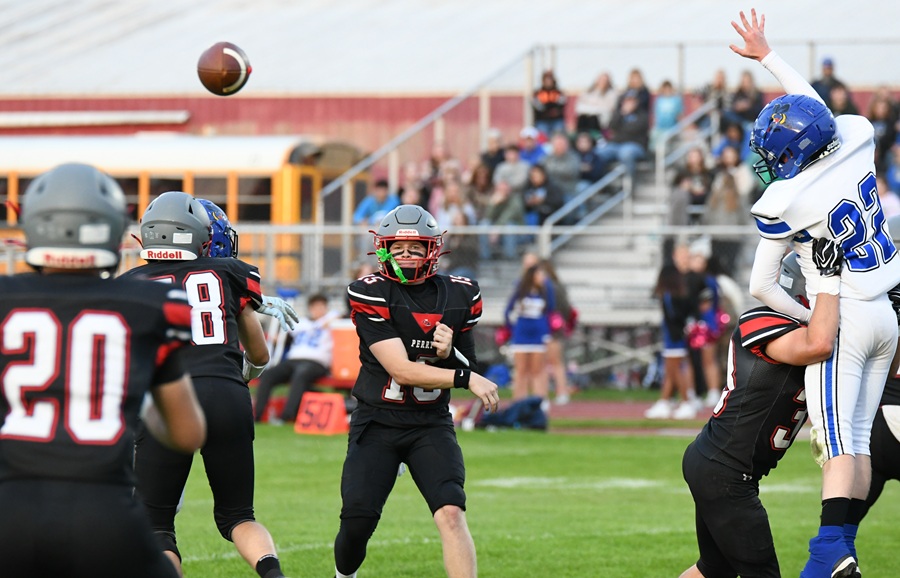
PHOTOS (Top) Detroit Cass Tech’s Marquell Evans Jr. (5) wraps up Detroit King’s De’Andre Williams. (Middle) Perry quarterback Tyger Whitbeck (15) fires a pass during his team’s 54-10 win over Bath. (Below) Marquette’s Brody Clements (5) hauls in a touchdown catch during his team’s win over Escanaba. (Cass Tech/King photo by Olivia B. Photography. Perry/Bath photo by John Johnson. Marquette/Escanaba photo by Randy Ritari.)