

And the MHSAA Survey Says ...
April 2, 2015
By Rob Kaminski
MHSAA benchmarks editor
A survey of MHSAA member schools was conducted in the fall of 2014 aimed to determine opinions for and against a myriad of out-of-season coaching/contact period topics within the school year.
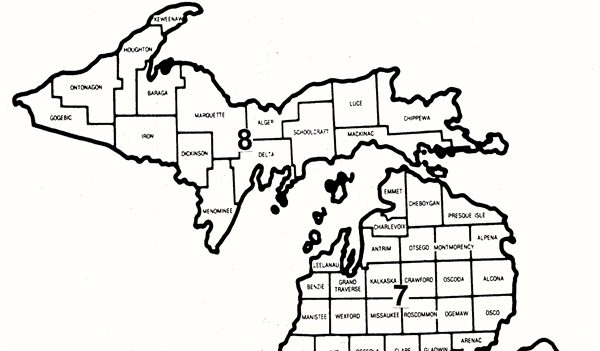
Below are some of the summaries drawn from that survey, plus a map of zones referred to in a number of points.
Survey Summary and Highlights
The larger the school, the higher the percentage of students who are involved in organized non-school sports.
The Detroit metro area (Zone 3) has the highest percentage of respondents in each of two groups in which the highest percentage of students are involved in organized non-school sports ... the 60 to 80% and 40 to 60% groups. The Grand Rapids area (Zone 6) ranks second.
The northern Lower Peninsula (Zone 7) and the Upper Peninsula (Zone 8) have the highest percentage of respondents in the group in which the lowest percentage of students are involved in organized non-school sports . . . the 0 to 20% group. This is also true of Zones 1, 2 and 5, although less dramatically.
In the majority of schools, coaches work with students out of season under the three- or four-player rule for a few weeks just before the season. This is generally true regardless of school classification or geographic zone.
In nearly 80% of schools, the frequency of coaches working with students out of season under the three- or four-player rule is one or two days a week.
100% of schools that sponsor basketball hold open gyms for basketball. Two-thirds of volleyball schools hold volleyball open gyms. Half of lacrosse schools hold lacrosse open gyms. Open gyms in baseball, softball and soccer occur in 40 to 45% of responding schools. Open gyms are less common for other sports.
More than half of all schools conduct open gyms for only a few weeks, just before the season begins.
In 85% of schools, the frequency of open gyms is one or two days a week.
The multi-sport athlete is common in schools of every classification, but more common in Class C and D schools than in Class A and B.
The multi-sport athlete is common in schools of every geographical zone, but more common in Zones 1, 2, 4, 7 and 8 than in Zones 3, 5 and 6.
Two-thirds of schools do not ban athletes from out-of-season workouts while in-season in a different school sport. Permitting weightlifting is most common (84%), then three- or four-player workouts (70%), then conditioning (66%) and open gyms (65%), and finally non-school competitions (57%).
Single-sport coaches are more common in smaller schools than larger (perhaps because fewer sports are sponsored in smaller schools).
For one question, schools were asked to rate ideas from 1 (I like the concept) to 6 (I do not like the concept). Average would be 3.5.
More than 60% of schools favor a no-contact period for all out-of-season sports at the start of every other sport’s season. (Support ranges from 55% for Class A schools to 65% for Class D schools and from 56% for Zones 1 and 3 to 71% for Zone 7.)
More than 72% of schools favor (in conjunction with a no-contact period) a defined contact period out of season. Support ranges from 69% for Class B schools to 76% for Class D schools and from 64% in Zone 6 to 88% in Zone 1.
Two-thirds of schools favor setting a limit on the number of contact days for out-of-season coaching. Support ranges from 63% for Class A schools to 72% for Class C schools and from 50% for Zone 2 to 73% for Zone 1.
More than 68% of schools favor setting a limit on the number of contact days in a week. There’s almost no difference based on school class. Support ranges from 58% in Zone 6 to 76% in Zone 5.
Counting days more than players – that is, allowing practice with any number of students for a defined number of days over a period of time – is favored by more than 72% of schools. Support ranges from 69% for Class D to 76% for Class A and from 59% for Zone 5 to 76.5% for Zone 3.
The least support of any idea surveyed was for allowing scrimmage competition (allowing the coach to coach any number of students from that coach’s school in competition against individuals not enrolled in that school).
More than 62% of schools favor a rule that would allow a school coach to coach a non-school team within a defined contact period; that is, a team with students from the coach’s school (and possibly other schools too), but not supported with school funds, administration, insurance, uniforms, etc. Support ranged from 58% for Class C schools to 68% for Class B schools. Support ranged from 54% for Zone 2 to 69% for Zone 6.
This is the most popular proposal (doesn’t preclude others being approved too): 84% of schools favor removing the phrase “under one roof” from Regulation II, Section 11(H) 2 a (see Tuesday's report). Support ranged from 80% for Class D schools to 86% for Class C schools and from 78% in Zone 2 to 89% for Zone 5.
Removing the portion of Interpretation 237 which prohibits setting up rotations that would allow a coach to work with dozens of players who rotate to his/her direct attention in groups of three or four is favored by 69% of schools, but with a distinct large school vs. small school difference of opinion: Class A (80.5% favorable), Class B (72.9%), Class C (61.3%) and Class D (61.7%).
Recent Whiteford Grad Ovall Leading Bobcats' Inaugural Girls Golf Team
By
Doug Donnelly
Special for MHSAA.com
September 2, 2026
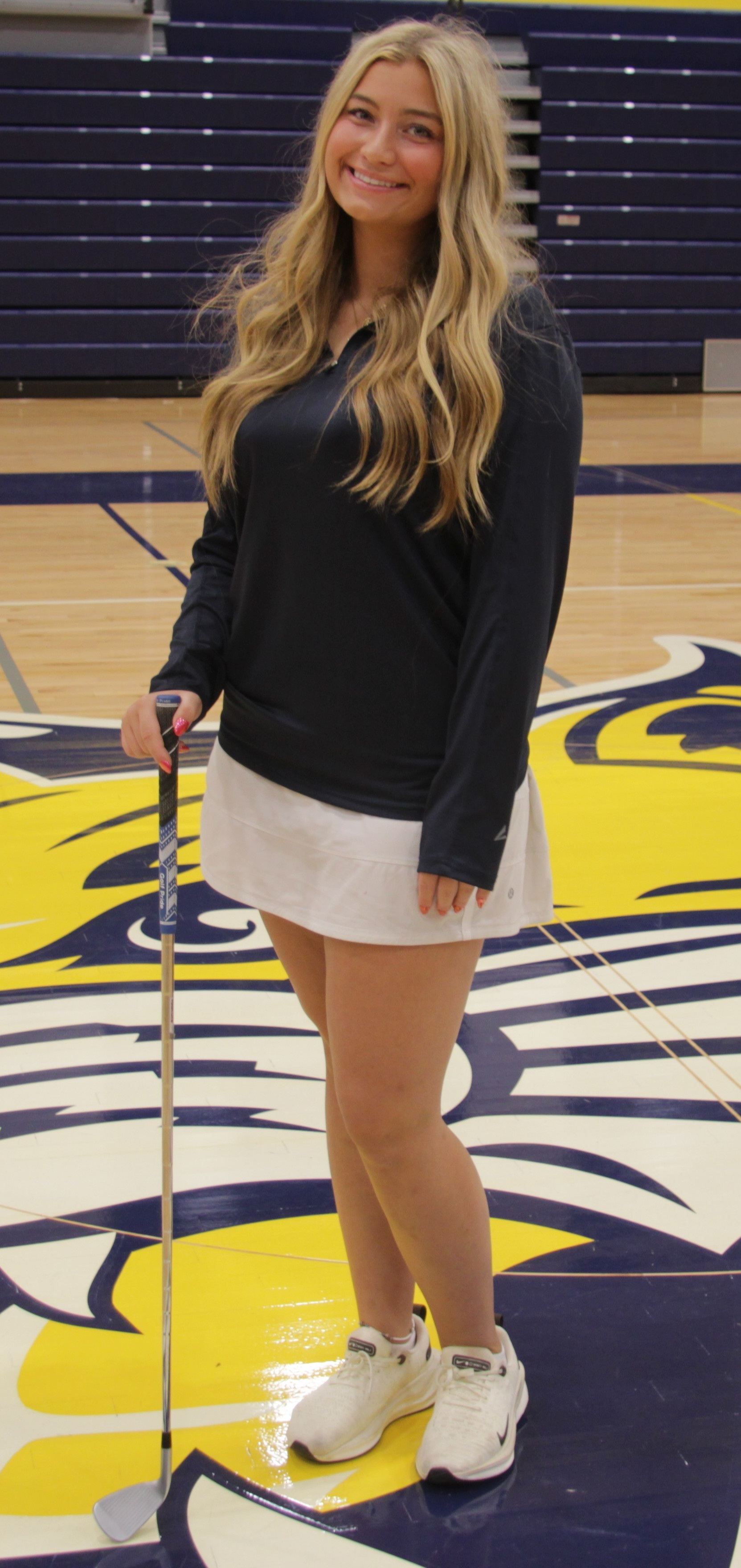
Addison Ovall might be the youngest varsity head coach in the state of Michigan this fall.
 Ovall, who graduated in June from Ottawa Lake Whiteford, had barely taken off her cap and gown when she found herself as the new head coach of the Bobcats girls golf team. She’s also a pioneer of sorts – she helped lead the crusade for Whiteford to field a team in that sport for the first time.
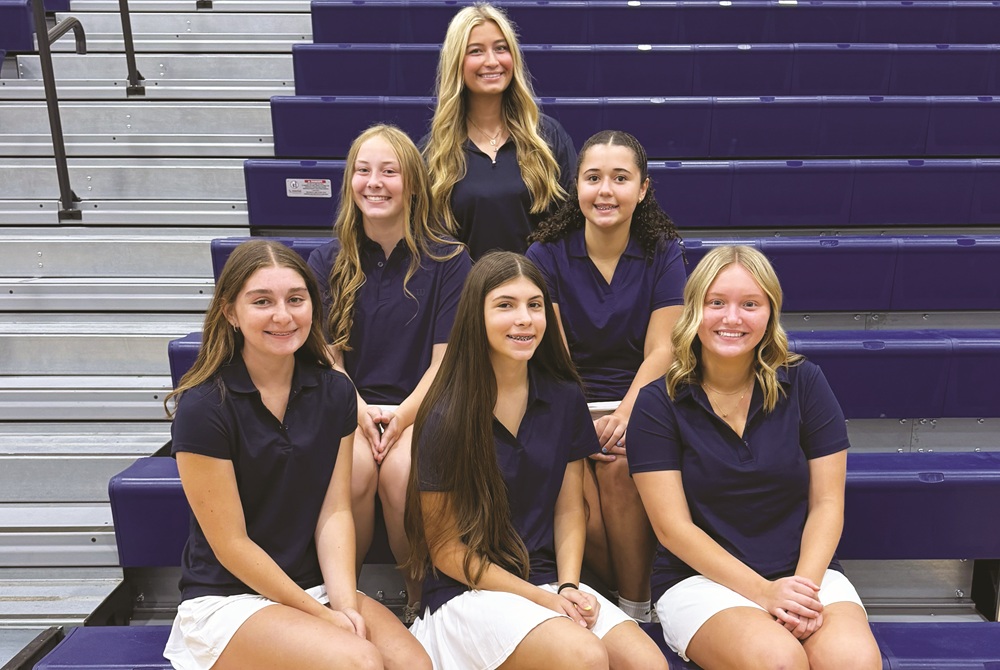
The five girls on the squad tee it up for the first time Tuesday.
“I always wanted to start a girls golf team while I was a student here, but there didn’t seem much interest in it,” Ovall said. “Once I graduated, I shared my story about having played on the boys team and I think that garnered some interest. It’s something I’ve always wanted.”
Ovall was going to golf in college, but a traffic crash during which she suffered a broken wrist put those plans on the backburner. For now, her work on the course is dedicated to helping five novice golfers learn the game.
“That just led me here to coach,” she said.
Ovall learned the game when she was a kid from her father.
“Ever since I was little, I had a club in my hand,” she said. “It seems like I’ve been playing forever.”
She started high school in Toledo and played on a girls golf team as a freshman at St. Ursula Academy, a private school in northwest Ohio. She moved to Whiteford as a junior and was set to be a one-person golf team in the fall of 2025 with her mom as the head coach. That’s when she was injured in the crash and couldn’t continue the season.
Whiteford athletic director Miranda Green went through the MHSAA to get clearance for Ovall to join the boys team in the spring.
“She had played in one competition in girls golf, then got hurt,” Green said. “I had to write a letter to the MHSAA, and she was approved to play on the boys team, but she had to sit one match. She was excited to still be able to play.”
Ovall said it was a difficult transition.
 “It was terrifying, to be honest,” she said. “I had to hit from the men's tees, had to learn everything, but I think it made me a better golfer and a better person overall. I met new people, which was cool. I had college opportunities, which was awesome.”
Her season was hampered by the wrist injury, but she didn’t let it stop her. It did get in the way of playing at the college level, however.
“It was sort of difficult, but I was better off for it,” she said.
While still in high school she started lobbying other girls in school to sign up for golf.
“Toward the end of the year we had girls start showing interest in it,” she said. “That was really cool. When the school asked me to come back to coach, I was pretty nervous. I didn’t think anyone was going to come to tryouts.”
She ended up having five girls join the squad, which gives them enough to compete in dual matches and tournaments.
“It’s just been fun to get to know the girls,” she said. “We are a very young team. We are just starting out so we are trying to see what our strengths and weaknesses are.”
While the first match isn’t until next week, they have been playing daily at Whiteford Valley Golf Club, the same home course the Whiteford boys team plays on. Ovall said they typically spend an hour on the driving range, then chipping and putting for the last 45 minutes of practice. One day a week, the girls play nine holes.
“It is good to see how the game is coming together and to see what we need to improve on,” she said.
Because there are so few members on the team, Ovall can spend about 15 minutes with each golfer daily.
“After we play a round, the next day I will focus on what their biggest weaknesses were on the course,” she said.
Ovall said teaching the game is a rewarding experience.
“We have one girl who is an experienced golfer, but everyone else is really brand new to the game,” she said. “We want them to go out and have fun. We’re all able to hit the ball, which is good. Right now, we just keep going over everything getting ready for that first tournament and going over all of the rules. We’ve had a month to prepare.”
Charlie Weiser is one of the freshmen on the team. She said she decided to go out for golf because her whole family golfs. The team is getting to know the rules and having fun together, she said. In practice, she likes to focus on driving and putting, but is getting pretty good with her 8-iron.
“I just started at the beginning of summer, but it’s been going pretty good,” she said. “There have been good days and bad days.”
Green said she didn’t have any apprehension about turning the new program over to Ovall.
“Honestly, it was a no-brainer,” she said. “She is the perfect person to do it. I’m excited for her. Hopefully she can keep the program growing.”
 Doug Donnelly has served as a news and sports reporter at the Adrian Daily Telegram and the Monroe News for 30 years, including 10 years as city editor in Monroe. He's written a book on high school basketball in Monroe County and compiles record books for various schools in southeast Michigan. He is now publisher and editor of The Blissfield Advance, a weekly newspaper. E-mail him at [email protected] with story ideas for Jackson, Washtenaw, Hillsdale, Lenawee and Monroe counties.
PHOTOS (Top) This fall’s Whiteford girls golf team is the school’s first. Top row: Coach Addison Ovall. Middle row: Grace Grosteffon and Avee Ingram. Bottom row: Addy Emch, Charlie Weiser and Brenna Allen. (Below) Ovall. (Photos by Doug Donnelly.)