


The Best Coach Ever
February 5, 2013
In the fall of 2004, another of the inductees with my father to the first-ever Hall of Fame Class of Stevens Point (WI) Area Senior High School was Rick Reichardt, arguably the best male athlete the community ever produced. Rick played four sports in high school, both football and baseball at the University of Wisconsin in Madison, and on two Major League Baseball teams.
In his own acceptance speech that evening in 2004, Rick said that my dad was the best coach he ever had. Well, Dad was merely Rick’s Little League baseball coach.
That’s remarkable in and of itself. What’s more remarkable is that Dad never played organized baseball. He never developed the skills of the game. Yet Rick said Dad was his best coach ever.
Eventually, I’ve figured out Dad’s “secret of success.” Dad didn’t coach a sport. He coached people.
Our just-published winter issue of benchmarks is devoted to coaches like this and to the coaching profession. Read it here.
Presidents Converge on MHSAA Office
January 29, 2015
By Geoff Kimmerly
Second Half editor
Coaches serving over three seasons and in a variety of different sports can have a variety of perspectives when it comes to most topics, including MHSAA rules.
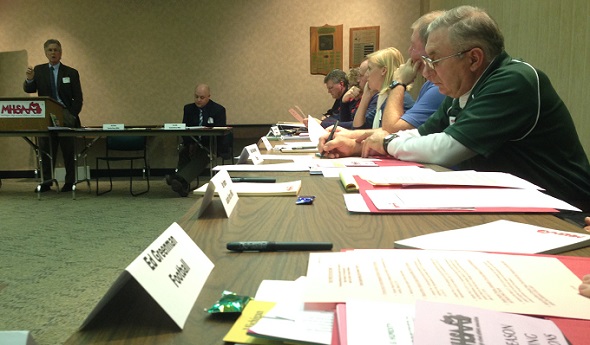
 The Coaches Association Presidents Meeting, an annual event hosted Monday at the MHSAA office in East Lansing, allows an opportunity to gather that valuable input as our staff works through pressing issues at the start of each new year.
Presidents from high school coaches associations representing nearly all of our MHSAA-sponsored sports met in East Lansing for an inside look at some of our latest efforts and how that work could affect their sports and the coaches they serve.
On the menu this time was an update on the MHSAA's drive to increase coaches health and safety training, followed by updates on recent research into how the association might better serve junior high and middle schools.
The entrée was discussion on out-of-season coaching rules, and how or if they should be altered to allow high school coaches more contact with athletes during offseasons than currently allowed.
This meeting allows for input on these topics, with the key, again, that the input comes from various sources who face differing circumstances but are all tied together under the umbrella of interscholastic athletics. Input from our coaches associations will be valuable as MHSAA staff and its Representative Council consider potential rules changes over the rest of this school year, and beyond.