

Coaches Guide to Nutrition: What are Macros?
February 18, 2025
Planning your meals and snacks shouldn’t be challenging.
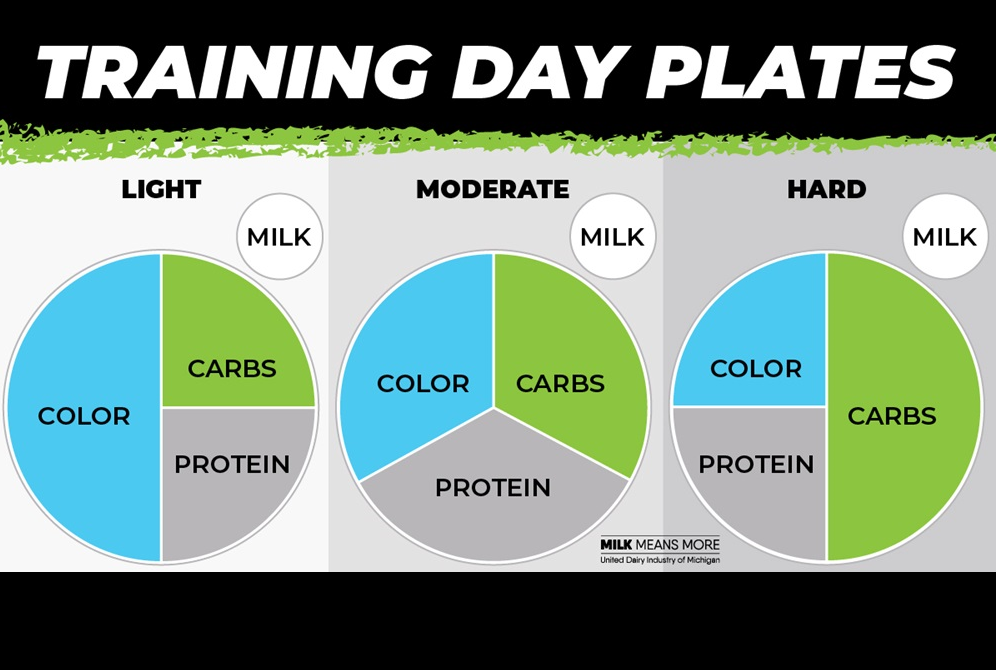
Break foods down into three categories: Carbs (energy), Protein (build and repair muscles), and Color (vitamins, minerals).
Adjust your plate based on your level of activity that day. Remember that your body needs carbohydrates like grains, fruits and vegetables for muscle fuel.
On hard training days, up to half of your plate should be carbs. On a recovery or rest day, make a quarter of your plate carbs.
Plan your meal
Check out these examples for your day’s main meals:
 Breakfast
- Overnight oats with fruit
- Egg wrap with spinach, cheese and salsa
- Cereal with fruit and milk topped with nuts
- Smoothie made with milk, fruit, spinach and oats
- Don’t forget about school breakfast!
Lunch
- Turkey roll-up with cheese, tomato and lettuce, fruit and milk
- Grilled cheese sandwich, tomato soup, small salad, milk and pear
- Large salad with your choice of berries, grilled chicken, cheese and vinaigrette dressing, garlic bread and milk
- School lunches are made with student nutrition in mind!
Dinner
- Pasta with chicken, pesto, tomatoes and peas with milk
- Shrimp or tofu fajita bowl with brown rice, peppers, onions and shredded cheese. Add guacamole and plain Greek yogurt instead of sour cream.
- Cheeseburger made with 90 percent lean beef or turkey on a whole grain bun with lettuce and tomato and a glass of milk. Add baked sweet potato fries on the side.
Information above is excerpted from UDIM’s A Coach’s Guide to Nutrition.
Coaches Guide to Nutrition: No Tricks, Just Smart Fuel
October 20, 2026
Halloween may bring plenty of treats, but fueling your body doesn’t have to be tricky!
For high school athletes, healthy snacks are an important way to maintain energy between meals and support performance before and after activity.
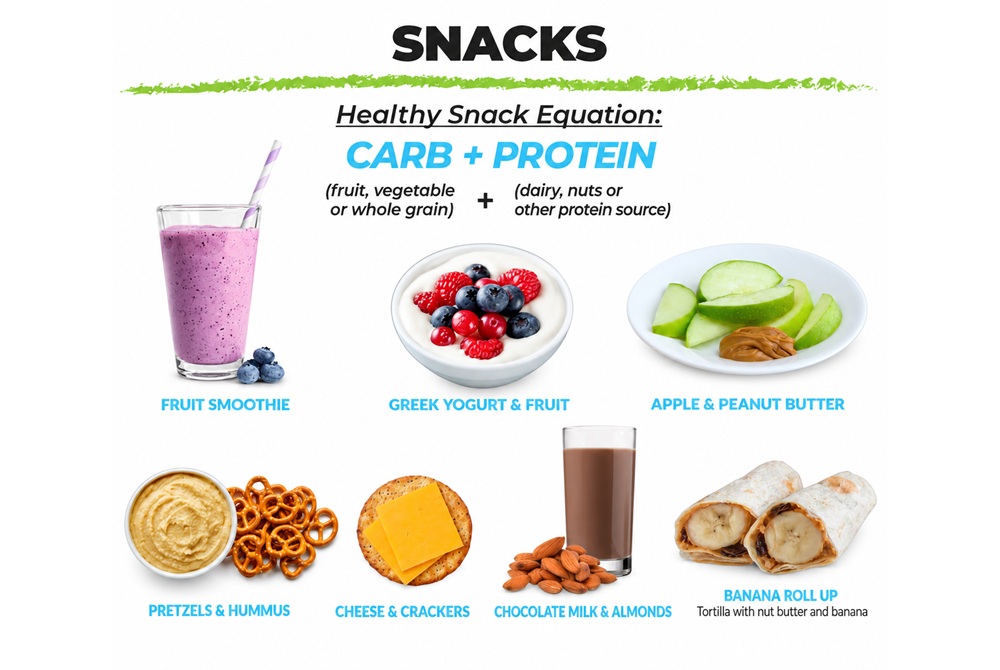
A simple formula to remember is carbohydrate + protein.
Try combinations like Greek yogurt and fruit, cheese and crackers, a fruit smoothie, or chocolate milk and almonds.
And yes, there’s still room for your favorite Halloween candy!
Rather than labeling foods as “good” or “bad,” focus on choosing nutrient-rich foods more often while enjoying foods with less nutrition occasionally.
For athletes, it’s all about finding balance while giving your body the fuel it needs for school, practice, and competition.
Information above is excerpted from UDIM’s A Coach’s Guide to Nutrition.