

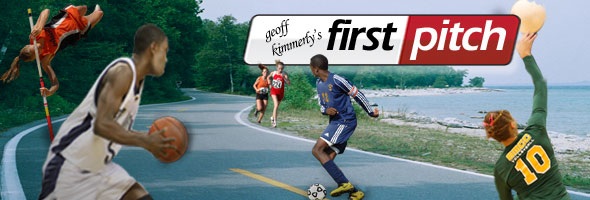
Let's Play 2 (or 3, or 4)
February 16, 2012
A few conversations I had at last week's Women In Sports Leadership conference further affirmed a point I've been making for years -- high school athletes, if they'd like, shouldn't hesitate to play multiple sports.
Doing so does not hurt, but might just help their chances at landing that prized college scholarship -- on top of adding another layer to the high school sports experience.
Reaffirming this for me last week was Michigan State softball coach Jacquie Joseph, who spoke on that subject at the WISL conference. She's heading into her 24th season as a head coach at the Division I college level -- so she's been around for some of the evolution of both high school sports specialization and college recruiting. Plus, she coaches a sport that sees its share of athletes playing just that one.
Later, I spoke with a high school coach who leads teams in three sports and also played one at the Division I college level. She's a believer in this as well.
Some of the things I've been told over the years about playing more than one sport:
- It allows an athlete to learn more skills and hone more parts of his or her athleticism.
- Using another range of movement further helps condition an athlete's body and make it more resistant to injury.
- It's hardly rare to see a college football coach watching a prospect's basketball game -- coaches like to see how athleticism transfers across sports, and sometimes will see something from an athlete playing basketball that he didn't show on the football field. (Football and basketball are used in this example, but the same applies to a number of similar situations.)
- Athletes get an opportunity to play whatever they'd like only this once (unless they turn out to be that rare college athlete who takes on more than one sport at that level).
These are hardly new arguments. But they are always worth repeating -- especially when the people frequently making them (college coaches) are the ones single-sport athletes often are trying to impress.
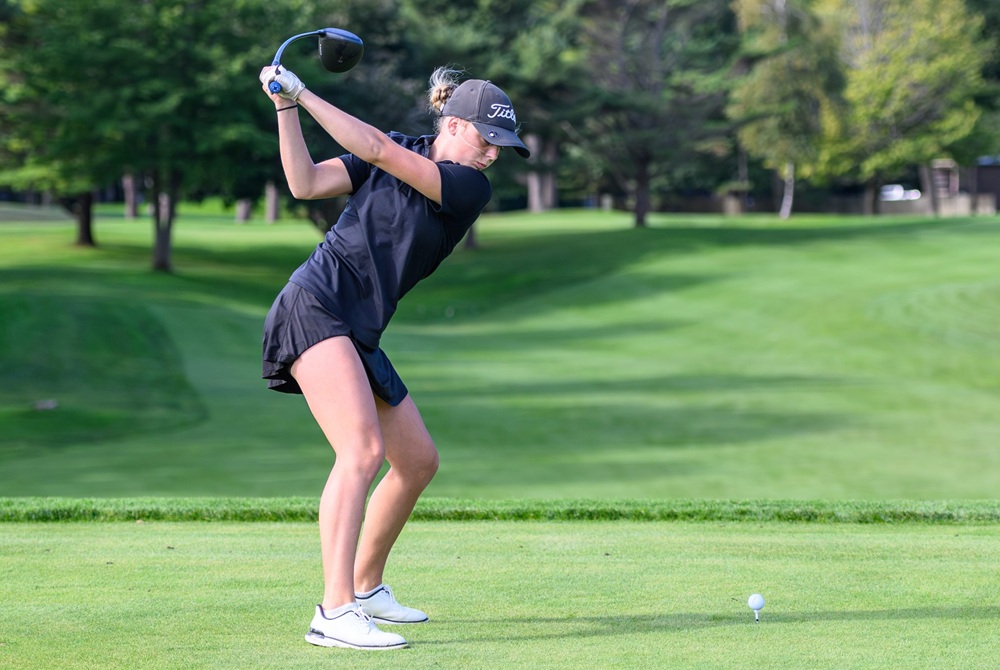
Performance of the Week: Muskegon Reeths-Puffer's Sophia McCollum
October 2, 2026
Sophia McCollum ♦ Muskegon Reeths-Puffer
Senior ♦ Golf
McCollum, the reigning Lower Peninsula Division 2 individual champion, won the Greater Muskegon Athletic Association individual title Sept. 22 for the third-straight season. She carded a 77 to also lead Reeths-Puffer to the team victory as the Rockets scored a 354 to outpace runner-up Montague by six strokes.
After tying for 17th as a sophomore, McCollum won last year’s LPD2 Final by four strokes and is gearing up for her team’s Regional on Tuesday at Lincoln Golf Club in Muskegon. She will be continuing her golf career at the college level but has not publicly announced where at this time; she is interested in studying nursing or education at that next destination. She’ll also be returning to the track for the Rockets next spring after taking last season off but running primarily middle distance as a freshman and sophomore.
@mhsaasports ⛳️🏌️♀️ POW: Sophia McCollum #ReethsPuffer #Golf #Champion #PerformanceOfTheWeek #MHSAA @sophia.mccollum1 @sophiamccollumgolf ♬ original sound - MHSAA
@mhsaasports ⛳️ POW: Sophia McCullom #TikTalk #FunFacts #Golf #PerformanceOfTheWeek #MHSAA @sophia.mccollum1 @sophiamccollumgolf ♬ original sound - MHSAA
Follow the MHSAA on TikTok.
MHSAA.com's "Performance of the Week" features are powered by MI Student Aid, a division within the Department of Lifelong Education, Advancement, and Potential (MiLEAP). MI Student Aid encourages students to pursue postsecondary education by providing access to student financial resources and information. MI Student Aid administers the state’s 529 college savings programs (MET/MESP), as well as scholarship and grant programs that help make college Accessible, Affordable and Attainable for you. Connect with MI Student Aid at www.michigan.gov/mistudentaid and find more information on Facebook and X @mistudentaid.
Past 2026-27 honorees
Sept. 25: Jenna Middleton, Kingsley volleyball - Read
Sept. 18: Caden Livermore, Grandville cross country - Read
(Action photo courtesy of the Local Sports Journal.)