


23rd WISL Conference Set for Feb. 4-5
January 11, 2018
By Geoff Kimmerly
Second Half editor
The first, largest and longest-running program of its type in the country, the Michigan High School Athletic Association’s Women In Sports Leadership Conference will take place Feb. 4-5 at the Crowne Plaza Lansing West.
The 23rd edition of the conference again will feature three keynote speakers and a variety of workshops. The program annually attracts upwards of 500 participants, most of them high school female student-athletes. High school students, coaches and administrators are invited to find registration information on the MHSAA Website.
Cost is $50 for students and $60 for adults, not including lodging for those intending to stay overnight in Lansing. A registration form for lodging also is available on the MHSAA Website.
The theme for this WISL Conference is “LEAD: Embrace the Challenge” – and the opening address will be delivered by U.S. national team volleyball setter Alisha Glass, who starred at Leland High School and led the Comets to the Class D championship as a senior in 2006. She continues to hold four MHSAA records including for career kills (3,584) and aces (937) and went on to start all four seasons as a setter at Penn State, leading the Nittany Lions to three straight NCAA Division I championships. Glass then led the U.S. national team to the 2014 world championship and the 2016 Olympic bronze medal. She will speak on 21st century leadership responsibilities and daily leadership opportunities student athletes may encounter.
The winningest coach in NCAA softball history, University of Michigan’s Carol Hutchins, will speak on the importance of leadership and continually sharpening those skills at the WISL Banquet during the evening of Feb. 4. Hutchins, a graduate of Lansing Everett High School and Michigan State University, has built a 1,527-491-5 record over 33 seasons and also is the winningest coach in Michigan athletic department history. Hutchins joined the Wolverines staff as an assistant in 1983 and took over the program as head coach in 1985. She led Michigan to the College World Series championship in 2005 and a runner-up finish in 2015. Hutchins played both softball and basketball at Michigan State and helped the Spartans to the 1976 Association of Intercollegiate Athletics for Women national softball championship. She also holds a master’s degree from Indiana University.
Michigan State University women’s volleyball coach Cathy George will challenge participants to “find the leader in you” throughout life during the morning of Feb. 5. George recently completed her 13th season at MSU and 31st overall as a college head coach by guiding the Spartans to the NCAA Elite Eight. Her 256 wins at MSU are the most in program history, and she has a career record of 621-398 – counting also 11 seasons leading Western Michigan University, five at University of Texas-Arlington and two at North Dakota State. Her MSU teams have made the NCAA Tournament seven straight seasons. As an athlete, George was a team captain and three-time all-league selection at Illinois State, helping the Redbirds to three NCAA Tournament appearances.
Workshops offered during the WISL conference include topics on coaching, teaching and learning leadership, sports nutrition and performance, injury prevention, promoting team chemistry and roles and responsibilities of captains. A complete itinerary is available on the MHSAA Website.
The WISL Banquet will include the presentation of this year’s Women In Sports Leadership Award. The winner will be announced later this month.
Follow the #WISL hashtag on Twitter to learn more about the conference’s activities.
MHSAA, NFHS Learning Center Team Up to Provide Online Student Leadership Series
By
Geoff Kimmerly
MHSAA.com senior editor
August 10, 2023
Leadership always has been one of the most valuable and applicable life skills developed by student-athletes participating in educational athletics. To assist in that development, the Michigan High School Athletic Association (MHSAA) and National Federation of State High School Associations (NFHS) have partnered to produce an online Student Leadership series designed to provide the latest research-based instruction to high schoolers throughout the United States.
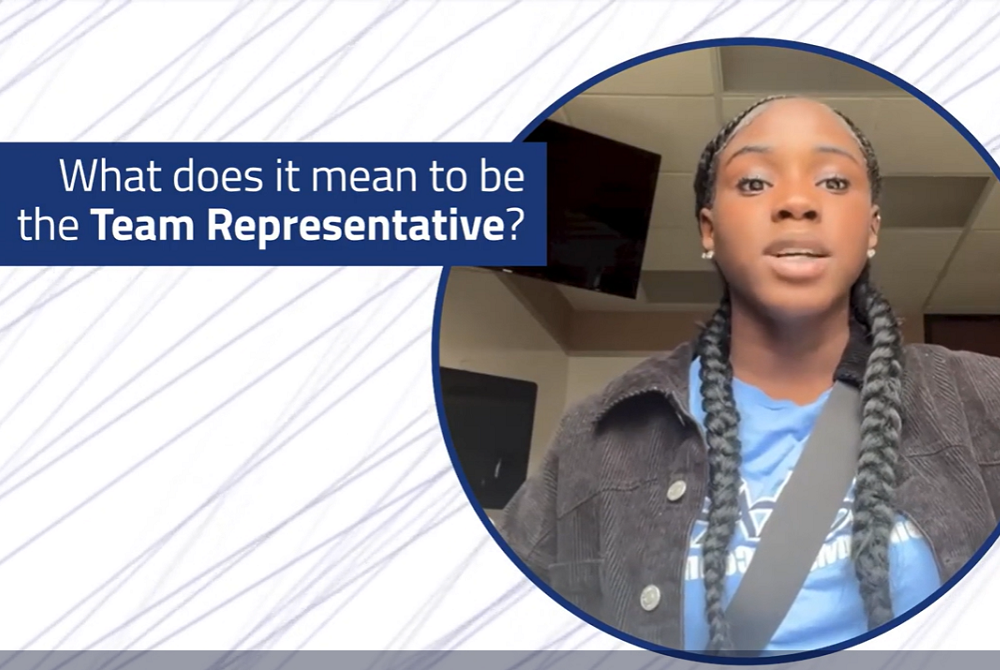
The Student Leadership series is provided as part of the web-based NFHS Learning Center and includes two free courses focused on students – “Becoming a Leader” and “Leading Others” – with a third installment for coaches currently in production. All three are inspired by the latest research on how youth-aged athletes learn to lead.
This latest work builds on the MHSAA-produced “Captains Course” developed in 2015 with Michigan State University’s Institute for the Study of Youth Sports (ISYS). The “Captains Course” has been taken more than 100,000 times and is based on in-person “Captains Clinics” that MHSAA staff and ISYS conduct with thousands of students across Michigan each year.
Each student-focused segment of the new Student Leadership series takes 30-45 minutes to complete and includes frequent and quick activities designed to help students understand how they would apply leadership skills in real-life scenarios. Course instruction was created primarily in coordination with the MHSAA by a pair of nationally-recognized authorities on the subject: Jed Blanton, an assistant professor in kinesiology, recreation and sport studies at the University of Tennessee; and Scott Pierce, an associate professor in kinesiology and recreation at Illinois State University.
Both Blanton and Pierce have vast experience with youth athletics; both also formerly worked for the Institute for the Study of Youth Sports and served as graduate assistants at the MHSAA during their time at MSU, playing large roles in more than a decade of research conducted through coordination with the MHSAA’s 16-member Student Advisory Council. High school administrators, student leaders, and other researchers and mental performance consultants also contributed to the lessons taught in these courses. The NFHS produced the content, including all of the visuals and digital features, and the student-focused courses went live on the NFHS Learn website in mid-summer.
“We’ve taken a good program, and made it even better,” said MHSAA Assistant Director Andy Frushour, who coordinates the Association’s student services programs. “This is a program we do in person in Michigan, but our reach now is across the country – and these courses are free, hopefully allowing us to contribute to the development of even more student leaders.”
The “Becoming a Leader” course defines leadership styles and builds skills to help students consider themselves as leaders. “Leading Others” details how leaders put those skills into practice including during challenging situations. Blanton and Pierce worked closely with student advisory groups from various states to make the research content relatable to school sports participants. All voices heard in the courses belong to high school students – including athletes from Michigan, Illinois and Washington who provided 30 testimonials that describe leadership in action.
The “Coaches Course” will provide the same information as presented to high school students, but in a way that explains how coaches can use these tools to personalize leadership training among their athletes as they seek to recognize which types of leaders they have on a team, and which types are missing and need to be developed.
“The NFHS is grateful for the opportunity to work with the MHSAA as well as Dr. Blanton and Dr. Pierce,” said Dan Schuster, the NFHS’ director of educational services. “We believe these student leadership courses will provide valuable information across the country and will contribute to the improvement of the interscholastic experience for young people.”
Video previews provide additional information on both Student Leadership courses.Click for direct links to “Becoming a Leader" and “Leading Others.”