


Cohen Champions Treatment, Technology
By
Geoff Kimmerly
MHSAA.com senior editor
March 10, 2014
Abby Cohen was looking for a problem to solve.
Two years later, she’s potentially only one more year from helping relieve a medical dilemma faced by 25 million Americans.
And the most impressive part might be that she graduated from high school a mere five years ago and is 23 years old.
 Cohen, a 2009 MHSAA Scholar-Athlete Award winner as a senior at Bloomfield Hills Cranbrook-Kingswood, certainly could be called proactive, going back to her days as a volleyball, basketball and soccer standout for the Cranes. Less than a year after graduating from Washington University in St. Louis, Mo., she’s co-founder and co-CEO of Sparo Labs, which seeks to provide asthma sufferers with a proactive way of monitoring their symptoms and improving their treatments.
“Everyone has a different perspective on how to go about doing things,” Cohen said. “For me, growing up trying to improve in sports, I’d write down a list of things to do every day and actually do them, follow through. That aspect of always wanting to get better, and improve, is something that’s carried through to the rest of what we do at Sparo and in general how I approach things.”
 On March 22, the MHSAA and Farm Bureau Insurance will recognize a 25th class of Scholar-Athlete Award winners. In advance of the celebration, Second Half has caught up with some of the hundreds who have been recognized (see additional links at the bottom of this page).
Cohen, who also served on the MHSAA Student Advisory Council from 2007-09, chose Washington based on its strong engineering problem and successful women’s basketball program. She studied bio-medical engineering and was a freshman on the Bears team that defeated Hope College for the Division III national championship in 2010.
But that first season was followed by a series of ankle injuries that required reconstructive surgery – and, effectively, ended her collegiate sports career. She still can play pick-up games, but four-hour daily practices and the other commitments of a varsity program would've been too much.
She missed basketball. But the end of her competitive career on the court, as it turned out, allowed more time to dive into a new pursuit – and, in her words, “work with another kind of team.”
“I’m a big believer in everything happens for a reason,” Cohen said. “It was disappointing having to have surgery to make everything feel better, for the long term, not just basketball. For me at that time, I didn't appreciate that with the extra time I could have, I could take the time to try new things, make the world a better place.”
Cohen planned at first to eventually become a physician. She shadowed a number of doctors, but decided that in the long run she could have a greater impact as an engineer designing products physicians could use.
In addition to her classwork, she helped form an extracurricular entrepreneurial group – and set out for an issue in need of repair. She and her now-business partner Andrew Brimer didn't realize how many Americans are affected by asthma, “that respiratory diseases are the only ones getting worse over time rather than getting better. That although technology is improving, why it’s not making a dent.”
They set out find out and make that dent themselves.
Through a series of interviews with patients, doctors, respiratory therapists and others in the field, Cohen and Brimer got an idea what could help – an affordable, easy-to-use device to allow patients to monitor on their own their symptoms so they can better manage them and the treatments to help. Cohen and Brimer designed a device that plugs into a smart phone and allows patients to blow into it like a whistle and register lung function readings – while also collecting data on medications, pollen counts, and other variables that affect lung function. Their device also should dent the health care costs that go with current testing, which generally requires an office visit.
Sparo will work over the next six months to improve its app interface and user experience, and then submit for Food and Drug Administration approval at the end of this year or the beginning of 2015 – with the hope it will then become available to patients later next spring.
Cohen is based in St. Louis, where she and Brimer have been able to work with three large local hospitals and within a nurturing entrepreneurial community. Brimer's brother owns a tech education company in New York which has provided additional support as she and Brimer discussed what was possible. “We were talking to patients and physicians, and it just seemed like the right thing to do,” Cohen said. “If we weren’t going to do this, who was?”
Cohen and Brimer have won 9 of 11 entrepreneurship grant competitions they've entered, netting more than $300,000 to get their lab rolling and allow them to hire two more engineers. Long-term, today’s work could just be the start of what Cohen hopes eventually will reach into developing countries as well.
She remains in touch with a number of teachers at Cranbrook-Kingswood – also, her mother Sheila Cohen teaches sixth-grade math at the school – and she spoke there at the end of 2013 as part of a TEDx event.
As she continues to build her team, Cohen is reminded of additional lessons she learned on the courts and soccer field – including a major one that will continue to pay as Sparo expands.
“Learning how to work on a team, with really different personalities, different people who all play different roles,” Cohen said. “That really came from sports – the ability to work with people and reach one common goal.”
Click to read the series' first installments:
- 25 Years Later, Scholar Athletes Shine On
- On Call as Doctor, Director, Mom
- "Mailloux Management" Goes Global
- Goorhouse Gives Back at Home
PHOTO: Abby Cohen (10) helps her teammates hoist a trophy while a player at Bloomfield Hills Cranbrook-Kingswood in 2009. (Photo courtesy of Cranbrook-Kingswood.)
Despite Overall Dip, 8 Sports Add Athletes
July 8, 2015
By Geoff Kimmerly
Second Half editor
Eight high school sports for which postseason tournaments are sponsored by the Michigan High School Athletic Association enjoyed gains in participation during the 2014-15 school year. However, total participation in MHSAA sports decreased slightly for the fourth straight school year, following a continuing trend of declining member school enrollments.
A total of 282,623 participants took part in the 28 tournament sports offered by the MHSAA during the past year – a 1.95-percent decrease from the 2013-14 figure of 288,230. However, enrollments at member schools also decreased 1.24 percent from 2013-14 and have fallen 11.1 percent since the 2006-07 school year – while MHSAA participation has fallen only 9.7 percent during that time. This year’s dip was only slightly larger than the 1.9-percent decrease from 2012-13 to 2013-14.
Overall boys participation fell 1.5 percent from 2013-14 to 2014-15, while girls participation fell 2.6 percent. The overall MHSAA totals count students once for each sport in which they participate, meaning students who are multiple-sport athletes are counted more than once.
Girls lacrosse was the only MHSAA sport to set a participation record during 2014-15, with 2,589 athletes (an increase of 1.9 percent) this spring, and has set a participation record every season since becoming a sponsored tournament sport in 2005. However, boys lacrosse, which also became tournament sponsored in 2005, saw its first decrease in participation, falling 2.6 percent to 4,958 athletes despite five schools adding programs to bring that total to 130.
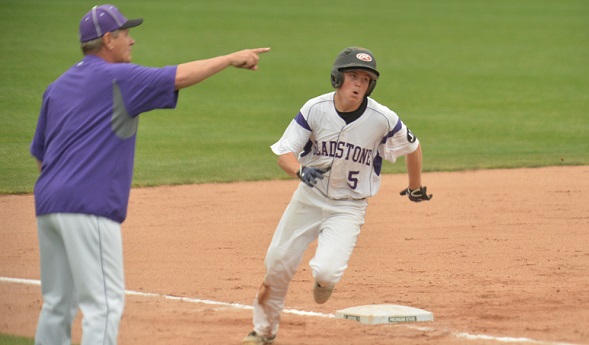
Baseball participation increased for the fourth straight school year, this season six tenths of a percent to 18,333 athletes. The other six sports that saw increased participation during 2014-15 all bounced back from decreases between 2012-13 and 2013-14. Boys bowling increased 4.2 percent to 3,724 athletes, its second-highest total as an MHSAA tournament sport. Both boys skiing (4.0 percent increase to 775 athletes) and girls skiing (1.4 percent to 671) also saw higher participation after two seasons of declines. Girls competitive cheer (1.0 percent to 7,189 athletes), girls gymnastics (3.0 percent to 618) and boys soccer (1.0 percent to 14,426) also saw bounce-back years after dips the school year before.
However, two of the most popular girls sports continued to experience downward trends. Girls basketball participation fell for the ninth straight season, to 15,702 athletes, the sport’s lowest total since records first were kept in 1991-92. The girls basketball total has decreased 18 percent since a U.S. District Court decision led to the switching of girls basketball season from fall to winter beginning in 2007-08. Comparatively, girls enrollment at MHSAA schools during that time has fallen 11.6 percent.
The sport that swapped seasons with girls basketball and moved to fall, volleyball, saw a 3.3-percent drop in participation this school year to 17,996 athletes, its fewest since 1991-92 and a decrease of 16.5 percent since its final season as a winter sport.
Also of note in this year’s survey:
- Total, eight sports saw increases in participation in 2014-15 (four boys, four girls), while 20 experienced decreases (10 boys, 10 girls).
- A recent drop in football participation, 11 and 8-player teams combined, has continued to slow, the total this season falling only 1.4 percent to 40,088 athletes. The drop from 2011-12 to 2012-13 was 3.7 percent, and the drop from 2012-13 to 2013-14 was two percent.
- Wrestling saw a decrease for the sixth straight year, this season to 9,475 participants, a 7.9-percent drop from 2013-14 with its lowest total since the collection of data began.
- Girls cross country, after five straight years of increases, fell back 4.1 percent, to 8,350 athletes, although that total still represented the third highest of the last seven seasons. The trend was identical for boys cross country, except this season’s total of 8,786 athletes was down only 1.1 percent from a year ago and the second-highest over the seven-season string.
- Swimming and diving saw the largest decrease among a pair of related sports; girls participation fell six percent to 4,938 athletes and boys fell 7.4 percent to 5,617 after both had experienced slight increases during the last three school years.
- Boys golf participation fell for the sixth straight season, to 6,533 athletes, its lowest since 1991-92.
The participation figures are gathered annually from MHSAA member schools to submit to the National Federation of State High School Associations for compiling of its national participation survey. Results of Michigan surveys from the 2000-01 school year to present may be viewed on the MHSAA Website – www.mhsaa.com – by clicking on Schools > Administrators > Sports Participation Listing.
The following chart shows participation figures for the 2014-15 school year from MHSAA member schools for sports in which the Association sponsors a postseason tournament:
BOYS GIRLS
SPORT |
SCHOOLS (A) |
PARTICIPANTS |
SCHOOLS (A) |
PARTICIPANTS (B) |
|
Baseball |
639/650/6 |
18,325 |
- |
-/8 |
|
Basketball |
726/733/5 |
21,401 |
665/726 |
15,702/14 |
|
Bowling |
355/371/9 |
3,711 |
339/366 |
2,970/13 |
|
Competitive Cheer |
- |
- |
335/348 |
7,189 |
|
Cross Country |
605/639/0 |
8,786 |
587/637 |
8,350/0 |
|
Football – 11 player |
597/621/59 |
39,338 |
- |
-/65 |
|
8-player |
33/38/0 |
685 |
- |
- |
|
Golf |
503/532/46 |
6,460 |
325/331 |
3,334/73 |
|
Gymnastics |
- |
- |
66/75 |
618 |
|
Ice Hockey |
232/269/11 |
3,448 |
- |
-/15 |
|
Lacrosse |
130/137/3 |
4,955 |
88/91 |
2,589/3 |
|
Skiing |
87/100/0 |
775 |
90/98 |
671/0 |
|
Soccer |
466/495/16 |
14,370 |
459/479 |
13,333/56 |
|
Softball |
- |
- |
570/635 |
13,113 |
|
Swimming & Diving |
233/264/3 |
4,935 |
256/275 |
5,617/3 |
|
Tennis |
299/316/6 |
6,294 |
335/345 |
8,628/11 |
|
Track & Field |
661/684/0 |
22,439 |
645/681 |
16,855/0 |
|
Volleyball |