


Multi-Sport Survey Helps Set Benchmark
July 31, 2018
By Geoff Kimmerly
Second Half editor
NOTE: This report includes a revision Aug. 3 to account for incorrect data for Jenison, which previously was listed with the second-highest percentage of multi-sport athletes in Class A. The updated data changed only two percentages updated below (*), and both by only one tenth of a percent.
Nearly 43 percent of athletes at Michigan High School Athletic Association member high schools participated in more than one sport during the 2017-18 school year, according to the first-ever Multi-Sport Participation Survey conducted this spring and inspired by the work of the MHSAA’s Task Force on Multi-Sport Participation.
Early and intense sport specialization has become one of the most serious issues related to health and safety at all levels of youth sports, as overuse injuries and burnout among athletes have been tied to chronic injuries and health-related problems later in life. In early 2016, the MHSAA appointed the Task Force on Multi-Sport Participation as part of a continued effort to promote and protect participant health and address the issues leading to early sport specialization.
While there is a growing amount of research detailing the negative effects of early sport specialization, there is little research on the prevalence of sport specialization, including at the high school level. This MHSAA survey received responses from 79.9 percent of member high schools and will be conducted annually to measure how multi-sport participation exists at schools of different sizes and also the progress being made to increase it at all schools.
“It’s now well-known that students who specialize in one sport year-round are prone to all kinds of health hazards. This is serious business; we have to find out the ways and means to promote the multi-sport experience,” MHSAA Executive Director John E. “Jack” Roberts said. “This survey will help us identify best practices. If I’m an administrator, and another school of the same size and same demographics has twice the multi-sport participation as my school, I want to know why. What are they doing to encourage that culture?”
From schools that responded to this year’s survey, 42.5 percent of students participated in athletics in 2017-18 – 46.3 percent of boys and 38.7 percent of girls. As anticipated, Class D schools enjoyed the highest percentage of athletes among the entire student body, at 55.2 percent, followed by Class C (50.1), Class B (45.1) and Class A (39.1*).
Of those athletes counted by responding schools, 42.8 percent participated in more than one sport – including 44.6 percent of boys and 40.6 percent of girls. Class D again enjoyed the highest percentage of multi-sport athletes, 58.1 percent, followed by Class C (55.2), Class B (46.7) and Class A (35.9*).
Similar results for overall sport participation and multi-sport participation relative to enrollment size were seen by further breaking down Class A into schools of fewer than 1,000 students, 1,000-1,500 students, 1,501-2,000 students and more than 2,000 students. For both sport participation as a whole and multi-sport participation specifically, the smallest Class A schools enjoyed the highest percentages, while percentages then decreased for every larger size group of schools.
The MHSAA Task Force on Multi-Sport Participation also recommended measuring multi-sport participation in MHSAA member schools to recognize “achievers” – that is, schools that surpass the norm given their enrollment and other factors that affect school sports participation. An achievement program is being developed for future years, and this year’s survey results will assist in setting a benchmark for that recognition.
In Class A, Marquette (82.6 percent), Grand Rapids Union (74.1) and Holland West Ottawa (74.0) posted the highest percentages of multi-sport athletes. In Class B, four schools achieved at least 80 percent multi-sport participation – Birch Run (87.1), Gladstone (83.8), Clawson (81.0) and Shepherd (80).
Class C saw 13 schools with more than 80 percent of its athletes taking part in more than one sport, led by Ubly (90.2 percent) and Detroit Southeastern (89.2). Four Class D schools responded at higher than 90 percent multi-sport participation – Brethren (95.4), DeTour (94.3), Jackson Christian (91.7) and Waterford Our Lady (90.8).
The full summary report on the Multi-Sport Participation Survey is available on the “Health & Safety” page of the MHSAA Website.
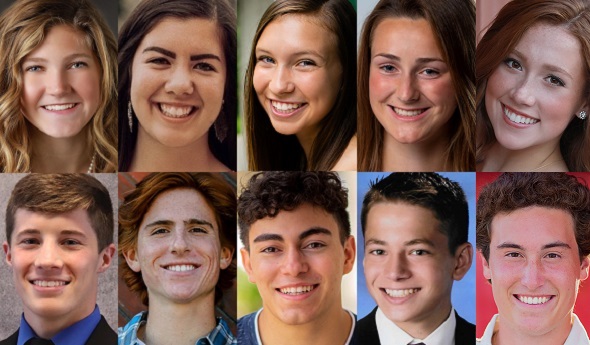
Scholars & Athletes 2020: Class B
By
Geoff Kimmerly
MHSAA.com senior editor
February 10, 2020
The Michigan High School Athletic Association has selected 10 student-athletes from Class B member schools to receive scholarships through the MHSAA/Farm Bureau Insurance Scholar-Athlete Award program.
 Farm Bureau Insurance, in its 31st year of sponsoring the award, will give $1,000 college scholarships to 32 individuals who represent their member schools in at least one sport in which the Association sponsors a postseason tournament. The first 30 scholarships are awarded proportionately by school classification and the number of student-athletes involved in those classes; also, there are two at-large honorees who can come from any classification.
Students applying for the Scholar-Athlete Award must be carrying at least a 3.5 (on a 4.0 scale) grade-point average and have previously won a letter in a varsity sport in which the Michigan High School Athletic Association sponsors a postseason tournament. Other requirements for the applicants were to show active participation in other school and community activities and produce an essay on the importance of sportsmanship in educational athletics.
Each of the scholarship recipients will be honored at a halftime ceremony during the Division 3 Boys Basketball Final, March 28, at the Breslin Student Events Center in East Lansing. Commemorative medallions will be given to the finalists in recognition of their accomplishments.
The Class B Scholar-Athlete Award honorees are: Hannah Fulmer, Grosse Ile; Alicia Kanai, Ada Forest Hills Eastern; Tara Keller, Frankenmuth; Faith Schafer, Williamston; Delaney Wesolek, Bay City John Glenn; Hunter Assenmacher, Ida; Samuel Beach, Hillsdale; Gabriel Hassan, Ada Forest Hills Eastern; Lucas Kopp, Grosse Ile and Ben Lankfer, Grand Rapids Catholic Central.
Overviews of the scholarship recipients of the Class B Scholar-Athlete Award follow. A quote from each recipient's essay also is included:
 Hannah Fulmer, Grosse Ile
Ran four seasons of cross country and will participate in her fourth of track & field this spring; also played three seasons of basketball including on varsity as a junior. Qualified for the MHSAA Finals in both cross country and track, helping both teams to multiple league titles and the cross country team to a Regional championship. Earned all-state in track and all-area in track and cross country. Serving as captain of both teams this school year. Serving as class president after three years as vice president, and also serving as Key Club president. Participating in third year of National Honor Society and is among those ranked first academically in her class. Participated in church mission trip as a junior and as Vacation Bible School leader and teacher all four years of high school. Will attend Michigan State University’s honors college and major in education.
Essay Quote: “In reality, sports are just sports. They're meant to be enjoyed. If we take them too seriously and don't treat our competitors with respect and kindness, then it goes from being a game to a battle. Additionally, without proper sportsmanship, high schoolers are taught that it is okay to treat our "enemies" with contempt and hostility. We need to be shown, however, that that type of behavior will get you nowhere in life.”
 Alicia Kanai, Ada Forest Hills Eastern
Playing third season of varsity basketball and will play third of varsity soccer this spring; also played varsity softball as a freshman. Received “Team First Award” from Basketball Coaches Association of Michigan and has served as captain in all three sports. Earned AP Scholar Award and is participating in second year of National Honor Society. Selected to speak at NHS induction ceremony. Participating in third year of math club and second with school’s Writing and Math Center, which she serves as head of communications. Also participates on school’s volunteer board and as Project CHUCK coordinator. Serves as small group and worship leader at her church and treasurer for her Fellowship of Christian Athletes chapter. Will attend Taylor University (Ind.) and study mathematics.
Essay Quote: “Our behavior on the field reflects our character, our team, our school, and our community. We should play with class not only to positively represent those with whom we are associated but to show others their value. When we are separated by different colored jerseys, we often dehumanize the opponents, viewing them only as a team we need to defeat. However, sportsmanship tears down the barriers and destroys the presumption that opponents are enemies.”
 Tara Keller, Frankenmuth
Ran four seasons of cross country, is playing her third of varsity basketball and will play her third of varsity softball this spring. Qualified twice for the MHSAA Cross Country Finals and earned all-conference and academic all-state honors in that sport. Helped basketball and softball teams to District championships. Earned AP Scholar with Honors designation and named National Merit Scholarship semifinalist. Serving as treasurer in fourth year of student council, and third year as clarinet section leader in marching band. Selected to represent school for Great Lakes Bay Regional Youth Leadership Institute. Participates in school’s Be the Change club and served on local library’s Teen Advisory Board and church’s Youth Leadership Team. Coached youth basketball throughout high school. Will attend Cedarville University (Ohio) and major in pre-medical studies.
Essay Quote: “The purpose of educational athletics is not to boost kids’ egos with championships and all-time bests, but rather to teach teenagers how to handle loss with grace and class, how to treat their rivals, and how to communicate with adults and opponents. … I personally have grown to realize the importance of sportsmanship the longer I have played sports. The things that I love most about athletics now are not the sports themselves, but the atmosphere of joy, selflessness, and love that I associate with them.”
 Faith Schafer, Williamston
Ran four seasons of cross country and will participate in fourth of track & field this spring; also played two seasons of junior varsity basketball. Qualified for MHSAA Finals in both varsity sports three times and was league champion in track while earning multiple all-league honors. Earned multiple academic all-state honors as well in both varsity sports and served as captain multiple seasons for both. Earned Girls State Citizen Award and named semifinalist for United State Senate Youth Program. Serving as class secretary for both student government and National Honor Society chapter and team administrator for school’s InvenTeams team. Also participating in third year of Mu Alpha Theta mathematics honor society. Earned various honors during four years of Model United Nations and serves on Lansing Youth Action Committee. Will attend University of Notre Dame and pursue a degree in neuroscience.
Essay Quote: “This is the same sort of culture I have tried to build (with) my own team as a captain – one that encourages sportsmanship at all times, even in the race. … It is a sentiment that cannot be expressed by someone who has not experienced it – like fifth-grade me. If I had been asked what sportsmanship was then, I would have answered with a vague ‘being nice.’ But now, it means far more.”
 Delaney Wesolek, Bay City John Glenn
Competed on swimming & diving team for four seasons and will participate in her second of track & field this spring; also played two seasons of subvarsity basketball with a promotion to varsity as a sophomore. Earned multiple all-state swim honors and is a four-time league and area champion, with six school and two area records. Also contributed to all-league team academic honor. Served as captain of swim and basketball teams and selected to multiple leadership conferences including USA Swimming Leadership Summit in Colorado. Serving fourth year as class president and third on student senate’s executive board. Participating in second year of National Honor Society and fourth as part of her district’s Superintendent Leadership Committee; also serving fourth year on Bay Area Community Foundation’s Youth Advisory Board. Participated in various volunteer projects and assisted with local grant funding for community youth. Will attend Hope College and study nursing.
Essay Quote: “We all want to win. We all train hard and take our commitment to our sport seriously. This respect makes sportsmanship come easy. We all cheer for each other. We cheer as loud for the last girl to get out of the pool as we do for the first girl. Why? Because we understand the work and dedication that goes into being a student athlete.”
 Hunter Assenmacher, Ida
Competing in fourth wrestling season, ran four seasons of cross country and will play third season of varsity baseball in the spring. Earned two MHSAA Finals wrestling championships and finished as runner-up as a freshman, and won Regional title and qualified for MHSAA Finals in cross country. Earned all-league and all-region recognition in baseball. Served as captain of all three teams and earned various league scholar-athlete and sportsmanship awards. Participating in second year of National Honor Society and student council and first in Key Club. Selected as Army Educational Outreach Program’s eCybermission state runner-up as freshman and participating in second year of school’s Peers for Accelerated Learning of Students program. Also participating in school’s role model program for third year and has taken part in various volunteer efforts. Served as youth wrestling referee for county tournament. Will attend Lawrence Technological University and study architectural engineering.
Essay Quote: “Sports provide the opportunity to have fun with your friends and community, improve as an athlete and person, and engage in a healthy lifestyle. When all of this happens, nobody feels like they lost when the final buzzer sounds. However, only when the players, coaches, and spectators all partake in maintaining a positive learning experience can we truly take away all that sports have to offer.”
 Samuel Beach, Hillsdale
Played four years of varsity soccer, two of varsity football, is playing his second of varsity basketball and will play his third of varsity golf this spring. Earned all-league recognition in soccer and all-county in football, and served as captain of soccer and golf teams. Serving as class president and president of Interact club and school’s freshman mentor program; also serving on board of National Honor Society chapter. Attained Eagle Scout with a Gold Palm and selected as senior patrol leader for his local and national jamboree troops. Recognized by city and state for Eagle Scout project. Participating in fourth year of Hillsdale County Heritage Association Youth Council and contributed to writing, illustration and publishing of children’s story book. Participating in third year of Business Professionals of America and co-owns auto detailing business. Attended United State Naval Academy Summer Seminar in 2019 and will attend the Naval Academy and study engineering while training toward becoming a Marine Corps officer.
Essay Quote: “How you act on the playing field has an effect on your teammates, whether it be positive or negative. If your teammates see the anger you are displaying towards referees or coaches, they will assimilate the attitude and it will then spread. Whether people believe it or not, people’s attitudes directly affect the mood and overall success of your team.”
 Gabriel Hassan, Ada Forest Hills Eastern
Competing in fourth wrestling season and will play first season of high school lacrosse this spring; ran two seasons of cross country and played multiple season of junior varsity football. Serving third season as captain of wrestling team and is a past individual league champion and MHSAA Finals qualifier; also helped team to league and District titles. Carries a grade-point average above 4.0 and is participating in second year of National Honor Society and also second year of student government. Serving as vice president of Youth Advisory Board and head of marketing for Billy Bear Hug program that serves children with life-threatening illnesses. Founded organization that promotes volunteerism in his area. Selected to represent school at regional Athletic Leadership Seminar. Finalizing college plans but intends to study business.
Essay Quote: “To me (sportsmanship is) about setting a positive example and doing what is right even when there is a risk of losing. Being a member of a team, community, nation and our world, one needs to be a good citizen. I believe being civil and taking part in sports takes a certain type of character; one needs to be inherently willing to feel empathy and take action to understand others.”
 Lucas Kopp, Grosse Ile
Played four seasons of varsity tennis, playing second of varsity basketball and will participate in third of track & field this spring; also played junior varsity golf as a freshman. Earned all-league recognition and helped his team to MHSAA Finals in tennis, and also earned all-league scholar-athlete honor in that sport. Served as captain of both tennis and track teams. Earned AP Scholar Award and is participating in third year of National Honor Society. Participating in fourth year of student government and has participated two years each in LINK Crew to mentor freshmen and STAND anti-bullying organization. Serving as executive leader of church youth group and teen liaison to parish council and earned St. Timothy Award from National Federation for Catholic Youth Ministries. Serves as referee in multiple youth sports and participated in Special Olympics Unified Sports program. Selected from among 5,000 applicants to attend Summer Leadership Experience at United States Military Academy at West Point. Finalizing college plans and plans to major in one of the sciences.
Essay Quote: “Sportsmanship is not always about winning, but being a winner in more ways than one. Being the one who stops to help a teammate or the friend who shows compassion are what educational athletics are all about.”
 Ben Lankfer, Grand Rapids Catholic Central
Played two seasons of varsity tennis and lacrosse and is in his fourth season skiing and first as part of that varsity lineup; also played football as a freshman. Earned doubles flight championships and helped tennis team to two league and Regional titles. Earned academic all-state in tennis and skiing and served as captain in both sports. Earned AP Scholar designation and Capstone Diploma. Received Harvard Book Award and Michigan Seal of Biliteracy. Founded and serving as captain of school’s Science Olympiad team, and serving as head delegate of Model United Nations team. Also serving as editor-in-chief of school newspaper and officer for National Honor Society chapter. Helped debate team to multiple league championships, and also participates in theater. Co-founded and serving as co-president of local PERIOD. chapter and also volunteers for Kid’s Food Basket. Served as research assistant at Aquinas College. Will attend Northwestern University and study biology and biomedical sciences.
Essay Quote: "When I consider the meaning of sportsmanship, it means creating an environment for sports that accepts players no matter their gender, race, or sexual orientation. After all, sports are a place for physical, mental, and emotional growth, not discrimination."
Other Class B girls finalists for the Scholar-Athlete Award were: Baylee Martens, Battle Creek Pennfield; Eleanor Kwartowitz, Bloomfield Hills Cranbrook Kingswood; Olivia Prodin, Chelsea; Elizabeth Norris, Corunna; Grace Beardsley, Gladwin; Hannah Johnson, Hastings; Elizabeth Hovest, Ida; Sheridan Leinbach, Lansing Eastern; Katelynn Ceccacci, Ortonville Brandon; Abbey Almeda, Plainwell; and Katherine Topoleski, Pontiac Notre Dame Prep.
Other Class B boys finalists for the Scholar-Athlete Award were: Brice Austin, Alma; Jacob Herman, Berrien Springs; Jack Fairman, Bloomfield Hills Cranbrook Kingswood; Isaac Joslyn, Caro; Trevin Phillips, Caro; Joseph Norwood, Chelsea; Chris Lilly, Croswell-Lexington; William Roosien III, Hastings; Alex Mitchell, Holland Christian; Jorden Sowash, Owosso; and Andrew Innerebner, Sault Ste. Marie.
The Class C and D scholarship award recipients were announced Feb. 4, and the Class A honorees will be announced Feb. 18.
Farm Bureau Insurance of Michigan was founded in 1949 by Michigan farmers who wanted an insurance company that worked as hard as they did. Those values still guide the company today and are a big reason why it is known as Michigan’s Insurance Company, dedicated to protecting the farms, families, and businesses of this great state. Farm Bureau Insurance agents across Michigan provide a full range of insurance services—life, home, auto, farm, business, retirement, Lake Estate®, and more—protecting nearly 500,000 Michigan policyholders.
The MHSAA is a private, not-for-profit corporation of voluntary membership by more than 1,500 public and private senior high schools and junior high/middle schools which exists to develop common rules for athletic eligibility and competition. No government funds or tax dollars support the MHSAA, which was the first such association nationally to not accept membership dues or tournament entry fees from schools. Member schools which enforce these rules are permitted to participate in MHSAA tournaments, which attract more than 1.4 million spectators each year.