

NFHS's Gardner Announces Retirement
January 9, 2018
Special from NFHS
Bob Gardner, executive director of the National Federation of State High School Associations (NFHS) since May 2010, has announced his retirement, effective Aug. 1, 2018. Gardner notified the NFHS Board of Directors of his retirement plans at the NFHS Winter Meeting on Jan. 3 in Scottsdale, Arizona.
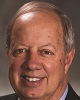 Gardner is the fifth full-time executive director of the NFHS, following H.V. Porter (1940-58), Cliff Fagan (1958-77), Brice Durbin (1977-93) and Bob Kanaby (1993-2010).
Gardner’s eight-year run as head of the national organization for high school athletics and performing arts activities will conclude a 48-year career in secondary education, including the final 18 years on the NFHS staff in Indianapolis.
Since assuming duties as NFHS executive director in 2010, Gardner has vigorously promoted the values of high school activity programs and expanded opportunities for participation by boys and girls nationwide. During his eight years as executive director, participation in high school sports has increased by almost 400,000, including the expanded opportunity for students with disabilities in high school sports.
Gardner has led the organization’s focus on risk minimization in high school sports, with particular emphasis on concussion awareness, and has brought a heightened national presence to the work of the NFHS and its member state associations. In addition to the continual expansion of the NFHS Learning Center during his tenure, Gardner is credited with starting the NFHS Network, the first-of-its-kind digital coverage of high school sports with more than 25,000 events covered during the 2016-17 school year.
In addition, during his eight years as chief executive of the organization, operating revenue for the NFHS increased by $4 million.
Ironically, Gardner’s entire 48-year career was spent in the state of Indiana. He was a teacher and coach at three schools for eight years and also served as an athletic director for a period of time. In 1978, Gardner became principal of Milan Junior-Senior High School, followed by a stint as superintendent of the Milan Community Schools.
After serving on the Indiana High School Athletic Association (IHSAA) Board of Directors during his time at Milan, Gardner joined the IHSAA staff in 1985 as assistant commissioner. He served 10 years in that role prior to becoming commissioner in 1995.
During his five years as IHSAA commissioner, Gardner led the change in the IHSAA football playoffs to permit participation by all schools, negotiated the association’s largest corporate sponsorship agreement in history with Indiana Farm Bureau Insurance and led the transition to multiple classes in team sports.
Gardner joined the NFHS staff in 2000 as chief operating officer and served in that position for 10 years prior to becoming executive director. During this time, he chaired the NFHS Rules Review Committee and was responsible for day-to-day operations of the organization.
Gardner earned his bachelor’s degree from the University of Evansville (Indiana) and his master’s and education specialist degrees from Ball State University in Muncie, Indiana. He has served on the Board of Directors for USA Football, USA Basketball and the Indiana Sports Corporation. He is a member of the Indiana High School Wrestling Hall of Fame.
Following the March 1 application deadline, finalists for the position will be interviewed by the NFHS Board of Directors April 17-18 in Indianapolis, with the new executive director expected to begin duties Aug. 1.

Participation Fees Rise Again
December 19, 2013
By Geoff Kimmerly
Second Half editor
The use of participation fees to help fund interscholastic athletics in Michigan high schools for the first time rose significantly above 50 percent during the 2012-13 school year, according to the most recent survey taken by the Michigan High School Athletic Association of its member institutions.
Use of fees had held steady at just above 50 percent over the last two school years, 2010-11 and 2011-12. But the most recently completed survey indicated that of 450 member schools participating, 249 schools – 55.3 percent – charged participation fees during the 2012-13 school year.
There were 758 senior high schools in the MHSAA membership in 2012-13 – the survey generated a response rate of 59 percent. This was the ninth survey of schools since the 2003-04 school year, when members reported that fees were being charged in 24 percent of schools.
The largest surge of charging fees in 2012-13 came at Class B schools, with 61 percent reporting fees after 54 percent reported using them in 2011-12. Class A schools saw a five percent jump to 71 percent, Class C saw a three percent rise to 49, and Class D schools saw a slight increase to 37 percent assessing fees.
Charging a standardized per-team fee for each on which a student participates remains the most popular method among schools that assess fees – although those doing so in that way dropped to 36 percent, a decrease of more than five percent. The median fee among those schools was $65, a decrease of $10 from the previous year.
Building on a trend that emerged during the 2011-12 survey, the use of fees incurred by students who paid once for an entire year of participation increased again to 29 percent of schools that charge. Families as a whole are facing higher fees as well; although an increasing number of schools are setting a maximum fee a family can be assessed, the amount of that fee increased in 2012-13 to a median of $300.
The survey for 2012-13 and surveys from previous years can be found on the MHSAA Website by clicking on Schools – Administrators – Pay-To-Play Resources.
The MHSAA is a private, not-for-profit corporation of voluntary membership by more than 1,500 public and private senior high schools and junior high/middle schools which exists to develop common rules for athletic eligibility and competition. No government funds or tax dollars support the MHSAA, which was the first such association nationally to not accept membership dues or tournament entry fees from schools. Member schools which enforce these rules are permitted to participate in MHSAA tournaments, which attract more than 1.4 million spectators each year.