


Rep Council Wrap-Up: Fall 2016
December 12, 2016
By Geoff Kimmerly
Second Half editor
The Representative Council of the Michigan High School Athletic Association took actions at its Fall Meeting on Dec. 2 in East Lansing that will affect baseball and Upper Peninsula golf teams this spring.
Generally, the Council takes only a few actions during its Fall Meeting, with topics often introduced for additional consideration and actions during its meetings in winter and spring. However, a rules change approved in baseball was required by the National Federation of State High School Associations before the start of the spring 2017 season, while the golf change is a result of multiple years of discussion concerning classifications for MHSAA Upper Peninsula Finals.
Beginning this upcoming baseball season, pitchers will be required to follow a pitch count limit, instead of the previous rule that limited their innings based on the number of outs thrown. In July, the NFHS Baseball Rules Committee mandated that all states adopt a pitch count rule in an effort to further prevent pitcher arm injuries, effective with the 2016-17 school year. Pitchers will be allowed to throw a maximum of 105 pitches in one day; they will be required to rest three days if they throw more than 75. Pitchers must rest two days after throwing 51-75 pitches, one day after throwing 26-50, and will not be required to rest if they throw 25 or fewer pitches in one day. The MHSAA pitch count rule was the result of work by a task force made up of current and former coaches and administrators, including representatives of the Michigan High School Baseball Coaches Association.
For Upper Peninsula Golf, both the girls and boys tournaments, the Council approved a change classifying participating schools into three equal divisions beginning in the spring of 2017. Previously, Class A, B and C schools were split evenly into Divisions 1 and 2, with Division 3 reserved for Class D schools. However, Class D had grown to include nearly twice as many participating schools as both Division 1 and 2, complicating tournament logistics. This proposal was advanced by the Upper Peninsula Athletic Committee.
The Council also approved for the MHSAA’s Multi-Sport Participation Task Force to continue its work indefinitely beyond the end of 2016, and also approved possible expansion of the task force as it continues to work toward preparing strategies and specific tactics for the MHSAA, allied organizations and local schools and conferences to promote multi-sport participation by student-athletes. The task force has determined it must focus on educating students and parents on the benefits of multi-sport participation when students are at younger ages – as early as when they are attending elementary school – while providing service and support at the junior high/middle school level; both efforts aim to create an atmosphere promoting multi-sport participation that would carry on when students reach high school.
Results of efforts to grow junior high/middle school membership were reported, with 757 junior high/middle schools in the MHSAA’s membership for 2016-17, compared to 705 at the conclusion of the 2015-16 school year. Of those 757, there are 498 that have included sixth grade in their membership, as allowed this school year for the first time. The Council also heard reports related to the MHSAA’s “Defining & Defending Educational Athletics” mission, notably on a pair of efforts by the National Federation focused on enhancing participation, reducing risk, optimizing performance and spreading the positive message of educational athletics. In addition, the Council discussed results of a recent survey of officials who had left the avocation and their reasons why, with the hope of staff using that data as it works to recruit and retain officials.
The Council also began a discussion on the future of 8-player football, including its growth and potential tournament format modifications, and the potential effects on 11-player football. There were 52 8-player football teams in Michigan for the 2016 season, including four that were ineligible for postseason play because their enrollments were too high (only Class D schools are eligible for the playoffs in the 8-player format). Discussions will continue with the MHSAA Classification Committee and Football Committee and at the League Leadership meeting before returning to the Council’s agenda.
The Fall Meeting saw the addition of Vicky Groat, principal and athletic director at Battle Creek St. Philip High School, to the 19-person Council. She was appointed to a two-year term. She also serves as her school’s varsity volleyball coach. Groat fills the position formerly held by Orlando Medina, athletic director at Harrison Township L’Anse Creuse High School, whose term ended. Also, Pat Watson, principal at West Bloomfield High School, was re-appointed for a second two-year term.
The Council re-elected Scott Grimes, assistant superintendent of human services for Grand Haven Area Public Schools, as its president; Benton Harbor athletic director Fred Smith was re-elected vice president and Vic Michaels, director of physical education and athletics for the Archdiocese of Detroit, was re-elected secretary-treasurer.
The Representative Council is the legislative body of the MHSAA. All but five members are elected by member schools. Four members are appointed by the Council to facilitate representation of females and minorities, and the 19th position is occupied by the Superintendent of Public Instruction or designee.
The MHSAA is a private, not-for-profit corporation of voluntary membership by more than 1,400 public and private senior high schools and junior high/middle schools which exists to develop common rules for athletic eligibility and competition. No government funds or tax dollars support the MHSAA, which was the first such association nationally to not accept membership dues or tournament entry fees from schools. Member schools which enforce these rules are permitted to participate in MHSAA tournaments, which attract more than 1.4 million spectators each year.
2016-17 Classifications Announced
By
Geoff Kimmerly
MHSAA.com senior editor
March 29, 2016
Classifications for Michigan High School Athletic Association elections and postseason tournaments in traditionally classified sports (A, B, C, D) for the 2016-17 school year have been announced, with enrollment breaks for postseason tournaments set up by divisions posted to each sport’s page on the MHSAA Website.
Classifications for the upcoming school year are based on a second semester count date, which for MHSAA purposes was Feb. 10. The enrollment figure submitted for athletic classification purposes may be different from the count submitted for school aid purposes, as it does not include students ineligible for athletic competition because they reached their 19th birthday prior to September 1 of the current school year and will not include alternative education students if none are allowed athletic eligibility by the local school district.
After all the counts are submitted, tournament-qualified member schools are ranked according to enrollment, and then split as closely into quarters as possible. For 2016-17, there are 751 tournament-qualified member schools with 187 schools in Class A, and 188 schools in Class B, Class C and Class D.
Effective with the 2016-17 school year, schools with 881 or more students are in Class A in MHSAA postseason tournament competition. The enrollment limits for Class B are 412-880; Class C is 207-411; and schools with enrollments of 206 and fewer are Class D. The break between Classes A and B increased six students from 2015-16, the break between Classes B and C decreased eight students, and the break between Classes C and D is six students fewer than the current school year.
The new classification breaks will see 22 schools move up in class for 2016-17, while 17 schools will move down.
Schools recently were notified of their classification. MHSAA Executive Director John E. "Jack" Roberts said schools may not subsequently lower their enrollment figure. However, if revised enrollment figures should be higher and indicate that a school should be playing in a higher class, that school would be moved up.
Schools have the option to play at any higher classification for a minimum of two years, but must exercise the option by April 15 for fall sports, August 15 for winter sports and October 15 for spring sports.
MHSAA tournament sports that will be conducted in traditional classifications for 2016-17 are Basketball and Girls Volleyball. Football will use traditional classifications to determine playoff points.
Sports which will compete in nearly equal divisions are: Baseball, Bowling, Girls Competitive Cheer, Lower Peninsula Cross Country, Lower Peninsula Golf, Ice Hockey, Lacrosse, Lower Peninsula Soccer, Skiing, Softball, Lower Peninsula Swimming and Diving, Lower Peninsula Tennis, Lower Peninsula Track and Field and Wrestling.
Visit the respective sport pages on the MHSAA Website to review the divisional alignments.
The divisions and qualifiers for the MHSAA Football Playoffs will be announced on Selection Sunday, Oct. 23, 2016.
A complete list of school enrollments used to determine classifications for the 2016-17 school year can be found on the Enrollment & Classification page of the MHSAA Website.
Here is a complete list of schools changing classification for 2016-17. (Note: This list does not include schools opting up in class/division for tournaments, which can be found on the Administrators page of the MHSAA Website, under Enrollment and Classification):
Moving Up From Class B to Class A
Coldwater
Detroit International Academy
Melvindale
New Boston Huron
Warren Fitzgerald
Moving Down From Class A to Class B
Haslett
Jackson Northwest
Lansing Eastern
Saginaw Arthur Hill
Moving Up From Class C to Class B
Canton Preparatory
Ferndale University
Flint Academy West
Grand Rapids Wellspring Preparatory
Ithaca
Montague
Sanford Meridian Early College
Tawas
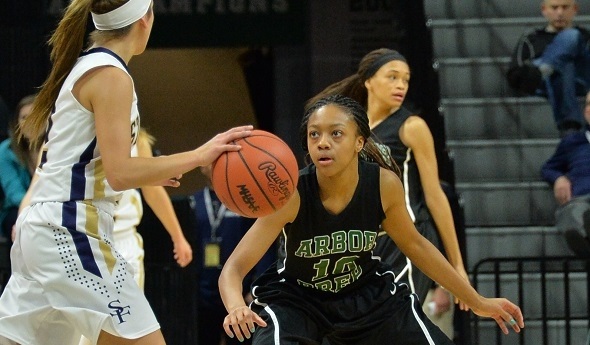
Ypsilanti Arbor Preparatory
Moving Down From Class B to Class C
Allen Park Cabrini
Detroit Central Collegiate
Detroit Benjamin Carson Science & Medicine
Harrison
Jackson Lumen Christi
Jonesville
Warren Michigan Collegiate
Moving Up From Class D to Class C
Detroit Randolph Technical
Detroit Universal Academy
Kimball Landmark Academy
Kingston
Munising
Newberry
Potterville
Rudyard
Moving Down From Class C to Class D
Auburn Hills Oakland Christian
Burton Madison Academy
Lutheran Westland
Mayville
Merrill
Saginaw Michigan Lutheran Seminary
New Postseason Eligible Tournament Schools in 2016-17
Brimley Ojibwe Charter
Center Line Michigan Math & Science
Detroit Cornerstone Leadership & Business
Detroit Delta Prep
Jackson Prep & Early College
Petoskey St. Michael Academy
Southfield Arts & Technology
Enrollment Breaks by Classes – 2016-17
(Number of schools in parentheses)
Class A: 881 and above (187 schools)
Class B: 412 – 880 (188)
Class C: 207 – 411 (188)
Class D: 206 and below (188)
The MHSAA is a private, not-for-profit corporation of voluntary membership by more than 1,400 public and private senior high schools and junior high/middle schools which exists to develop common rules for athletic eligibility and competition. No government funds or tax dollars support the MHSAA, which was the first such association nationally to not accept membership dues or tournament entry fees from schools. Member schools which enforce these rules are permitted to participate in MHSAA tournaments, which attract more than 1.4 million spectators each year.
PHOTO: Ypsilanti Arbor Prep won the Class C girls basketball championship earlier this month, but will compete in Class B next season.