


Be the Referee: 40-Second Play Clock
August 30, 2018
In this week's edition, assistant director Brent Rice explains how Michigan is continuing to experiment with a 40-second play clock in football.
Be The Referee is a series of short messages designed to help educate people on the rules of different sports, to help them better understand the art of officiating, and to recruit officials.
Below is this week's segment – 40-Second Play Clock - Listen
There’s an experiment taking place on a number of high school football fields across the state again this year. Michigan is experimenting with a 40-second play clock in football.
This is designed to provide more consistency from play to play as the ball must be snapped 40 seconds after the end of the previous play and is not dependent on the referee’s subjective signal.
When play is continuing without a stoppage, the 40-second play clock will be used. If play has been stopped for a time out or penalty, the play clock will be set at 25 seconds.
After two seasons, the feedback received from coaches and officials has been very positive, and there’s a possibility the Michigan experiment may become a new national playing rule soon.
Past editions
August 23: Football Rules Changes - Listen
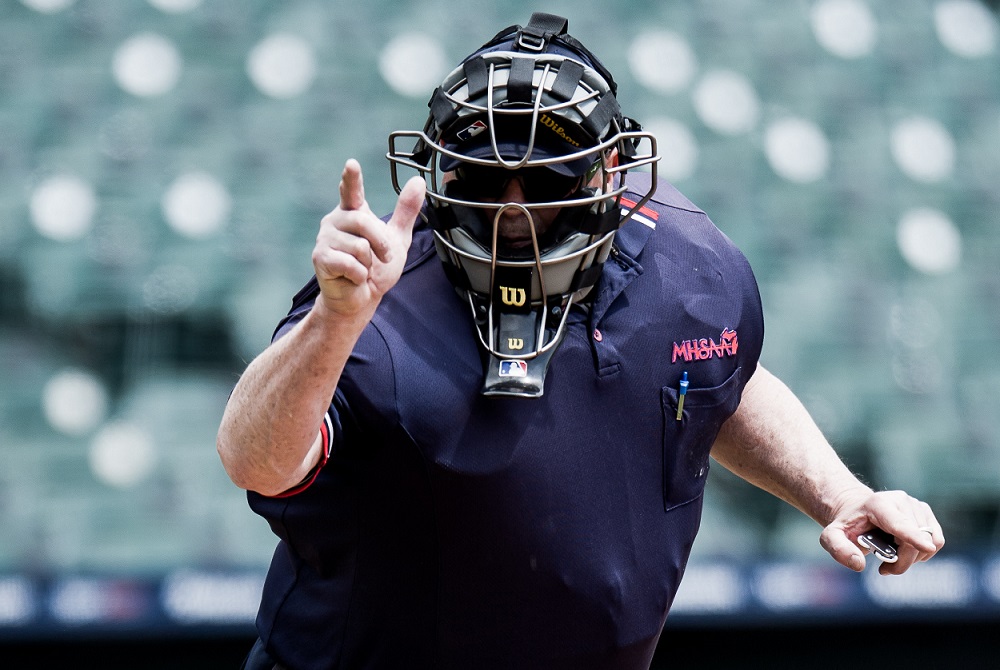
2021-22 MHSAA Officials Registration Underway
By
Geoff Kimmerly
MHSAA.com senior editor
June 29, 2021
The MHSAA is accepting registrations online or by mail for game officials for the 2021-22 school year.
The MHSAA annually receives registration by more than 9,000 officials, but in part due to COVID-19 precautions had just 7,968 during the 2020-21 school year – a decrease of nearly 14 percent from 2019-20.
“We are thankful for the leadership shown by our officials as they worked together to provide coverage of all levels of school sports events during this unpredictable year, but certainly we’re looking forward to refilling our ranks and taking some of the pressure off the many officials who worked nearly daily during the pandemic seasons,” said MHSAA assistant director Brent Rice, who supervises the officials program. “With the elimination of restrictions this spring and the return of full schedules anticipated this fall, there’s no better time for experienced officials to return and those interested in registering for the first time to become part of this essential and valued group.”
For all new and returning officials, those who register online again will receive a $5 discount off their processing fees. A $16 fee is charged for each sport in which an official wishes to register, and the online processing fee is $40. Officials submitting registration forms by mail or on a walk-up basis will incur a $45 processing fee. Officials registered in 2020-21 will be assessed a late fee of $30 for registration after Aug. 15. The processing fee includes liability insurance coverage up to $1 million for officials while working contests involving MHSAA schools.
Online registration can be accessed by clicking “Officials” on the home page of the MHSAA Website. Forms also are available online that can be printed and submitted by traditional mail to the MHSAA Office at 1661 Ramblewood Drive in East Lansing. More information about officials registration may be obtained by contacting the MHSAA by phone at (517) 332-5046 or by e-mail at [email protected].
There is an officials' registration test for first-time officials and officials who were not registered during the past school year. The test is derived from the MHSAA Officials Guidebook, which also is available on the Officials page of the MHSAA Website. Additional exams must be taken by those registering for football or basketball for the first time or those who were not registered for those sports during the previous school year. Manuals for both sports are available on the Officials page. New officials and those who didn’t officiate during 2020-21 also must complete the online MHSAA Principles of Officiating course, also available on the MHSAA Website.
There also are opportunities to officiate for students at least 14 years old and in grades 9-12 through the MHSAA Legacy Program. Juniors and seniors may officiate subvarsity contests, while freshmen and sophomores may officiate contests at the middle school/junior high levels. Mentor officials will work events with Legacy participants to provide guidance and support. Find information on the Legacy Program by clicking “REGISTER NOW” on the Officials page of the MHSAA Website.
PHOTO by Jamie McNinch.