

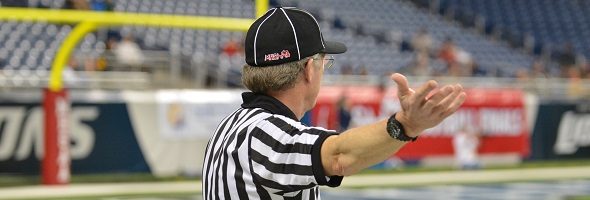
Be the Referee: Clipping Clipped
August 25, 2016
MHSAA assistant director Mark Uyl opens a new year of “Be the Referee” by explaining the latest rules change affecting blocking in football.
Be The Referee is a series of short messages designed to help educate people on the rules of different sports, to help them better understand the art of officiating, and to recruit officials.
Below is this week's segment – Clipping in the Free Blocking Zone - Listen
Most of the recent rules changes in high school football have all dealt with increasing player safety. The most significant change for the 2016 season focuses on safety, especially for offensive and defensive linemen.
For many years, the free blocking zone (the area between the two offensive tackles) was an area where two types of blocks – blocks below the waste and clipping, that are illegal on other parts of the field – were legal if done by linemen initially at the start of a play. For this season, clipping is now an illegal block, even in the free blocking zone, while blocks below the waste continue to be legal from in front.
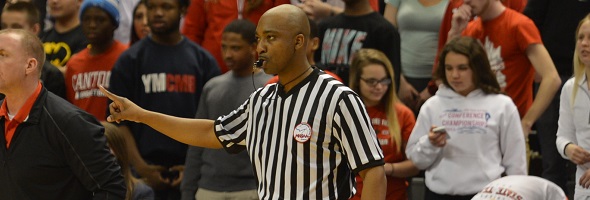
Be the Referee: Communication
December 17, 2015
This week, MHSAA assistant director Mark Uyl explains the expectations for officials working with coaches during basketball games.
Be The Referee is a series of short messages designed to help educate people on the rules of different sports, to help them better understand the art of officiating, and to recruit officials.
Below is this week's segment - Basketball Communication - Listen
The most challenging task in officiating any basketball game for referees is effectively working with coaches. In a perfect world, coaches would simply ask questions on plays they had questions or concerns about and the official would simply respond with a description of what he or she saw on the play.
The very best basketball officials keep the communication with coaches during a game a conversation, not an ongoing argument. Officials need to always be in control of their emotions, answer questions from coaches honestly and head off behavior early that is argumentative and unprofessional. Coaches and officials working together makes for a much better game as everyone in the gym – players, media members and spectators – take their cues for how coaches are acting. When coaches are professional with officials, the entire atmosphere is so much more positive.
Past editions:
Dec. 10: Basketball Excessive Contact - Listen
Nov. 26: Pregame Communication - Listen
Nov. 19: Trick Plays - Listen
Nov. 12: 7-Person Football Mechanics - Listen
Nov. 5: Make the Call: Personal Fouls - Listen
Oct. 29: Officials Demographics - Listen
Oct. 15: Make the Call: Intentional Grounding - Listen
Oct. 8: Playoff Selection - Listen
Oct. 1: Kick Returns - Listen
Sept. 24: Concussions - Listen
Sept. 17: Automatic First Downs - Listen
Sept. 10: Correcting a Down - Listen
Sept 3: Spearing - Listen
Aug. 27: Missed Field Goal - Listen