

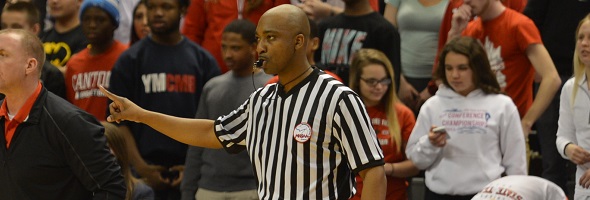
Be the Referee: Communication
December 17, 2015
This week, MHSAA assistant director Mark Uyl explains the expectations for officials working with coaches during basketball games.
Be The Referee is a series of short messages designed to help educate people on the rules of different sports, to help them better understand the art of officiating, and to recruit officials.
Below is this week's segment - Basketball Communication - Listen
The most challenging task in officiating any basketball game for referees is effectively working with coaches. In a perfect world, coaches would simply ask questions on plays they had questions or concerns about and the official would simply respond with a description of what he or she saw on the play.
The very best basketball officials keep the communication with coaches during a game a conversation, not an ongoing argument. Officials need to always be in control of their emotions, answer questions from coaches honestly and head off behavior early that is argumentative and unprofessional. Coaches and officials working together makes for a much better game as everyone in the gym – players, media members and spectators – take their cues for how coaches are acting. When coaches are professional with officials, the entire atmosphere is so much more positive.
Past editions:
Dec. 10: Basketball Excessive Contact - Listen
Nov. 26: Pregame Communication - Listen
Nov. 19: Trick Plays - Listen
Nov. 12: 7-Person Football Mechanics - Listen
Nov. 5: Make the Call: Personal Fouls - Listen
Oct. 29: Officials Demographics - Listen
Oct. 15: Make the Call: Intentional Grounding - Listen
Oct. 8: Playoff Selection - Listen
Oct. 1: Kick Returns - Listen
Sept. 24: Concussions - Listen
Sept. 17: Automatic First Downs - Listen
Sept. 10: Correcting a Down - Listen
Sept 3: Spearing - Listen
Aug. 27: Missed Field Goal - Listen
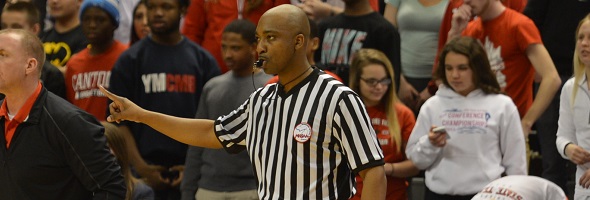
Be the Referee: Too Much TV
February 26, 2015
This week, MHSAA assistant director Mark Uyl explains how inaccuracies in TV play-by-play can lead fans to quote rules incorrectly.
Be The Referee is a series of short messages designed to help educate people on the rules of different sports, to help them better understand the art of officiating, and to recruit officials.
Below is this week's segment - Too Much TV - Listen
The over-saturation of sporting events on television has turned too many people into thinking they know it all about coaching and especially officiating.
This only gets worse when the television commentators themselves don’t know the rules. On a recent Sunday afternoon college basketball broadcast, the team trying to bring the ball upcourt had the ball knocked out of bounds twice by the defense, and the color commentator said the offensive team was down to 6 seconds to get the ball across the center line.
The fact is, whenever the ball is knocked out under those circumstances, the 10-second count resets; and whenever there’s a mistake on television like that, you can bet someone will take that as gospel and berate an official when it happens the next time they’re at a game.
Past editions
Feb. 16 - Video Clip Library - Listen
Feb. 9 - Cheer Safety - Listen
Feb. 2 - Basketball PA Announcers - Listen
Jan. 26 - Wrestling Health Concerns - Listen
Jan. 19 - Basketball Physical Contact - Listen
Jan. 12 - Video Review Part 2 - Listen
Dec. 29 - Video Review Part 1 - Listen
Dec. 17 - Registration Part 2 - Listen
Dec. 10 - Registration Part 1 - Listen
Dec. 3 - Legacy Program - Listen
Nov. 26 - Sideline Management - Listen
Nov. 19 - 7-Person Mechanics - Listen
Nov. 12 - Blocking Below the Waist - Listen
Nov. 5 - Tournament Selection - Listen
Oct. 29 - Uncatchable Pass - Listen
Oct. 22 - Preparation for Officials - Listen
Oct. 15 - Automatic First Downs - Listen
Oct. 8 - Officials & Injuries - Listen
Oct. 1 - Overtime - Listen
Sept. 25 - Field Goals - Listen
Sept. 18 - Tackle Box - Listen
Sept. 11 - Pass Interference - Listen
Aug. 25 - Targeting - Listen