

Be the Referee: Football Targeting
August 22, 2014
The series features MHSAA assistant director Mark Uyl's insights on officiating. These weekly messages can be heard on Mondays, Wednesdays and Fridays during the school year on The Drive With Jack Ebling on WVFN-AM, East Lansing.
Below is this week's segment:
"Be The Referee"
Aug. 25 - Targeting - Listen
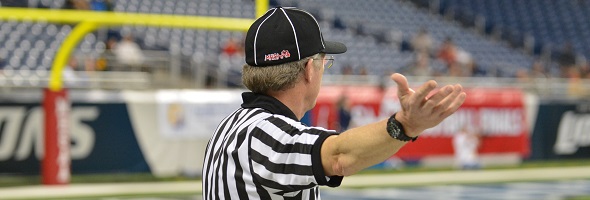
Today we are going to talk about one of the new rules changes for this fall’s high school football season, targeting. This is yet another example of player safety being the number one priority in our game.
Targeting deals with getting the “head” out of the game of football. Many times when you will see a targeting foul is when a player will use the top or the crown of his helmet to launch or propel himself into an opposing player, making that helmet to helmet contact, which can be so dangerous for both players involved.
When a targeting foul happens, the officials, if they judge it to be flagrant, can not only enforce a 15-yard penalty but also can eject the offending player.
Be the Referee: Fumble Out of Bounds
By
Paige Winne
MHSAA Marketing & Social Media Coordinator
August 25, 2026
Be The Referee is a series of short messages designed to help educate people on the rules of different sports, to help them better understand the art of officiating, and to recruit officials.
Below is this week's segment – Fumble Out of Bounds - Listen
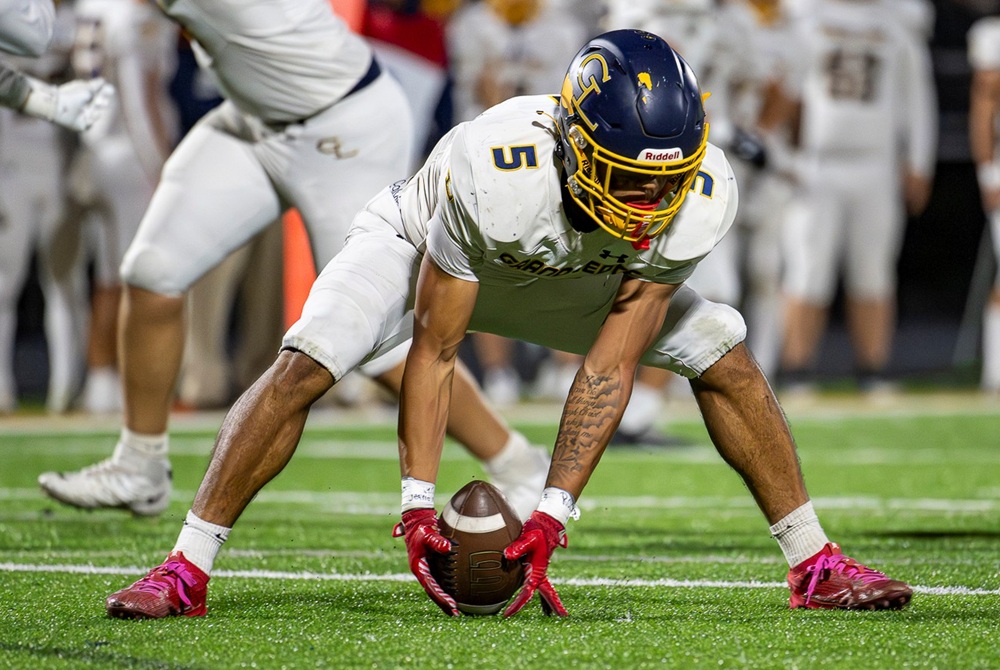
We are on the football field today, where the offense has the ball on their own 20-yard line. It’s 3rd-and 10. They run a draw play, with the running back gaining nine yards before fumbling at the 29 yard-line.
The fumbled ball goes forward to the 35-yard line before another offensive player recovers. Where should the ball be marked?
Because the ball was recovered in-bounds, it’s first down for the offense at the point of recovery, the 35-yard line.
If the ball had rolled out of bounds at the 35-yard line, before anyone could recover it, it would have been brought back to the spot of the fumble – the 29-yard line – making it 4th-and-1 for the offense.
(Photo by Larry Arreguin/Team Arreguin Photos.)