


Be the Referee: Pass Interference
September 9, 2014
This week, MHSAA assistant director Mark Uyl explains one of the toughest calls to make on the football field.
"Be the Referee" is designed to help educate people on the rules of different sports, to help them better understand the art of officiating and to recruit officials. The segment can be heard on Mondays, Wednesdays and Fridays during the school year on The Drive With Jack Ebling on WVFN-AM, East Lansing.
Below is this week's segment - Pass Interference - Listen
Today we’re going to talk about one of the most difficult calls for any football official – pass interference. It’s important to know that whenever a forward pass is thrown beyond the line of scrimmage that both players – the offensive receiver as well as the defender – each have an equal right to make a play on the football.
Now, not all contact will automatically result in a pass interference foul. The official must judge if that early contact before the ball arrives has placed one of the two players at a distinct disadvantage. When that contact does create the disadvantage, you have a foul for pass interference. When the contact is minimal and is simply incidental, no foul has occurred.
Past editions
Aug. 25 - Targeting - Listen
Sept. 4 - Concussions - Listen
Nearly 1,000 Officials Converge in Grand Rapids for Officiate Michigan Day
By
Geoff Kimmerly
MHSAA.com senior editor
August 5, 2026
GRAND RAPIDS – Nearly 1,000 MHSAA-registered officials – and some of the biggest names in officiating nationwide – attended Officiate Michigan Day on July 25 at DeVos Place.
Attendees enjoyed opportunities to hear football rules analyst and longtime official Mike Pereira and World Cup and Olympic soccer official Kari Seitz during the opening and closing addresses, respectively. They also took part in training sessions throughout the day including four that were sport-specific, with clinicians including several of the state’s highest-regarded officials at the high school level and some of the best-known at the collegiate and professional levels nationwide who grew up or reside in our state.
Above are highlights from the event and insights from several accomplished officials. Click for photos from throughout the day, from Adam Sheehan.
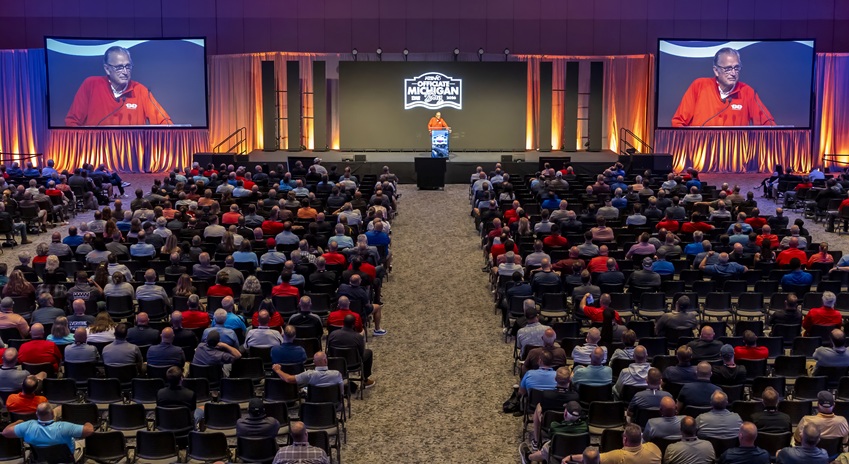
PHOTO Football rules analyst Mike Pereira speaks during the opening address at Officiate Michigan Day. (Photo by Adam Sheehan.)