

Be the Referee: Personal Fouls
November 5, 2015
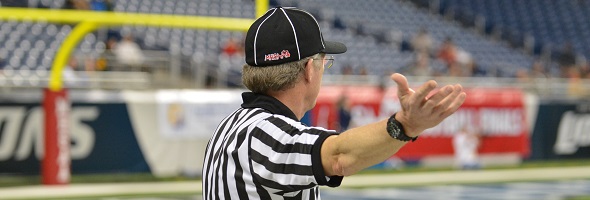
This week, MHSAA assistant director Mark Uyl explains how personal fouls are penalized at the high school level.
Be The Referee is a series of short messages designed to help educate people on the rules of different sports, to help them better understand the art of officiating, and to recruit officials.
Below is this week's segment - Make the Call: Personal Fouls - Listen
Late in a key game that’s tied, it’s third down and goal from the 12-yard line after a sack has pushed the offense back. On the third-down play, the quarterback has scrambled and is pulled down again for an apparent sack, but he is pulled to the ground by his facemask.
The officials throw the flag and correctly rule it’s a personal foul facemask. What’s the next down? Under high school rules, personal fouls are NOT an automatic first down. On this play, the officials would walk off the yardage penalty of half-the-distance (to the goal line) and we would replay third down. The only fouls that give the offense an automatic first down are the roughing fouls … roughing the kicker, passer, holder and long snapper.
Past editions:
Oct. 29: Officials Demographics - Listen
Oct. 15: Make the Call: Intentional Grounding - Listen
Oct. 8: Playoff Selection - Listen
Oct. 1: Kick Returns - Listen
Sept. 24: Concussions - Listen
Sept. 17: Automatic First Downs - Listen
Sept. 10: Correcting a Down - Listen
Sept 3: Spearing - Listen
Aug. 27: Missed Field Goal - Listen
Be the Referee: Goaltending vs. Basket Interference
By
Paige Winne
MHSAA Marketing & Social Media Coordinator
December 2, 2025
Be The Referee is a series of short messages designed to help educate people on the rules of different sports, to help them better understand the art of officiating, and to recruit officials.
Below is this week's segment – Goaltending vs. Basket Interference - Listen
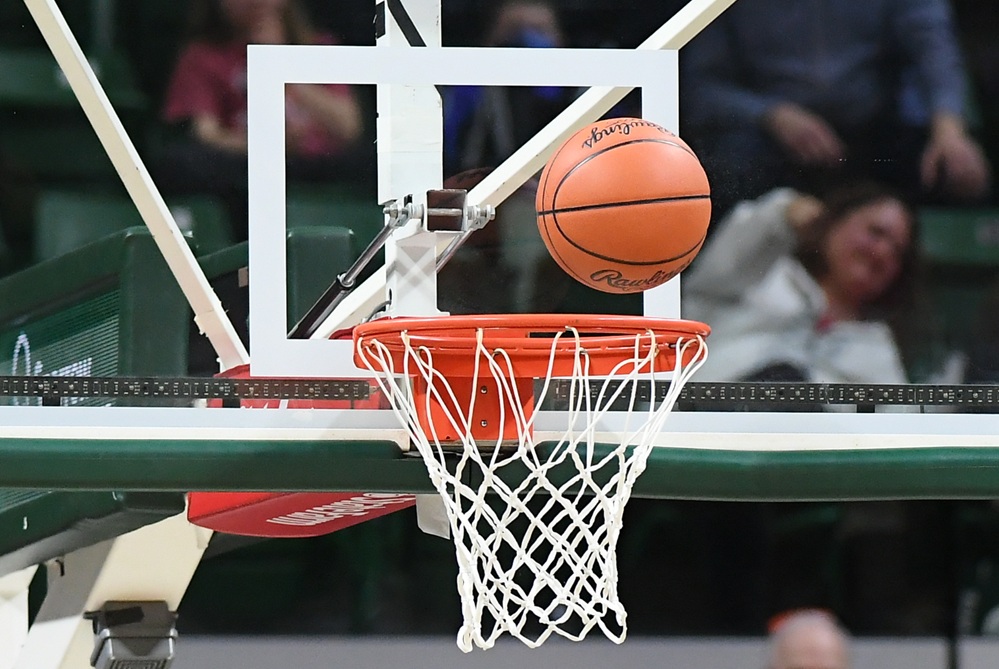
We’re on the basketball court today to talk about the differences between goaltending and basket interference.
Goaltending occurs when a player touches a shot that is on its downward flight and has a chance to go in.
Basket interference is when a player touches the ball when it is on the rim, or inside the cylinder above it.
An offensive player cannot be called for goaltending but can be called for basket interference.
And once a shot hits the backboard, it is automatically considered to be on a downward flight, even if it is still going up. It’s goaltending by the defense if they touch a shot with a chance to go in that has hit the backboard.
Previous 2025-26 editions
Nov. 25: Football Finals Instant Replay - Listen
Nov. 18: Volleyball Libero Uniforms - Listen
Nov. 11: Illegal Substitution/Participation - Listen
Nov. 4: Losing a Shoe - Listen
Oct. 28: Unusual Soccer Goals - Listen
Oct. 21: Field Hockey Penalty Stroke - Listen
Oct. 14: Tennis Double Hit - Listen
Oct. 7: Safety in Football - Listen
Sept. 30: Field Hockey Substitution - Listen
Sept 23: Multiple Contacts in Volleyball - Listen
Sept. 16: Soccer Penalty Kick - Listen
Sept. 9: Forward Fumble - Listen
Sept. 2: Field Hockey Basics - Listen
Aug. 26: Golf Ball Bounces Out - Listen