


Be the Referee: Preparation for Officials
September 21, 2017
This week, MHSAA assistant director Mark Uyl explains how football officials also prepare all week for Friday's big games, while lending their talents to various levels every weekend.
Be The Referee is a series of short messages designed to help educate people on the rules of different sports, to help them better understand the art of officiating, and to recruit officials.
Below is this week's segment – Preparation for Officials - Listen
Football is a game of preparation. During the week, the teams involved, the cheerleading squads and members of the marching band put in a great deal of work to be ready for Friday night. Officials are no different.
All across the state on Monday nights, referees attend local association meetings where they review film from the previous week’s game, talk about rules, coverages and mechanics, so that our team of officials are just as prepared and ready to go as the teams playing each and every Friday night.
In addition to Friday nights, many officials also work freshman and junior varsity games on Thursday, and will often work games on the weekend – whether it be small college all the way down to youth games – to give those young people on the field the best officiating possible.
Past editions
September 14: Always Stay Registered - Listen
September 7: Other Football Rules Changes - Listen
August 31: Pop-Up Onside Kicks - Listen
August 24: Blindside Blocks - Listen
Be the Referee: Volleyball Obstruction
By
Brent Rice
MHSAA Assistant Director
September 23, 2021
Be The Referee is a series of short messages designed to help educate people on the rules of different sports, to help them better understand the art of officiating, and to recruit officials.
Below is this week's segment – Volleyball Obstruction - Listen
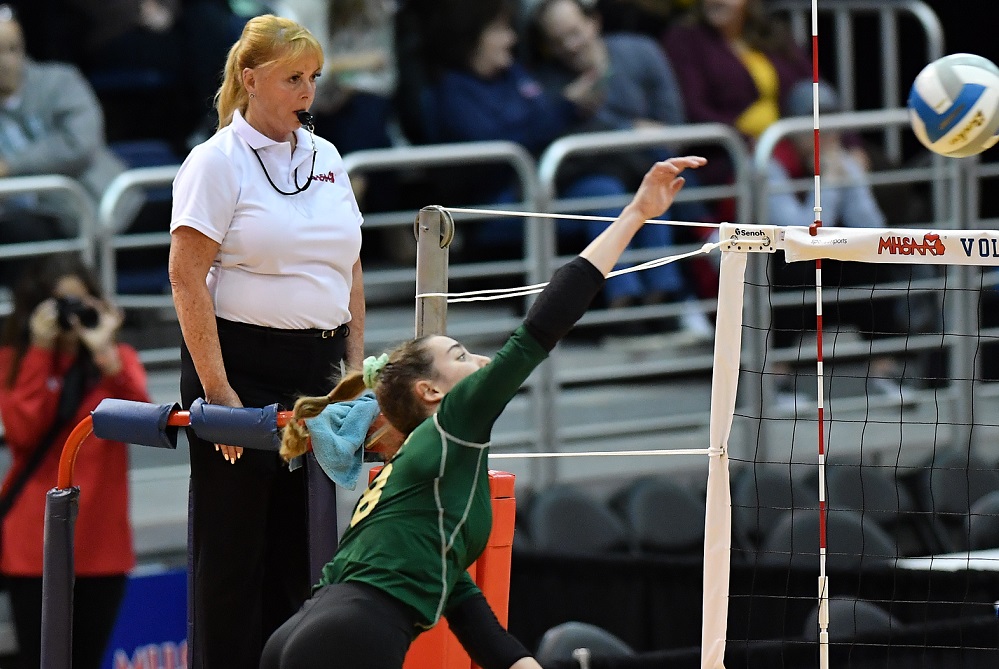
Ever wonder why in volleyball some balls hit into obstructions remain in play, while others are replayed, and some end the rally?
If a ball hits an obstruction over a playable area during a rally, and then is played by the same team, it has the same status as any other hit. However, that isn’t the case in all other instances.
If the ball hitting the wall or an object attached flush to the wall doesn’t actually interfere with a player’s legitimate effort to play the ball, the ball is dead and a loss of rally and point shall be awarded. If it does interfere with the playing of the ball, a replay is declared if the wall is less than six feet from the boundary.
If the ball hits a suspended backboard over the playable area, a replay will be declared as long as the referee believes the ball would have remained in play. Serves that hit any obstruction are a loss of rally and point.
Previous editions
Sept. 16: Catch or No Catch - Listen
Sept. 9: Intentional Grounding – Listen
Sept. 2: Pass Interference – Listen
Aug. 26: Protocols and Mechanics – Listen