

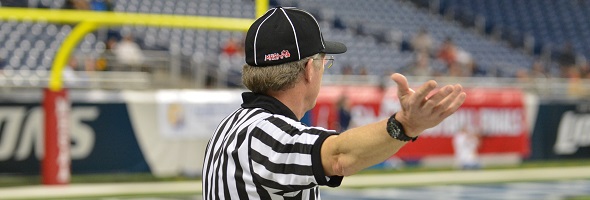
Be the Referee: Soccer Rule Change
September 13, 2018
In this week's edition, MHSAA officials coordinator Sam Davis explains a significant change in soccer regarding fouls in the penalty area.
Be The Referee is a series of short messages designed to help educate people on the rules of different sports, to help them better understand the art of officiating, and to recruit officials.
Below is this week's segment – Soccer Rules Change - Listen
There’s a big change in soccer rules this year on plays where a defender denies an obvious goal-scoring opportunity within his or her own penalty area.
The penalty has been amended depending on whether or not the referee determines that the defensive player was attempting to play the ball when committing the foul. If so, the defender will receive a yellow card rather than a red card – and a penalty kick will be awarded. This eliminates the previous double jeopardy on the play – a P-K and a red card.
Of course, in those circumstances where there was no attempt to play the ball, the defender is still disqualified. This brings the high school rule in line with college and international rules.
Past editions
September 3: You Make the Call: Face Guarding - Listen
August 30: 40-Second Play Clock - Listen
August 23: Football Rules Changes - Listen
Be the Referee: Automatic 1st Downs
October 29, 2020
This week, MHSAA assistant director Brent Rice explains how high school football rules differ from those at the collegiate and professional levels when it comes to awarding automatic first downs.
Be The Referee is a series of short messages designed to help educate people on the rules of different sports, to help them better understand the art of officiating, and to recruit officials.
Below is this week's segment - Automatic 1st Downs - Listen
Today we are going to talk about one of the biggest rule difference areas in high school football from those rules used in college and pro games, and that deals with automatic first downs.
When watching that college game on Saturday or the pro game on Sunday, all of us know there are several defensive fouls that give the offense an automatic first down. However, under high school rules, the opposite is true most of the time.
The only high school fouls that result in an automatic first down for the offense are the roughing fouls – roughing the passer, the kicker, the holder and the long snapper. Fouls such as defensive pass interference or any other personal foul do not bring an automatic first down under high school rules.
Past editions
10/22: You Make the Call: Illegal Kick - Listen
10/15: Toe the Line on Penalty Kicks - Listen
10/8: Disconcerting Acts - Listen
10/1: Ball Hits Soccer Referee - Listen
9/24: Clocking the Ball from the Shotgun - Listen