

Be the Referee: Soccer Rule Change
September 13, 2018
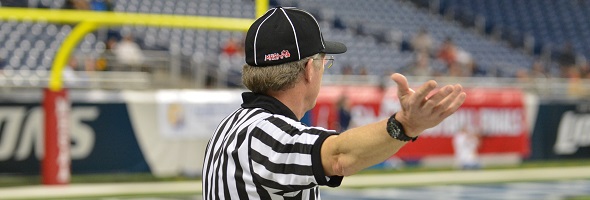
In this week's edition, MHSAA officials coordinator Sam Davis explains a significant change in soccer regarding fouls in the penalty area.
Be The Referee is a series of short messages designed to help educate people on the rules of different sports, to help them better understand the art of officiating, and to recruit officials.
Below is this week's segment – Soccer Rules Change - Listen
There’s a big change in soccer rules this year on plays where a defender denies an obvious goal-scoring opportunity within his or her own penalty area.
The penalty has been amended depending on whether or not the referee determines that the defensive player was attempting to play the ball when committing the foul. If so, the defender will receive a yellow card rather than a red card – and a penalty kick will be awarded. This eliminates the previous double jeopardy on the play – a P-K and a red card.
Of course, in those circumstances where there was no attempt to play the ball, the defender is still disqualified. This brings the high school rule in line with college and international rules.
Past editions
September 3: You Make the Call: Face Guarding - Listen
August 30: 40-Second Play Clock - Listen
August 23: Football Rules Changes - Listen
Metro Detroit Crew Recognized as September's "Crew of the Month" by Lions, MHSAA
By
Geoff Kimmerly
MHSAA.com senior editor
September 29, 2026
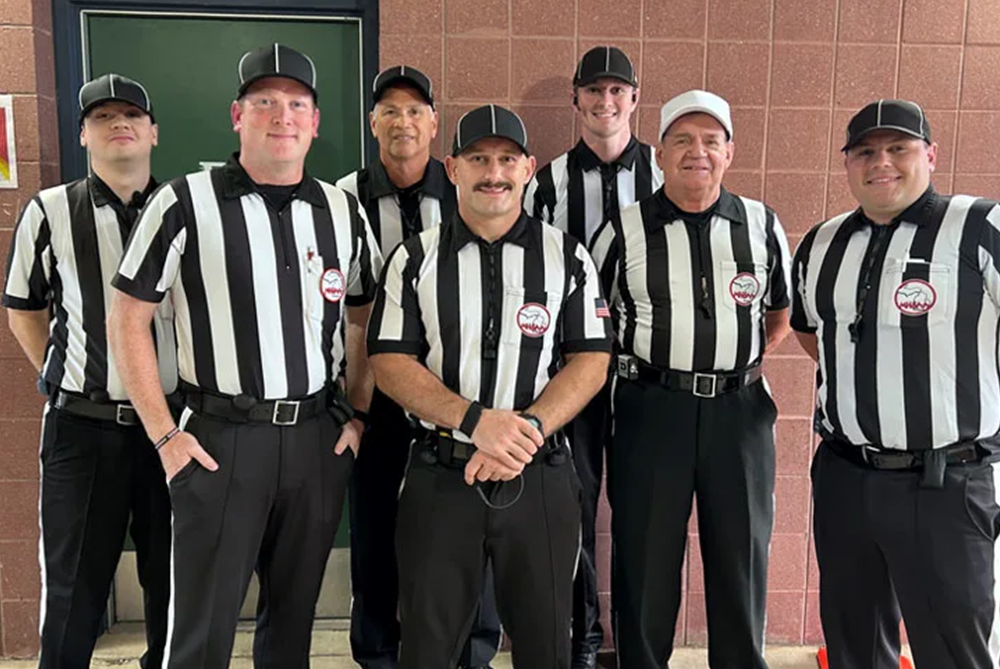
A Metro Detroit football officiating crew has been named the inaugural Michigan “High School Officiating Crew of the Month” by the Detroit Lions.
Shelby Township’s Mike Gentry and Craig Goepper, Grosse Pointe Woods’ David Prince, Ann Arbor’s Shane Smith, Roseville’s Scott Suminski and Jordan Pearson, and St. Clair Shores’ Carson Roose make up the crew, which combined has been part of officiating 10 MHSAA Finals, nine Semifinals and more than 50 District Finals. Gentry received the MHSAA’s Vern L. Norris Leadership in Officiating Award in 2017.
The crew also was recognized for its dedication to the avocation, participation as members of the Motor City Area Officials Association and recruitment of new officials.
The Lions, in partnership with the MHSAA and National Federation of State High School Associations (NFHS), will recognize an officiating crew monthly this season.