


Beyond Fairness
April 11, 2017
One of the lessons I learned decades ago when I was employed at the National Federation of State High School Associations (NFHS) is that sometimes the playing rules are not fair.
The NFHS is the publisher of playing rules for most high school sports, and its rule books govern competition for most of the contests for most of the high schools in the U.S.
But the NFHS doesn’t publish the most fair rules. On purpose.
The rules for the high school level attempt to do much more than promote competitive equity, or a balance between offense and defense; they also attempt – without compromising participant health and safety – to simplify the administration of the game.
Unlike Major League Baseball, where umpires officiate full-time, and professional basketball, football and ice hockey where they officiate nearly full-time, the officials at the high school level are part-timers. They have other jobs. This is their avocation, not their vocation.
So the NFHS develops and publishes rules that minimize exceptions to the rules. In football, for example, there are fewer variables for determining the spot where penalties are enforced.
At the high school level, the rule makers intend that the rules be – for players, coaches and officials alike – quicker to learn, simpler to remember, and easier to apply during the heat of contests.
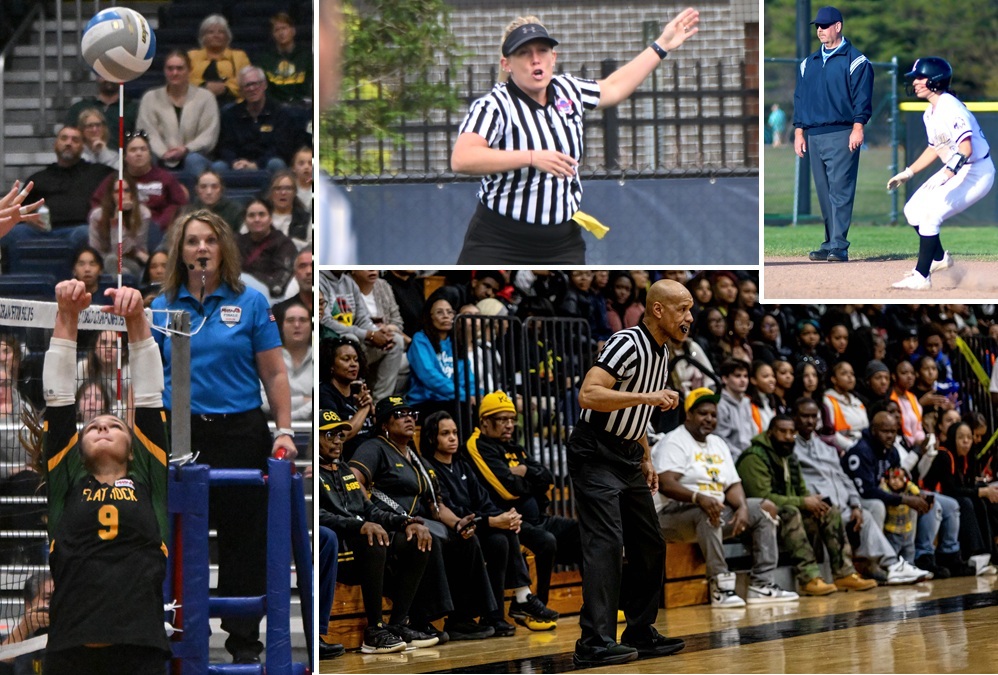
Officiate Michigan Day 2026 - Register to Join Us!
By
Geoff Kimmerly
MHSAA.com senior editor
May 19, 2026
Officiate Michigan Day 2026 will welcome 2,000 MHSAA-registered game officials to Grand Rapids on July 25 – and registration is available now for this historic gathering expected to draw participants from all over the state.
 Doors open at 7:30 a.m., with the first session at 9 a.m. at DeVos Place. The day-long event will feature dynamic speakers and presenters providing knowledge in several sports and all levels including collegiate and professional. We will be highlighting several of those speakers over the next many weeks on MHSAA.com and social media as part of the lead-up to the event.
Cost is $45 if officials register by the end of June, and $50 beginning July 1. More information is on the way; keep posted at MHSAA.com/OMD.
This will be the third Officiate Michigan Day, joining events in 2013 and 2018.
OMD will accompany the annual National Association of Sports Officials (NASO) Summit that will take place July 26-28, also at DeVos Place.