

Online Course Trains Leaders Nationwide
By
Geoff Kimmerly
MHSAA.com senior editor
August 11, 2015
By Geoff Kimmerly
Second Half editor
The valuable lessons student leaders have received over the last decade during Captains Clinics presented statewide by Michigan High School Athletic Association staff are now available to students nationwide and beyond as part of an online Captains Course produced by the MHSAA and available from the National Federation of State High School Associations on its Learning Center website.
The Captains Course, created over two years with assistance from Michigan State University’s Institute for the Study of Youth Sports (ISYS), is broken into 10 segments providing instruction on leadership styles and skills to how to handle situations faced by leaders of teams in any sport. A total of 20 past members of the MHSAA Student Advisory Council speak during the program, providing peer-to-peer guidance that has proven effective in student leadership campaigns.
The online Captains Course has been started 2,881 times since its release in July, including 802 times during the first 10 days of this month. The first MHSAA Captains Clinic was conducted in March 2005, and clinics are presented in person on a league-by-league basis to approximately 1,000 students each school year.
The online Captains Course is free and can be downloaded after an account is created on the NFHS Learning Center website at http://www.nfhslearn.com.
“Many student-athletes have characteristics that allow them to become leaders, but rarely do they receive lessons in how to be an effective team captain; this has been the goal of our Captains Clinics and is the aim of this Captains Course,” said MHSAA assistant director Andy Frushour, who coordinates the association’s student services programs and advises the Student Advisory Council. “Our in-person Captains Clinics are still a great way to deliver leadership lessons and to get students from rival schools to interact with each other in a fun and worthwhile way. But we can only do so many in-person clinics per year.
“With the online version, we can deliver the same message, albeit through a different format. And we can do it 24 hours a day, at the user’s convenience, using a medium that kids use like the rest of us use oxygen, and potentially delivering our captains message to exponentially more students than the in-person version; even to students outside of Michigan.”
The online Captains Course is an introductory program, with plans for two more advanced leadership courses that will be facilitated online but with activities and discussions to take place offline in local communities. The goal for the “hands-on” portion of later training courses will be for leaders to conduct interviews with coaches and administrators, write short answers and interact with teammates for a more transformational learning experience.
The first course is made up of 10, 10-minute segments, and takes about two hours to complete – but is meant to be completed over multiple days. The short “bite-sized” segments make it easier for students to digest all of the information being given to them, and are based on research by the Institute for the Study of Youth Sports. Doctoral students working with the institute serve as instructors during Captains Clinics.
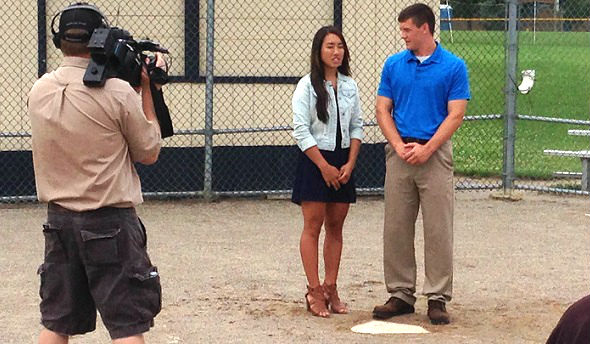
The Captains Course is hosted by recent high school graduates Caycee Turczyn of Lapeer High School and Connor Thomas of Marlette. Both were two-year members of the Student Advisory Council; Turczyn will begin studies this fall at the University of Michigan, while Thomas will start at Oakland University.
“All of the lessons are based on research conducted by MSU’s Institute for the Study of Youth Sports,” Frushour said. “Dr. Dan Gould and his doctoral students are rock stars in the field of youth and leadership development, and we are lucky to have them as partners on this project “
The Institute for the Study of Youth Sports was launched in 1978 to establish a world-class institute that would scientifically study the beneficial and detrimental effects of sports participation on children and youth and then work to maximize the beneficial effects. The mission of the Institute for the Study of Youth Sports is to provide leadership, scholarship and outreach that transforms the face of youth sports in ways that maximize the beneficial physical, psychological, and social effects of participation for children and youth while minimizing detrimental effects.
The Student Advisory Council is a 16-member group which provides feedback on issues impacting educational athletics from a student’s perspective, and also is involved in the operation of MHSAA championship events and other programming. Members of the Student Advisory Council serve for two years, beginning as juniors. Eight new members are selected annually to serve on the SAC, with nominations made by MHSAA member schools.
The MHSAA is a private, not-for-profit corporation of voluntary membership by more than 1,400 public and private senior high schools and junior high/middle schools which exists to develop common rules for athletic eligibility and competition. No government funds or tax dollars support the MHSAA, which was the first such association nationally to not accept membership dues or tournament entry fees from schools. Member schools which enforce these rules are permitted to participate in MHSAA tournaments, which attract more than 1.4 million spectators each year.
PHOTO: Lapeer's Caycee Turczyn and Marlette's Connor Thomas host the online Captains Course, with this segment shot at DeWitt High School.
Scholars & Athletes 2022: Class B
By
Geoff Kimmerly
MHSAA.com senior editor
February 15, 2022
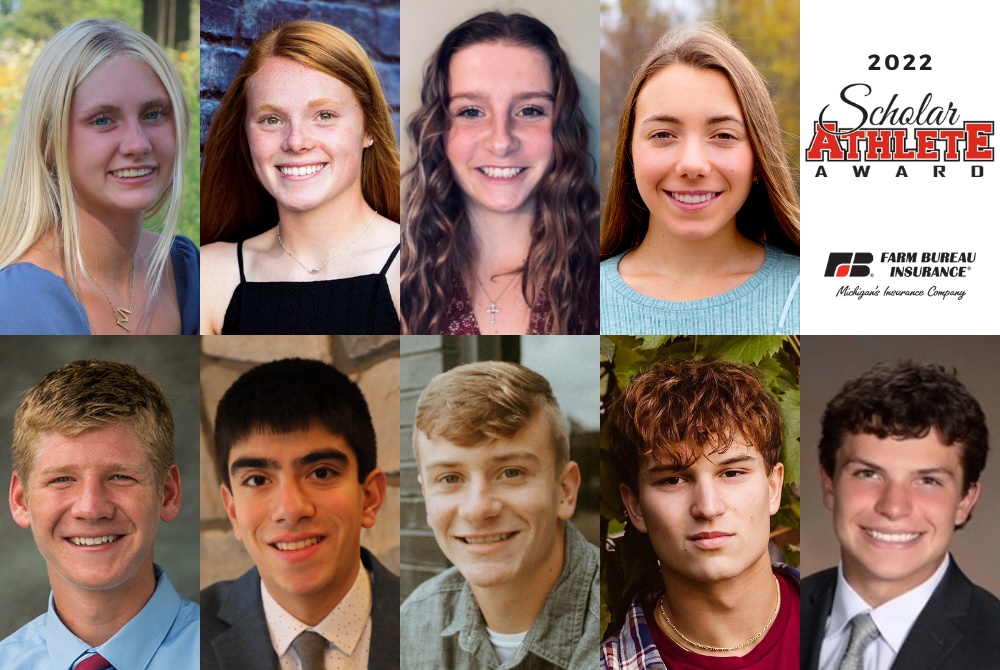
The Michigan High School Athletic Association has selected nine student-athletes from Class B member schools to receive scholarships through the MHSAA/Farm Bureau Insurance Scholar-Athlete Award program.

Farm Bureau Insurance, in its 33rd year of sponsoring the award, will give $2,000 college scholarships to 32 individuals who represent their member schools in at least one sport in which the Association sponsors a postseason tournament. The first 30 scholarships are awarded proportionately by school classification and the number of student-athletes involved in those classes; also, there are two at-large honorees who can come from any classification.
Students applying for the Scholar-Athlete Award must be carrying at least a 3.5 (on a 4.0 scale) grade-point average and have previously won a letter in a varsity sport in which the Michigan High School Athletic Association sponsors a postseason tournament. Other requirements for the applicants were to show active participation in other school and community activities and produce an essay on the importance of sportsmanship in educational athletics.
The 32 scholarship recipients will be recognized March 26 during the MHSAA Boys Basketball Finals at the Breslin Student Events Center in East Lansing.
The Class B Scholar-Athlete Award honorees are: Maggie Duba, Grand Rapids West Catholic; Whitney Farrell, Freeland; Claire Meacham, Montague; Rylee Tolson, Stockbridge; Derek Distelrath, St. Clair; Joseph Hayes, Shelby; Curtis Knapp, Jonesville; Michael A. Meneguzzo, Kingsford; and Jack Rellinger, Grand Rapids Catholic Central.
Overviews of the scholarship recipients of the Class B Scholar-Athlete Award follow. A quote from each recipient's essay also is included:
(NOTE: If an athlete intended to play and was part of a spring sports team in 2020, that sport is counted among the athlete’s total although the season was canceled due to COVID-19.)
 Maggie Duba, Grand Rapids West Catholic
Ran four seasons of varsity cross country, and will play her fourth of varsity lacrosse and participate in her fourth of track & field this spring. Qualified three times for MHSAA Finals in cross country and earned all-state as a senior. Also earned academic all-state and served as cross country team captain. Ranked second academically in class of 125 entering this school year carrying 4.375 GPA with 12 dual-enrollment college credits earned. Participating in National Honor Society and has served three years as student government class secretary. Serving as junior and senior class peer advocate and has participated in a variety of volunteer and community service efforts. Will attend University of San Diego and study business accountancy and economics with the intention of continuing to medical school and studying to become a general surgeon.
Essay Quote: “In the split moment that I threw away an opportunity to achieve all-state, a position that I had prioritized for the five months of training before, I remembered that this is all supposed to be fun. … By sacrificing the race, I gained something much more important than posting my best time. I grew in humility and developed a new perspective on sports and competing.”
 Whitney Farrell, Freeland
Playing fourth season of varsity basketball, ran four seasons of cross country and will participate in her fourth of track & field in the spring. Qualified for MHSAA Finals in cross country and track and helped 2019 basketball team to Division 2 runner-up finish. Earned all-state in cross country and track and all-conference in basketball, and served as captain of all three teams. Serving third year on student council and second as part of National Honor Society, and also participating in fourth years of Be The Change club and Students Leading Students. Served as youth basketball coach and referee throughout high school. Will attend Ferris State University and study architecture.
Essay Quote: “Prior to my 2019-20 varsity basketball season, I truly believed that good sportsmanship was offering to help an opponent up off the court or shaking every single opponent's hand after a game. I had participated in sports since the age of 3 and that was sportsmanship in action. However, my experience with and understanding of sportsmanship completely changed throughout the 2019-20 basketball season … (as) each of our opponents was metaphorically helping us up off the court by recognizing the loss of our beloved coach.”
 Claire Meacham, Montague
Playing third season of varsity basketball, played two seasons of varsity golf and will participate in her third season of track & field this spring; also played varsity volleyball as a freshman and varsity softball as a junior. Helped golf team to two MHSAA Finals championships, the track team to a Regional victory and the basketball team to league and District titles. Earned all-state recognition in golf and academic all-state in track and golf, and served as captain of track and basketball teams. Participating in second year of National Honor Society and has served as chapter president, and is serving second year as part of student senate. Participated in Future Farmers of America and DECA throughout high school, serving as a DECA officer and reaching state finals competition as part of both. Participates in various volunteer efforts as part of church and community organizations. Is undecided where she will attend college but intends to study civil engineering.
Essay Quote: “No matter the outcome, every athlete, coach, and individual has to remember that we are all part of a bigger game. We are all striving to improve the game and ourselves through personal growth and dedication. We are supposed to be preparing our athletes to be model citizens who set standards for what is right and just, on and off the court.”
 Rylee Tolson, Stockbridge
Playing third season of varsity basketball, ran four seasons of cross country and participated two seasons in track & field. Qualified for MHSAA Cross Country Finals all four seasons, earned all-state three times and won Lower Peninsula Division 3 title as a sophomore. Served as captain of cross country and track teams. Serving fourth year on student council including second as an executive officer, and has served as class vice president. Participating in second year of National Honor Society and serving as chapter president. Playing fourth years of marching and concert band and third of jazz band, and served as section leader for drumline. Participating in third years of Fellowship of Christian Athletes and peer-to-peer assistance program. Will attend University of Michigan and study kinesiology.
Essay Quote: “I try my best to be a support system for everyone around me all of the time. Supporting others includes time outside of sports. Tutoring after school before practice, waking up early to prepare for a National Honors Society meeting, or helping a teammate during lunch with a class that I have already taken allows me to help my peers strive to be their best academically.”
 Derek Distelrath, St. Clair
Played four seasons of varsity tennis and is playing his first of varsity basketball this winter. Finished No. 1 singles runner-up in Lower Peninsula Division 3 as a sophomore and made semifinals as a junior and senior. Won United States Tennis Association Midwest singles and national doubles championships. Earned academic all-state in tennis all four high school seasons and twice served as team captain. Participating in third year of National Honor Society and serving as vice president, and participating in second year of student council and serving as spirit corps leader. Participating in fourth year on St. Clair County Community Foundation Youth Advisory Council, including second on executive board. Served as youth tennis coach throughout high school and as youth basketball coach as a senior. Will attend Western Michigan University and study business analytics and statistics.
Essay Quote: “Compete intensely but honor and respect opponents. If athletes transfer this lesson into life, the world would be a much better place because we would take the time to get to know people who differ from us and treat each other with honor and respect. We would seek to unite people instead of divide them.”
 Joseph Hayes, Shelby
Playing fourth season of varsity basketball, played three of boys soccer and will play third of baseball in the spring. Helped soccer team to Regional championship and baseball team to District title. Earned all-league and all-District in soccer and all-conference recognition in basketball. Served as soccer team captain multiple seasons. Participating in second year of National Honor Society and has served as president, and also participating in fourth year of local Youth Advisory Council. Played two years in school band earning “1” ratings, and has participated in 4-H throughout high school earning “A” awards for showing of livestock. Is undecided where he will attend college but intends to study business and entrepreneurship.
Essay Quote: “One of the things that I dislike the most as an athlete is not just losing, but losing to a team full of players that are disrespectful to me and my team. Being a good sport during high school educational athletics is very important. Learning how to control your emotions and demonstrate great sportsmanship at a young age will lead you to demonstrate those qualities as an adult.”
 Curtis Knapp, Jonesville
Playing third season of varsity basketball and played four seasons of varsity football. Earned all-state in football and set three school records in the fall. Earned Big 8 Conference Leadership Award multiple years and served as captain of both varsity teams. Carries 4.022 GPA. Serving fourth year as student council class president and participating in second year of National Honor Society. Participating in fourth year of Students Against Destructive Decisions and is a leader of that group as well. Has participated in various volunteer efforts with Rotary Club, Habitat for Humanity and 4-H. Started and owns lawn and landscaping business. Will attend Hillsdale College and study economics.
Essay Quote: “My definition of sportsmanship is the general respect you have for another team or player. … I have grown so much as a person through my four years in high school sports. I am thankful for the opportunity to build relationships with not only people from my own school, but also people that I have played in sports. I learned that sportsmanship is the most important part of sports, and that the overall goal is to have fun.”
 Michael A. Meneguzzo, Kingsford
Playing third season of varsity basketball, played two of varsity football and will compete in third of track & field in the spring; also played varsity tennis as a freshman. Holds multiple school football records and earned all-Upper Peninsula recognition in that sport. Earned runner-up finish at Track & Field Finals. Served as captain of football and basketball teams. Participating in second year of National Honor Society and fourth of key club. Served as school’s representative on Youth Coalition and as French club vice president. Served more than 100 hours of volunteer service including for American Red Cross, Salvation Army and at youth football and basketball camps. Is undecided where he will attend college, but intends to study business.
Essay Quote: “I have always been very competitive. … (But) whenever I exhibited poor body language or questionable sportsmanship, my dad would talk to me after the game about how my actions affect the team and also, how they make me look as an athlete. My dad … has always held me to a different level than other players when it came to sportsmanship and body language during a competition.”
 Jack Rellinger, Grand Rapids Catholic Central
Played three seasons of varsity football and will play second of varsity lacrosse in the spring; also played two seasons of subvarsity basketball. Helped football team to three MHSAA Finals championships and lacrosse team to District title. Earned all-league in football and academic all-state in lacrosse, and served as captain of lacrosse team and subvarsity basketball teams. Carries 4.5 GPA and posted “5” score on six Advanced Placement exams as a junior. Received National Merit Scholarship “commended” recognition and earned Harvard Book Award. Serving as head boy for his house as part of student government. Serving second year as student ambassador for Van Andel Institute biomedical research organization and participating in second year of National Honor Society. Is leaning toward attending Notre Dame University and intends to study computer engineering.
Essay Quote: “I think this is what sportsmanship is really all about. An appreciation for the game and the players objectively, regardless of the outcome. When you really step back to look at it, wins and losses make up such a small part of what makes high school sports great. These sports are made special through the bonds formed and shared between coaches, players, and even opponents, as well as a true, unbridled appreciation for the game.”
Other Class B girls finalists for the Scholar-Athlete Award were: Elise Rose Johnson, Benzie Central; Sydni Mudge, Birch Run; Claire Thomson, Clawson; Faith Breinager, Frankenmuth; Emma Kerkau, Frankenmuth; Sophia Argyle, Freeland; Haley Zerlaut, Fremont; Magdalaina Menghini, Kingsford; Mallory Moore, Ortonville Brandon; Paige Thwing, Ortonville Brandon; Alina Stanczak, Pontiac Notre Dame Prep; and Ashley Bower, Portland.
Other Class B boys finalists for the Scholar-Athlete Award were: Zachary Elmouchi, Ada Forest Hills Eastern; Thomas Hamann, Ann Arbor Father Gabriel Richard; Jeff Ren, Bloomfield Hills Cranbrook Kingswood; Jace DeRosia, Chelsea; Jared Hanson, Escanaba; Liam Anderson, Essexville Garber; Alex Duley, Freeland; Seth Thompson, Manistee; Jerome Korten, Marshall; Cale Coppess, Montague; and Bennett Blase Hitzelberger, Richmond.
The Class C and D scholarship award recipients were announced Feb. 8, and the Class A honorees will be announced Feb. 22.
Farm Bureau Insurance of Michigan was founded in 1949 by Michigan farmers who wanted an insurance company that worked as hard as they did. Those values still guide the company today and are a big reason why it is known as Michigan’s Insurance Company, dedicated to protecting the farms, families, and businesses of this great state. Farm Bureau Insurance agents across Michigan provide a full range of insurance services—life, home, auto, farm, business, retirement, Lake Estate®, and more—protecting nearly 500,000 Michigan policyholders.
The MHSAA is a private, not-for-profit corporation of voluntary membership by more than 1,500 public and private senior high schools and junior high/middle schools which exists to develop common rules for athletic eligibility and competition. No government funds or tax dollars support the MHSAA, which was the first such association nationally to not accept membership dues or tournament entry fees from schools. Member schools which enforce these rules are permitted to participate in MHSAA tournaments, which attract more than 1.4 million spectators each year.