

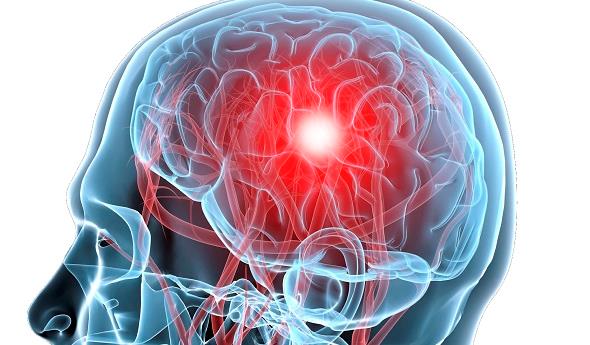
Concussion Care: Signs & Symptoms to Watch
October 27, 2020

Henry Ford Health System
When you experience a blow to the head, knowing whether you've suffered a concussion isn't always clear cut.
Head injuries have a range of physical, psychological and intellectual effects — and only a small number of people lose consciousness.
"It's critical for parents, coaches, players and trainers to recognize the potential signs and symptoms of a concussion," says Jeffrey Kutcher, M.D., a sports neurologist who treats athletes at the Henry Ford Kutcher Clinic for Concussion and Sports Neurology. "The basic rule is that a concussion can affect any aspect of brain function."
Signs of Concussion
The Latin root of the word "concussion" means "to shake violently" — which makes sense. Concussions happen when there's a combination of movement and impact. So, any injury that involves a hit to the head — a fall, collision or hard hit by a heavy object — could cause one. So could a hit to the body that causes the head to move quickly.
"But every brain injury is different," Dr. Kutcher says. "Some symptoms show up right away while others develop gradually over days."
Here are common concussion symptoms to watch for — both immediately following a head injury and in the hours and days after:
Physical Concussion Symptoms
- Changes in sleep patterns
- Difficulty with balance
- Dizziness or lightheadedness
- Fatigue
- Headache
- Light sensitivity
- Nausea
- Numbness or tingling
- Sensitivity to sound
- Visual problems
- Vomiting
Emotional Concussion Symptoms
- Anxiety
- Depression
- Irritability
- Mood swings
Cognitive Concussion Symptoms
- Confusion
- Difficulty concentrating
- Feeling "slow" or "foggy"
- Memory problems
Diagnosing Concussion: Getting It Right
One reason concussions are frequently misdiagnosed is because they're assessed on the field or courtside during game play or practice. Coaches, trainers and parents often make lightning fast decisions about whether symptoms, such as headache, nausea and light sensitivity, are signs of concussion.
"Unfortunately, it’s more complicated than completing a concussion checklist. Everyone — and every concussion — is different. So, observers shouldn’t be diagnosing a head injury on the spot, but rather making a triage decision for safety. They should leave the diagnosis to the medical professionals," Dr. Kutcher says. In fact, those in-the-moment assessments are wrong about half of the time.
People should focus instead on getting immediate, emergency care for anyone who displays the following signs and symptoms right after a hit:
- Difficulty walking
- Weakness on one or both sides
- Not waking up
- Repeated vomiting
- Persistent confusion
- Seizures
- Unconsciousness
No matter how hard (or lightly) you think you've been hit, it's important to take head injury symptoms seriously. Even a seemingly minor blow could have a major impact. A complete evaluation by a medical professional will not only determine whether you have a concussion, it can also identify more serious, or even life-threatening, concerns.
"In every case, medical professionals are better equipped to assess the extent of the damage if you have a comprehensive baseline evaluation on file," Dr. Kutcher says. This thorough evaluation with a sports neurologist, including a complete family and neurological history, can act as a critical point of reference when trainers and medical professionals are trying to diagnose or manage a concussion.
Dr. Jeffrey Kutcher is a sports neurologist and the medical director of the Henry Ford Kutcher Clinic for Concussion and Sports Neurology.
Want to learn more? Henry Ford Health System sports medicine experts are treating the whole athlete, in a whole new way. From nutrition to neurology, and from injury prevention to treatment of sports-related conditions, they can give your athlete a unique game plan.
Visit henryford.com/sports or call (313) 972-4216 for an appointment within 24 business hours.
The Inherent Risk of Sport Specialization
April 30, 2018
 By Bob Gardner
Executive Director of the National Federation of State High School Associations
One of the responsibilities that parents take most seriously is protecting their children from injury, whether it is buckling seat belts in a car or wearing a helmet while riding a bike. And when their kids become teenagers and want to participate in sports or other activities, parents do everything they can to keep their sons and daughters from getting hurt.
But not all injuries are caused by a twist, fall, collision or accident. Many are caused when young athletes repeat the same athletic activity so often that muscles, ligaments, tendons and bones don’t have time to recover—especially among middle school and high school students. These injuries can end promising careers, cost families tens of thousands of dollars, squash dreams and literally change lives.
Examples include elbow and arm injuries to teenagers who play baseball or softball all year long, shoulder injuries to year-round swimmers, wrist and elbow injuries to gymnasts, and stress fractures to soccer players.
The culprit, most often, is what’s commonly known as “sport specialization,” the process of playing the same sport all year long with the goal of either gaining a competitive edge or earning a college scholarship. It involves intense, year-round training in a single sport.
Research shows that sports specialization is putting teenage athletes at risk. According to a study commissioned by the National Federation of State High School Associations (NFHS) and conducted by researchers from the University of Wisconsin, high school athletes who specialize in a single sport are 70 percent more likely to suffer an injury during their playing season than those who play multiple sports.
The American Academy of Orthopedic Surgeons says much the same. It reports that “overuse injuries” (injuries caused when an athletic activity is repeated so often that parts of the body do not have enough time to heal) are responsible for nearly half of all sports injuries to middle school and high school students.
There is a solution. Young athletes should be encouraged to play multiple sports.
When student-athletes cross-train, they work different muscle groups and joints which, in fact, results in better overall conditioning. They also develop a new set of athletic skills like hand-eye coordination, balance, endurance, explosion and agility that are transferable to their primary sport. It’s no coincidence that 30 of the 32 first-round picks in the 2017 National Football League draft played multiple sports in high school.
Parents can play a key role in preventing these overuse injuries by encouraging their kids to play multiple sports rather than pushing them to specialize in one sport. They will have more fun, will be less likely to suffer burnout and will actually become better athletes.