

Be the Referee: Soccer Shootouts
By
Sam Davis
MHSAA Director of Officials
October 18, 2022
Be The Referee is a series of short messages designed to help educate people on the rules of different sports, to help them better understand the art of officiating, and to recruit officials.
Below is this week's segment – Soccer Shootouts - Listen
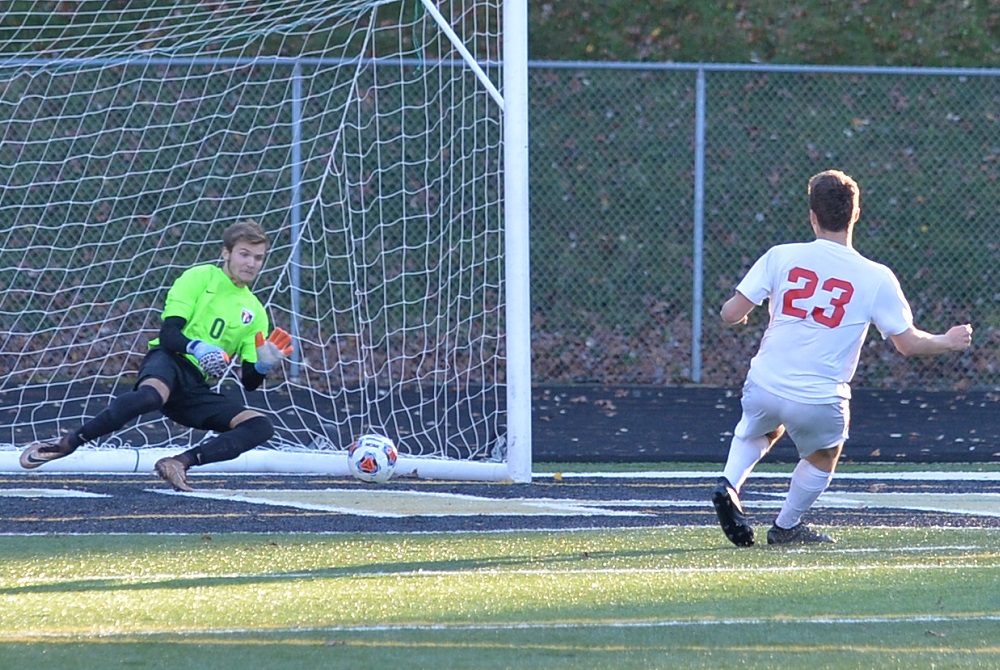
It’s tournament time for boys soccer, and that means the return of the shootout. In the regular season, games can end in a tie. But postseason games need to have a winner. If a game is tied at the end of regulation and the 20-minute overtime period, we move to a shootout.
Each team gets five attempts from the penalty spot, alternating between teams. If after five attempts, the teams still remain tied, it moves to one kick for each team until the tie is broken.
Now what happens when a kick is stopped by the keeper but has enough spin on it to roll back across the goal line?
That’s a goal. A shootout attempt isn’t complete until the ball stops moving, goes out of play or the referee stops play. Just because a goalie initially stops an attempt does not mean the play is over.
Previous Editions:
Oct. 11: Safety in End Zone - Listen
Oct. 4: Football Overtime Penalty - Listen
Sept. 27: Kickoff Goal - Listen
Sept. 20: Soccer Timing - Listen
Sept. 13: Volleyball Replays - Listen
Sept. 6: Switching Sides - Listen
Aug. 30: Play Clock - Listen
Aug. 23: Intentional Grounding Change - Listen

Be the Referee: Fumble Out of Bounds
By
Paige Winne
MHSAA Director of Brand Management
August 25, 2026
Be The Referee is a series of short messages designed to help educate people on the rules of different sports, to help them better understand the art of officiating, and to recruit officials.
Below is this week's segment – Fumble Out of Bounds - Listen
We are on the football field today, where the offense has the ball on their own 20-yard line. It’s 3rd-and 10. They run a draw play, with the running back gaining nine yards before fumbling at the 29 yard-line.
The fumbled ball goes forward to the 35-yard line before another offensive player recovers. Where should the ball be marked?
Because the ball was recovered in-bounds, it’s first down for the offense at the point of recovery, the 35-yard line.
If the ball had rolled out of bounds at the 35-yard line, before anyone could recover it, it would have been brought back to the spot of the fumble – the 29-yard line – making it 4th-and-1 for the offense.
(Photo by Larry Arreguin/Team Arreguin Photos.)