

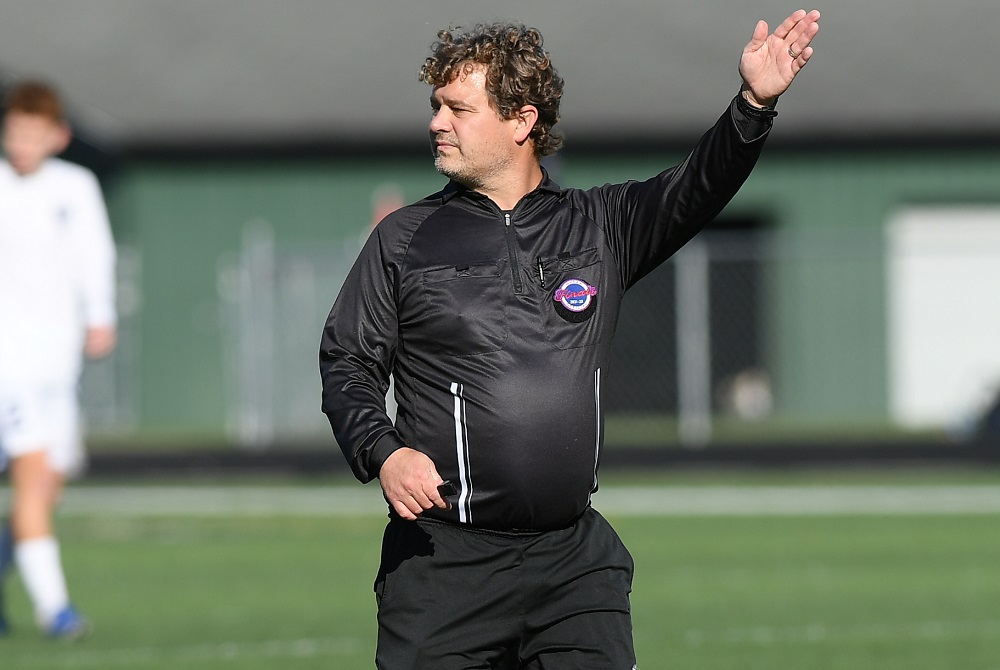
Be the Referee: Soccer Timing
By
Sam Davis
MHSAA Director of Officials
September 20, 2022
Be The Referee is a series of short messages designed to help educate people on the rules of different sports, to help them better understand the art of officiating, and to recruit officials.
Below is this week's segment – Soccer Timing - Listen
One of the biggest complaints people make about professional soccer is never knowing how much time is really left in the game. The clock counts up from zero, and the referee can add time at their discretion.
But that’s not the case in high school soccer.
To start with, halves are 40 minutes, not 45. The clock starts at 40 and counts down. And when players are injured and the ball is not in play, the clock will stop and then restart when action is ready to continue.
In the last five minutes of the game, the clock stops for substitutions by the leading team, so a coach can’t stall by sending in a new player. When the clock hits zero and the buzzer sounds … the game is over. There’s no guessing how much added time there is – the end of the game is the end of the game.
Previous Editions:
Sept. 13: Volleyball Replays - Listen
Sept. 6: Switching Sides - Listen
Aug. 30: Play Clock - Listen
Aug. 23: Intentional Grounding Change - Listen
Nearly 1,000 Officials Converge in Grand Rapids for Officiate Michigan Day
By
Geoff Kimmerly
MHSAA.com senior editor
August 5, 2026
GRAND RAPIDS – Nearly 1,000 MHSAA-registered officials – and some of the biggest names in officiating nationwide – attended Officiate Michigan Day on July 25 at DeVos Place.
Attendees enjoyed opportunities to hear football rules analyst and longtime official Mike Pereira and World Cup and Olympic soccer official Kari Seitz during the opening and closing addresses, respectively. They also took part in training sessions throughout the day including four that were sport-specific, with clinicians including several of the state’s highest-regarded officials at the high school level and some of the best-known at the collegiate and professional levels nationwide who grew up or reside in our state.
Above are highlights from the event and insights from several accomplished officials. Click for photos from throughout the day, from Adam Sheehan.
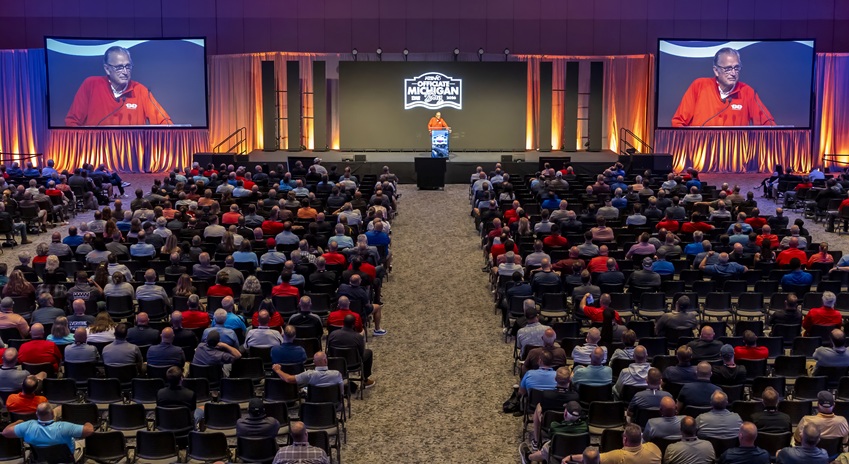
PHOTO Football rules analyst Mike Pereira speaks during the opening address at Officiate Michigan Day. (Photo by Adam Sheehan.)