

Be the Referee: Soccer Timing
By
Sam Davis
MHSAA Director of Officials
September 20, 2022
Be The Referee is a series of short messages designed to help educate people on the rules of different sports, to help them better understand the art of officiating, and to recruit officials.
Below is this week's segment – Soccer Timing - Listen
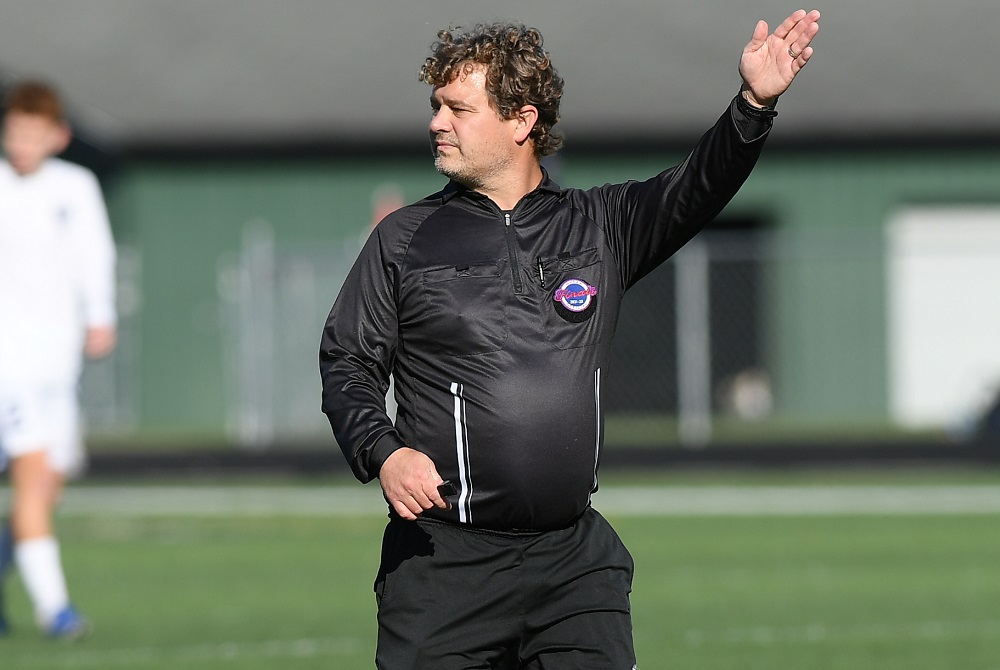
One of the biggest complaints people make about professional soccer is never knowing how much time is really left in the game. The clock counts up from zero, and the referee can add time at their discretion.
But that’s not the case in high school soccer.
To start with, halves are 40 minutes, not 45. The clock starts at 40 and counts down. And when players are injured and the ball is not in play, the clock will stop and then restart when action is ready to continue.
In the last five minutes of the game, the clock stops for substitutions by the leading team, so a coach can’t stall by sending in a new player. When the clock hits zero and the buzzer sounds … the game is over. There’s no guessing how much added time there is – the end of the game is the end of the game.
Previous Editions:
Sept. 13: Volleyball Replays - Listen
Sept. 6: Switching Sides - Listen
Aug. 30: Play Clock - Listen
Aug. 23: Intentional Grounding Change - Listen
Bloomfield Hills' Persistence Pays Off with Dream Finish, 1st Championship
By
Perry A. Farrell
Special for MHSAA.com
June 17, 2022
EAST LANSING – Ava Badallo momentarily made her dream come true by scoring in the first half of Friday's Division 1 soccer championship game at Michigan State’s DeMartin Stadium.
But an offsides penalty nullified what would have been a rare goal against one of the state's stingiest defenses.
Undaunted, the Bloomfield Hills senior forward scored again off a great assist from Brooke Green at 5 minutes, 44 seconds into the second half – just the eighth goal Northville had given up all season. The Black Hawks could sense the upset against the unbeaten Mustangs.
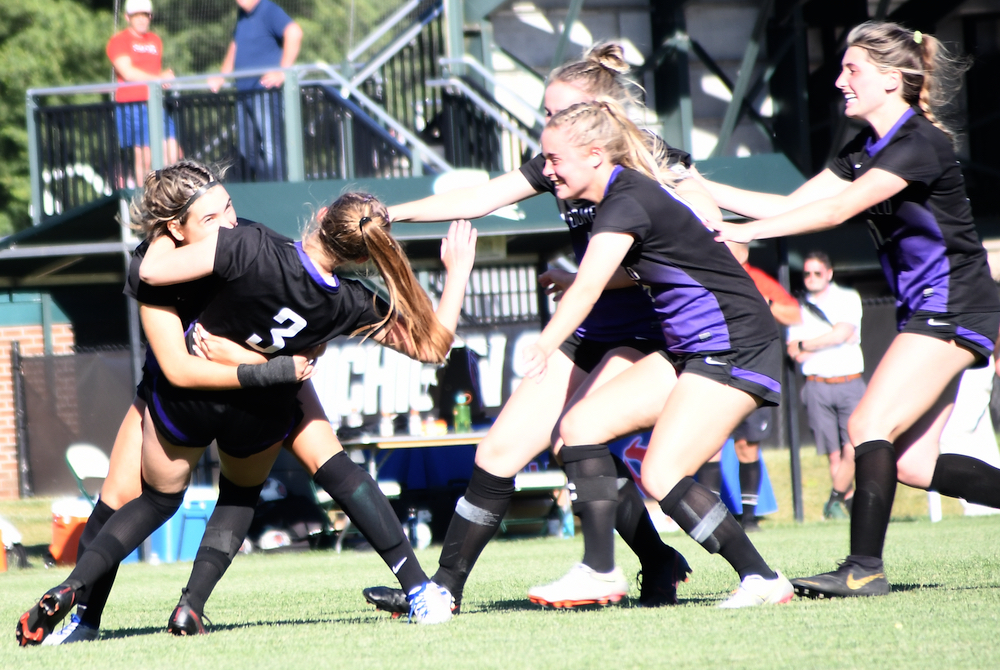
Ultimately the game went to a shootout, and it was one more Badallo goal that put Bloomfield Hills up 4-1 and clinched an overall 2-1 victory over the previously-unbeaten Mustangs – earning the Black Hawks' their first Finals championship in girls soccer.
“I think the goal they disallowed was an indirect kick,’’ said Badallo. “We finally got it going and … it was kind of a letdown, but we knew this game was going to be a struggle.
“We finally got those goals. We ended up finishing up in the PK. I don’t even know how to explain the feeling. I’m so just happy Jenica (Opdahl) came up with those big saves. I was able to go in there with a lot of confidence.’’
Opdahl, Bloomfield Hills’ sophomore keeper, said she used a ploy to confuse the Northville shooters.
“I stood to one side leaving one side of the net wide open,’’ she said. “So, I knew they were going to shoot it that way. It worked.’’
Drew Martin, Esther Rosett and Emma Merchant scored during the shootout before Badallo’s clincher. Caroline Meloche scored Northville’s shootout goal.
 “I can’t even believe it,’’ said Merchant, whose goal made it 3-1. “We practice penalty kicks every single day, 15 minutes every practice. To see all our hard work pay off is indescribable.’’
It was a battle of stingy defenses colliding in a struggle that lasted through regulation and overtime.
The second period of overtime saw Bloomfield Hills’ Avary Hall also put the ball into the net, but the goal was called off because of offsides.
Badallo’s second-period score was her 17th goal of the season, and none had been bigger.
“We always talk about the golden minutes,’’ said Black Hawks coach Alan Zakaria. “I was proud of the resilience we showed. You score a goal and have great energy, and it’s disallowed. Our girls responded in a big way. What a great player (Badallo). Our goalkeeper made some great saves. Unbelievable resilience to pull it out.’’
The Mustangs’ Kate Gonzalez got Northville on the board at the 15:27 mark of the second half with a header off an assist from Lauren Moraitis, her 24th, to tie the game at 1-1.
The Black Hawks (15-2-3) were playing in their first Final and entered the contest having won or tied their last 14 games, while Northville had two runner-up finishes, the most recent in 2014.
Led by nine seniors, the Mustangs hadn’t given up more than one goal in a game all season, posting 16 shutouts on their way to the championship while allowing just seven goals. The Black Hawks posted 11 shutouts this spring.
Bloomfield Hills pressed the action early Friday and had a couple of chances to score but the Mustangs defense, as usual this year, held tough.
Halfway through the first half Northville’s offense started peppering shots at Opdahl, but she was up to the task. Northville played five midfielders in an attempt to put pressure on the Black Hawks’ defense, generating scoring chances.
The Mustangs (18-1-5) had a pair of scoring chances as the second half began to wind down before Gonzalez sent in the equalizer.
“I thought we had some momentum when Kate scored,’’ said Northville coach Jeannine Reddy. “I thought both teams played great. It’s tough to lose that way. It was a good Division 1 state final. Both teams battled. You don’t want that to be your last memory.”
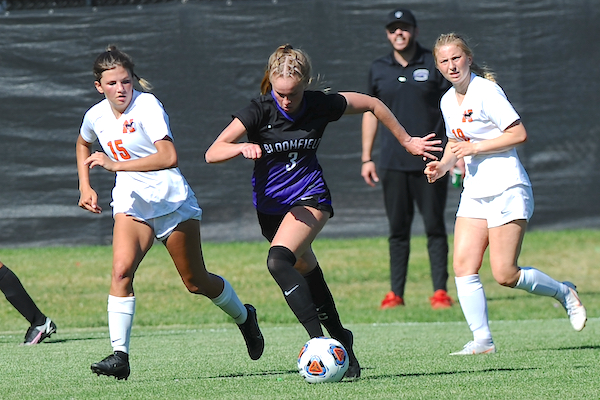
PHOTOS (Top) Bloomfield Hills celebrates its first Finals championship Friday at DeMartin Stadium. (Middle) The Black Hawks’ Drew Martin (3) controls play with Northville’s Avery Peters (15) in pursuit.