

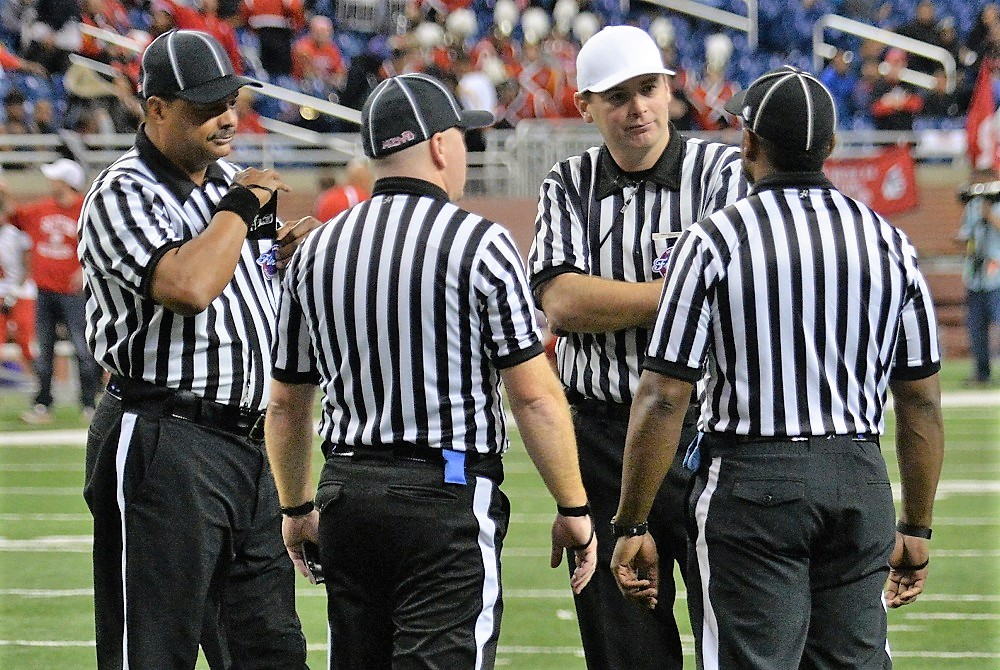
Be the Referee: Safety in End Zone
By
Geoff Kimmerly
MHSAA.com senior editor
October 11, 2022
Be The Referee is a series of short messages designed to help educate people on the rules of different sports, to help them better understand the art of officiating, and to recruit officials.
Below is this week's segment – Safety in End Zone - Listen
Team A has the ball on its own 3-yard line – facing a 4th-and-10. The quarterback drops back into the end zone, and just before he’s about to be sacked, he throws the ball away.
Out comes the flag for intentional grounding – which would give the defense two points and force Team A to kick off. But the coach of the team on defense would rather decline the penalty and take over at the 3-yard line. Can he do that?
Not exactly.
While he can decline the penalty, the result of the play is the same. A safety for the defense. If the penalty is accepted, the enforcement is from the end zone resulting in a safety. Incomplete illegal passes end the play where the pass is made, so even if the penalty is declined, it’s a safety because the play ended behind the goal line.
Previous Editions:
Oct. 4: Football Overtime Penalty - Listen
Sept. 27: Kickoff Goal - Listen
Sept. 20: Soccer Timing - Listen
Sept. 13: Volleyball Replays - Listen
Sept. 6: Switching Sides - Listen
Aug. 30: Play Clock - Listen
Aug. 23: Intentional Grounding Change - Listen
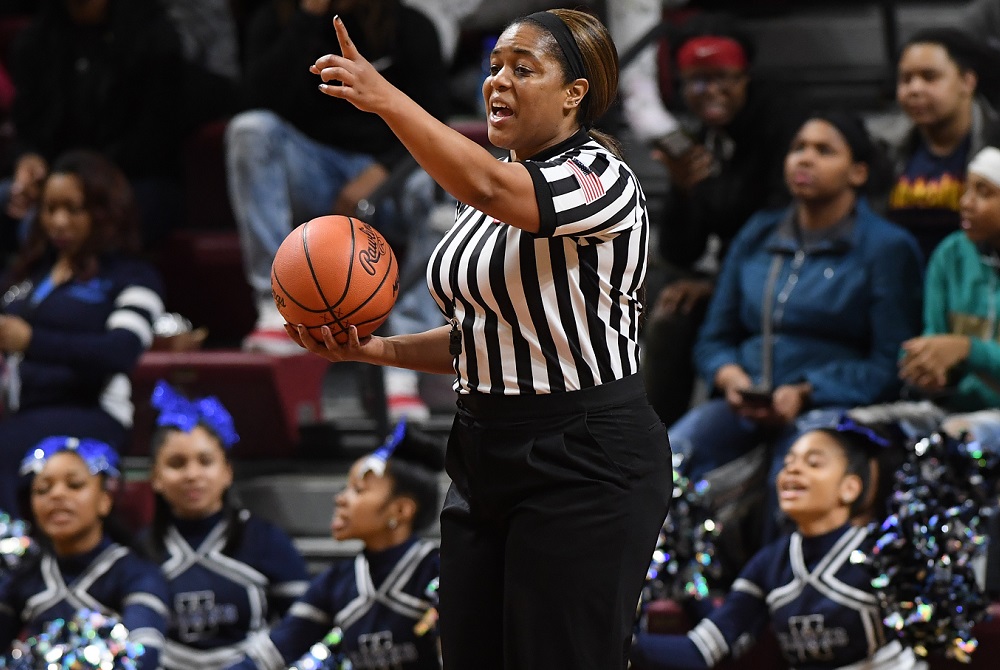
Be the Referee: Winter Officials Mechanics
By
Sam Davis
MHSAA Director of Officials
December 9, 2021
Be The Referee is a series of short messages designed to help educate people on the rules of different sports, to help them better understand the art of officiating, and to recruit officials.
Below is this week's segment – Winter Officials Mechanics - Listen
This season, MHSAA officials will return to the courts, mats and ice under some different conditions than over the past 20 months.
Other than a few select instances, all MHSAA protocols, procedures and playing rules have returned to what they were pre-COVID.
This means the jump ball in basketball returns, postgame handshakes will be permitted as each school sees fit, and traditional ball-handling by officials for free throws and throw-ins is back.
Of course, individual schools may retain certain precautionary measures, and officials are always permitted to use personal medical protective equipment.
The health and welfare of athletes, coaches and spectators is our No. 1 priority, and compliance with all local school district and health department mandates is required.
Previous editions
Nov. 26: Instant Replay - Listen
Nov. 11: Tourney Selection - Listen
Nov. 4: Receiver Carried Out of End Zone – Listen
Oct. 28: Volleyball Back-Row Block – Listen
Oct. 21: Soccer Disallowed Goal – Listen
Sept 30: Field Goal Falls Short – Listen
Sept. 23: Volleyball Obstruction – Listen
Sept. 16: Catch or No Catch – Listen
Sept. 9: Intentional Grounding – Listen
Sept. 2: Pass Interference – Listen
Aug. 26: Protocols and Mechanics – Listen