

Be the Referee: Swim Turn Judges
By
Sam Davis
MHSAA Director of Officials
November 8, 2022
Be The Referee is a series of short messages designed to help educate people on the rules of different sports, to help them better understand the art of officiating, and to recruit officials.
Below is this week's segment – Swim Turn Judges - Listen
Did you know the officials in swimming do more than make sure everyone dives in at the same time?
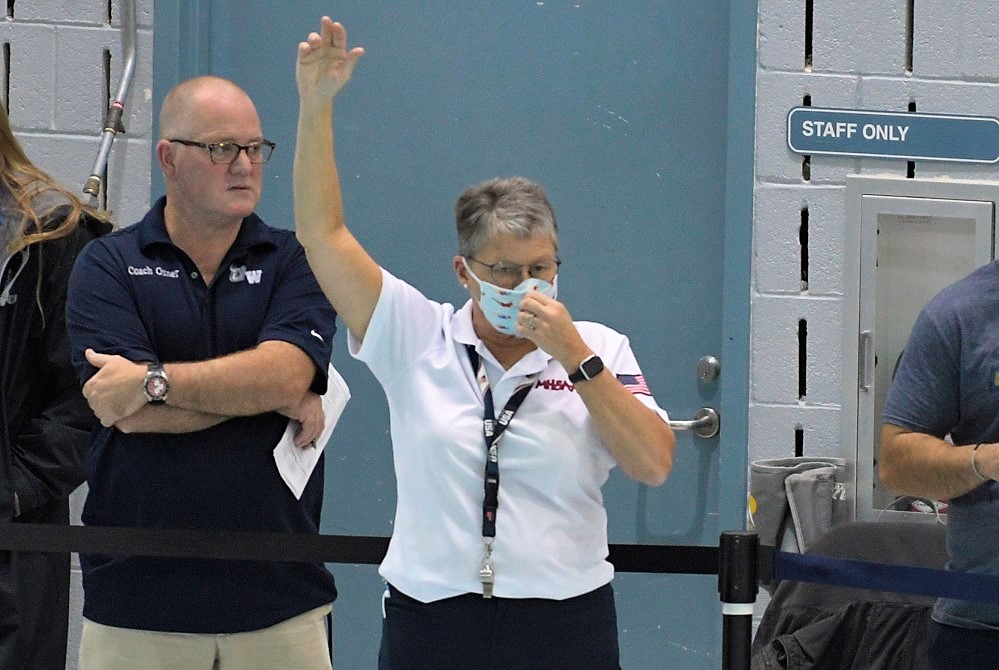
Each race has a turn judge who is positioned in line with the end wall. Their job is to make sure each swimmer is executing the proper stroke during his or her turn.
For example, if you are swimming the individual medley and are in the backstroke lap, you must turn while using the backstroke. You can’t go into the breaststroke while turning. If you do, the turn judge will signal to the referee by placing one hand overhead with an open palm, and then report it to the referee after the conclusion of the race.
The referee will then decide if the turn was legal or if the swimmer should be disqualified.
Previous Editions:
Oct. 25: Soccer Referee Jersey Colors - Listen
Oct. 18: Cross Country Tie-Breaker - Listen
Oct. 11: Soccer Shootouts - Listen
Oct. 11: Safety in End Zone - Listen
Oct. 4: Football Overtime Penalty - Listen
Sept. 27: Kickoff Goal - Listen
Sept. 20: Soccer Timing - Listen
Sept. 13: Volleyball Replays - Listen
Sept. 6: Switching Sides - Listen
Aug. 30: Play Clock - Listen
Aug. 23: Intentional Grounding Change - Listen

Be the Referee: Missed Field Goal
August 27, 2015
This week, MHSAA assistant director Mark Uyl kicks off the second season of "Be the Referee" with a "You Make the Call" on what happens after a missed field goal rolls out of bounds.
Be The Referee is a series of short messages designed to help educate people on the rules of different sports, to help them better understand the art of officiating, and to recruit officials.
Below is this week's segment - Missed Field Goal - Listen
Let’s get everyone in “football game shape” with the following You Make The Call.
One team has the chance to kick a 50-yard field goal just before halftime. As the kicker approaches the ball being held at the 40-yard line, his plant leg slips and the kick comes up well short and wide as it rolls out of bounds at the 4-yard line. Under high school rules, where will the team that forced the bad kick next snap the ball?
Believe it or not, under high school rules, missed field goals that roll out of bounds before reaching the goal line are treated just like a punt! The new offense will put the ball in play, first and 10, from the 4-yard line.