

Be the Referee: Back Row Setter
By
Paige Winne
MHSAA Director of Brand Management
November 12, 2024
Be The Referee is a series of short messages designed to help educate people on the rules of different sports, to help them better understand the art of officiating, and to recruit officials.
Below is this week's segment – Back Row Setter - Listen
We’re on the volleyball court for today’s “You Make the Call.”
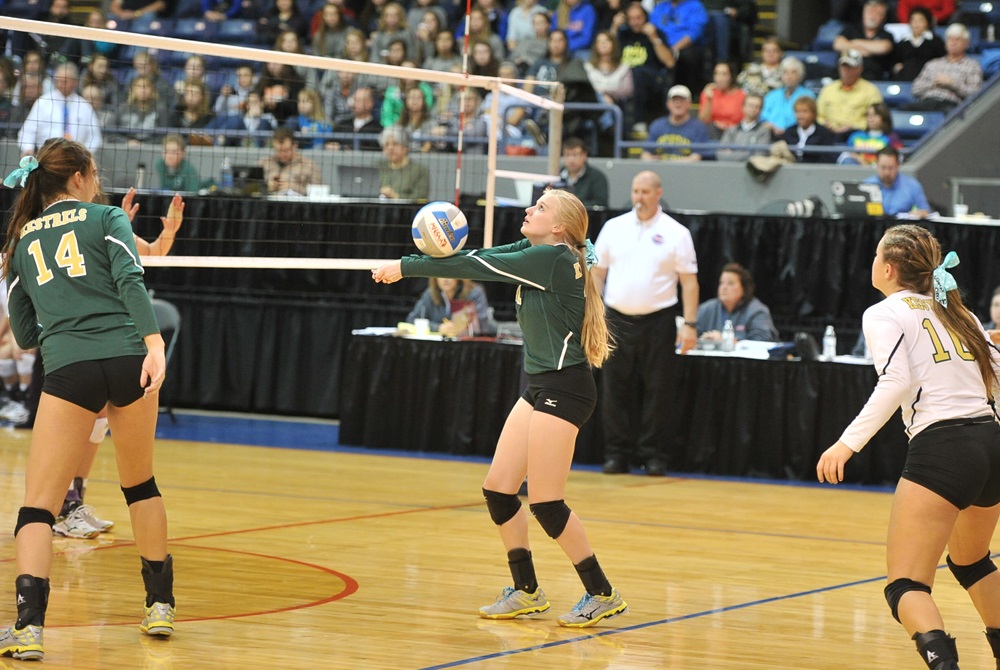
Team A serves the ball over net. Team B’s number 9 passes, or bumps the ball up toward the net, where number 2 tips it over for a point.
But number 2 is a back row setter and moved to the front row on the serve.
Is this a legal play?
If you said it depends … you are correct.
A back row setter can move to the front row and play the ball over the net as long as the entire ball is NOT above the net.
If the ball is completely above the net, then the back row setter is not allowed to play it over the net from the front row.
Previous 2024-25 Editions
Nov. 5: Football OT - Listen
Oct. 29: Officials Registration - Listen
Oct. 22: Volleyball Serve - Listen
Oct. 15: "You Make the Call" - Soccer Offside - Listen
Oct. 8: Roughing the Passer - Listen
Oct. 1: Abnormal Course Condition - Listen
Sept. 25: Tennis Nets - Listen
Sept. 18: Libero - Listen
Sept. 10: Cross Country Uniforms - Listen
Sept. 3: Soccer Handling - Listen
Aug. 24: Football Holding - Listen
Be the Referee: Football Holding
By
Sam Davis
MHSAA Director of Officials
August 27, 2024
Be The Referee is a series of short messages designed to help educate people on the rules of different sports, to help them better understand the art of officiating, and to recruit officials.
Below is this week's segment – Football Holding - Listen
In football, it’s often said that holding happens on every play. But does it?
When an offensive player uses their hands or arms to illegally restrain a defensive player – that’s holding. This typically happens when blockers grab or pull defensive players away from their path – impeding their ability to make a play. The penalty is 10 yards from the previous spot.
Defensive players can be flagged for holding as well. That’s also a 10-yard penalty. An example of defensive holding is when a cornerback grabs a receiver to slow him down before the ball is thrown. If that same contact happens while the pass is in the air – then it’s pass interference. Defensive pass interference is a 15-yard penalty.
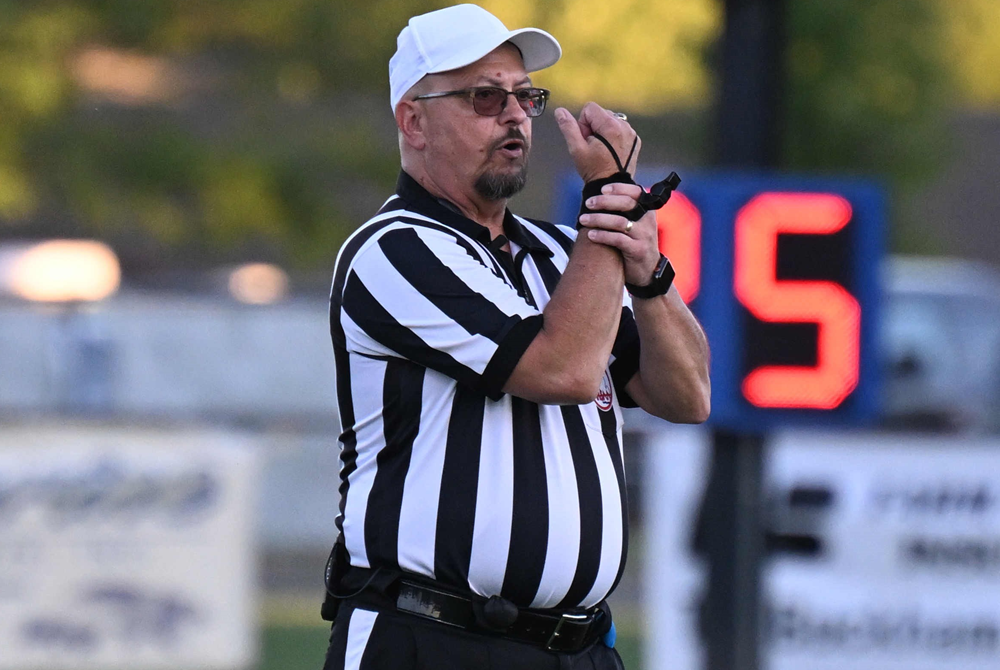
PHOTO A football official signals holding during a 2023 game. (Photo by Gary Shook.)