

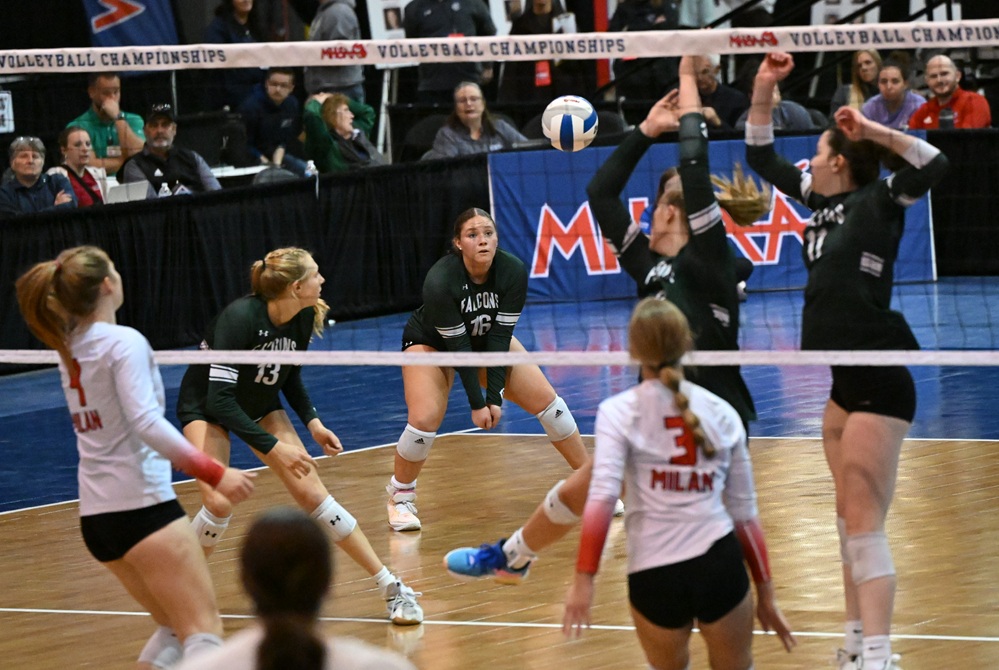
Be the Referee: Illegal Attack
By
Paige Winne
MHSAA Director of Brand Management
November 11, 2026
Be The Referee is a series of short messages designed to help educate people on the rules of different sports, to help them better understand the art of officiating, and to recruit officials.
Below is this week's segment – Illegal Attack - Listen
A volleyball scenario for you today:
A back-row player attacks the ball from in front of the attack line and the ball is higher than the net. Is this allowed?
Sort of.
Simply being a back-row player and contacting the ball higher than the net in front of the attack line is not illegal.
Completing the attack makes it illegal.
An attack is considered complete when the ball either crosses the net completely or is legally contacted by the opponent.
The referee should wait until the attack is completed before making the call.
If this happens, the play is whistled dead for an illegal attack.
Previous 2026-27 editions
Nov. 3: Pass Interference - Listen
Oct. 27: Field Hockey Substitutions - Listen
Oct. 20: Foot Save in Volleyball - Listen
Oct. 13: Soccer Advantage - Listen
Oct. 6: Defensive Holding - Listen
Sept. 29: Minimum Number of Volleyball Players - Listen
Sept 22: Soccer Changes - Listen
Sept: 15: Dead Ball Penalty - Listen
Sept. 8: Libero Ejected - Listen
Sept. 1: Soccer Foul After Shot on Goal - Listen
Aug. 25: Fumble Out of Bounds - Listen

Be the Referee: Girls Lacrosse Self-Start
By
Paige Winne
MHSAA Director of Brand Management
May 10, 2023
Be The Referee is a series of short messages designed to help educate people on the rules of different sports, to help them better understand the art of officiating, and to recruit officials.
Below is this week's segment – Girls Lacrosse Self-Start - Listen
You make the call: In girls lacrosse … when can a player self-start?
New this year, when there is a foul by an attack player within the critical scoring area when the game clock is running, the defensive player awarded the free position is allowed self-start.
If the game clock is stopped, it will be a whistle-start.
When else can a player self-start?
a) On an offside foul
b) On a defensive foul in the critical scoring area
c) On a defensive foul in the midfield
d) After a misconduct card has been issued
The correct answer is on a defensive foul in the midfield. For any fouls in the midfield when the clock is running, the player who was fouled may self-start from a settled stance within four meters of the spot of the foul.
Previous Editions:
May 2: Baseball/Softball Overthrow - Listen
April 25: Fifth-Quarter/Third-Half Rule - Listen
April 18: Soccer Referee in Play? - Listen
April 11: Softball Strikeout - Listen
March 14: Basketball Instant Replay - Listen
March 7: Hockey Overtime - Listen
Feb. 28: Baker Bowling - Listen
Feb. 21: Ski Finish - Listen
Feb. 14: Swimming Touchpads - Listen
Feb. 7: In or Out-of-Bounds in Wrestling - Listen
Jan. 31: Over the Back - Listen
Jan. 24: Competitive Cheer Judges - Listen
Jan. 17: More Lines - Listen
Jan. 10: On the Line - Listen
Jan. 3: Basketball Measurements - Listen
Dec. 13: Pregame Dunks - Listen
Dec. 6: Gymnastics Judges - Listen
Nov. 22: Football Finals Replay - Listen
Nov. 15: Back Row Illegal Blocker - Listen
Nov. 8: Swim Turn Judges - Listen
Nov. 1: Soccer Referee Jersey Colors - Listen
Oct. 25: Cross Country Tie-Breaker - Listen
Oct. 18: Soccer Shootouts - Listen
Oct. 11: Safety in End Zone - Listen
Oct. 4: Football Overtime Penalty - Listen
Sept. 27: Kickoff Goal - Listen
Sept. 20: Soccer Timing - Listen
Sept. 13: Volleyball Replays - Listen
Sept. 6: Switching Sides - Listen
Aug. 30: Play Clock - Listen
Aug. 23: Intentional Grounding Change - Listen