

Be the Referee: Libero
By
Paige Winne
MHSAA Director of Brand Management
September 17, 2024
Be The Referee is a series of short messages designed to help educate people on the rules of different sports, to help them better understand the art of officiating, and to recruit officials.
Below is this week's segment – Libero - Listen
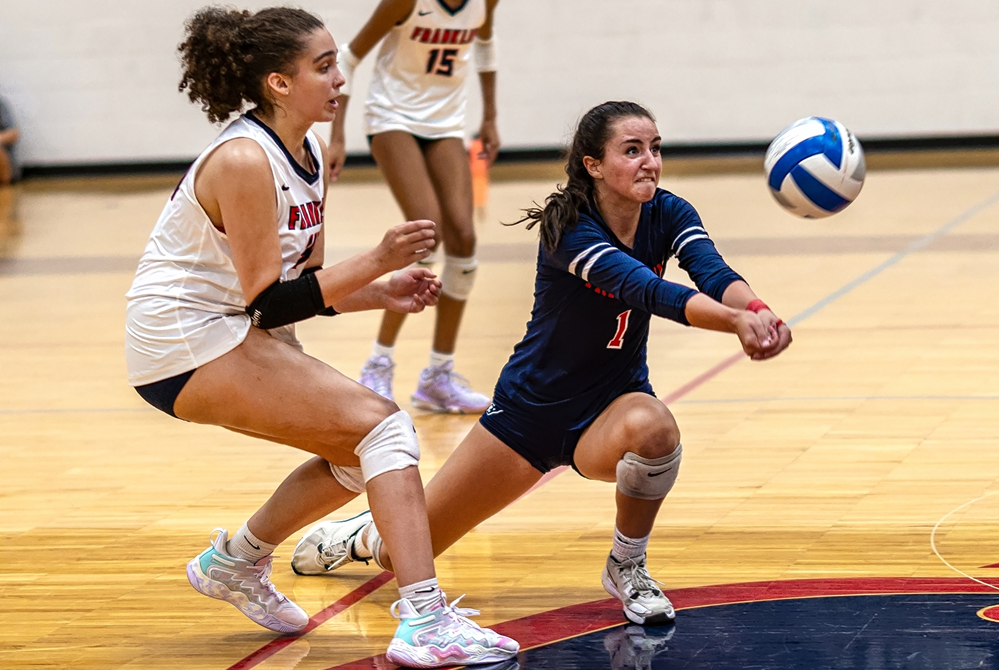
In volleyball, a libero is a defensive player who plays in the back row. It’s a fairly new position, as it was introduced in 1998 – and the libero plays by some unique rules:
► The libero wears a different color jersey from the rest of the team – so they are easily identifiable. Only one libero can be designated for each set of a match.
► The libero can serve, but can't perform an overhead set in front of the attack line, or complete an attack if the ball is above the net.
► The libero is never allowed to rotate to the front line.
► The libero is the first line of defense, often passing to the setter and covering open spaces.
► The libero can be replaced without restriction – but in the event of an injury, can only be replaced by the player the libero originally replaced.
Previous 2024-25 Editions
Sept. 10: Cross Country Uniforms - Listen
Sept. 3: Soccer Handling - Listen
Aug. 24: Football Holding - Listen
PHOTO Livonia Franklin libero Mckenna Moore (1) defends during her team's match against Livonia Churchill this season. (Photo by Douglas Bargerstock.)
What's My Why: Official Stan Wright
May 27, 2026
Stan Wright, Warren
Wright was recognized this spring for his 30 years as an MHSAA-registered official. He started with basketball, added baseball his second year, and continues to officiate those and also football and softball. He also officiated volleyball for three years.
One, I love the competition. Two, I love giving these kids an opportunity to compete, be a part of them competing.
And also being a part of encouraging them to be the best person they can be as they matriculate from sport to sport and then as they matriculate in life. So, it's all about helping those kids become the best that they can be.
And that's the passion and the joy I get out of it.
“What’s My Why” is a weekly feature telling the stories of MHSAA-registered officials in their own words. If you’re an MHSAA official and would like to share your reason why, please submit a 15 to 45-second video, taken horizontally, to director of officials Sam Davis at [email protected].
Don't miss Officiate Michigan Day 2026, July 25 in Grand Rapids! Check out MHSAA.com/OMD to register and learn more.
What's My Why
May 26: Murray Rose, Zeeland - Watch
May 22: Mike VanLaan, Alto - Watch
May 18: Clint Abbott, Newaygo - Watch