

Be the Referee: Switching Sides
By
Sam Davis
MHSAA Director of Officials
September 6, 2022
Be The Referee is a series of short messages designed to help educate people on the rules of different sports, to help them better understand the art of officiating, and to recruit officials.
Below is this week's segment – Switching Sides - Listen
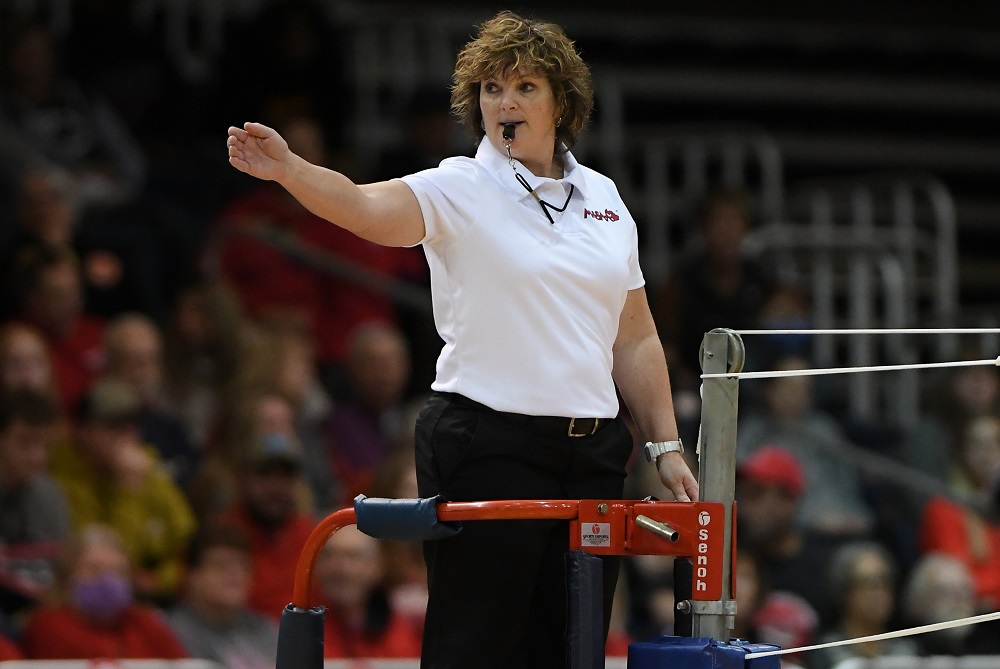
In volleyball, a rules modification that came about during COVID has been instated as a permanent change - with overwhelming support from coaches and officials.
Previously, teams would switch sides after each set, sometimes creating a traffic jam as players and coaches move benches from side to side. Unless there is a clear competitive advantage, there is no switching now. Coaches like having a dedicated home bench and the improved pace of the match.
Things that would necessitate teams switching would be less serving room on one end of the court, a window on one side with the sun shining in, or an overhead obstruction on one end.
It’s up to the official to determine if an advantage exists and if teams will switch at the end of each set – or stay on the same side for the entirety of the match.
Previous Editions:
Aug. 30: Play Clock - Listen
Aug. 23: Intentional Grounding Change - Listen
Story in Photos: 2022 Volleyball Division 1 & 4 Semifinals
By
Geoff Kimmerly
MHSAA.com senior editor
November 17, 2022
BATTLE CREEK – Two of this season’s four MHSAA volleyball championship pairings were decided during Thursday’s Semifinals, with a pair of first-time finalists set to play for the Division 4 title and the remaining Division 1 contenders meeting for the second edition of one of this regular season’s most notable matches.
Saturday’s first two Finals will see the following face off at Kellogg Arena:
10 a.m. – Division 4 – Athens (34-12-3) vs. Mount Pleasant Sacred Heart (43-7-6)
Noon – Division 1 – Bloomfield Hills Marian (48-1) vs. Northville (47-3)
Division 2 and 3 Semifinals will be played Friday. Click here for more.
Hockey Weekly Action Photos captured the following from Thursday’s Semifinals.
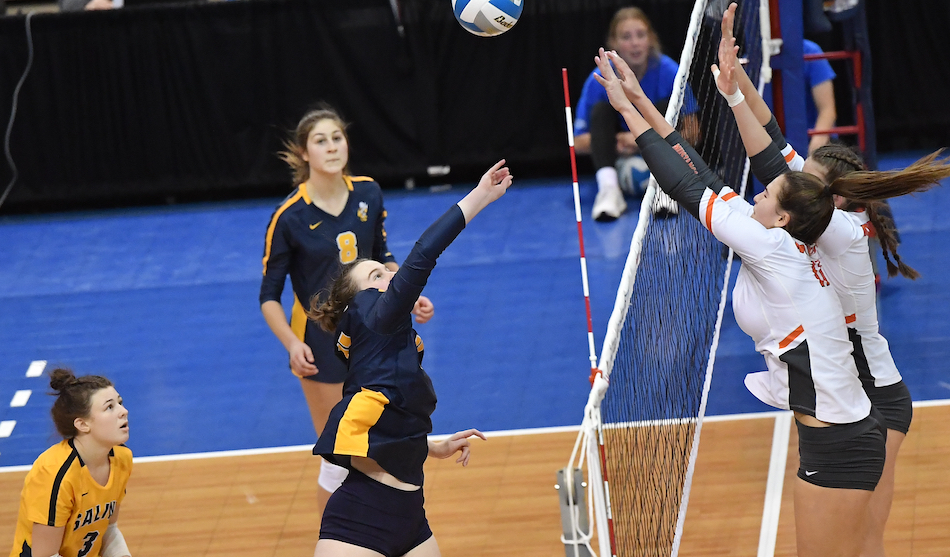
A pair of Northville players, right, put up a block during their 25-23, 21-25, 23-25, 25-13, 15-13 comeback Semifinal win over Saline, which finished 38-9-1.
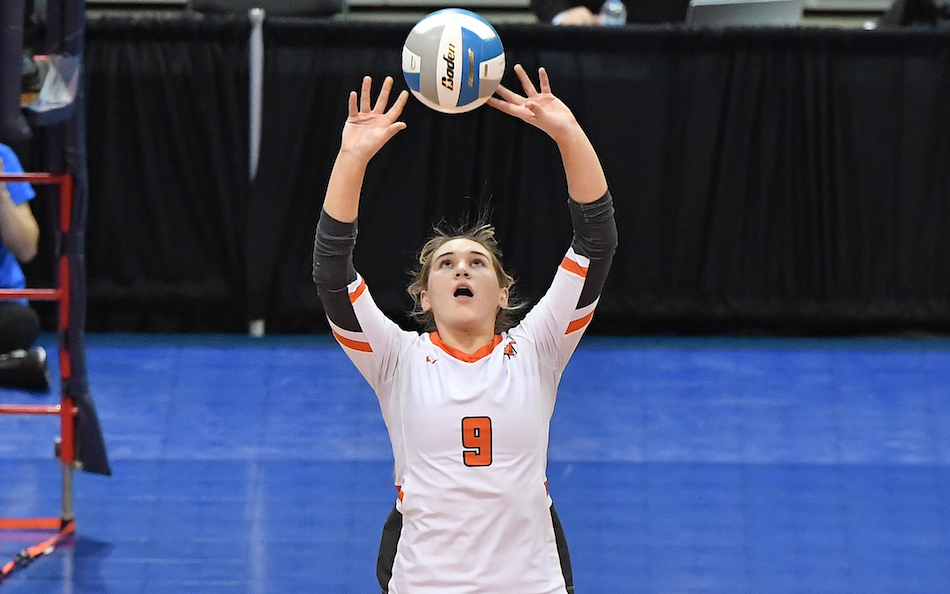
Mustangs setter Ella Craggs sets up her hitters Thursday. She finished with 45 assists, while Saline setter Laney Burns had 54. Both totals qualify for the MHSAA record book.
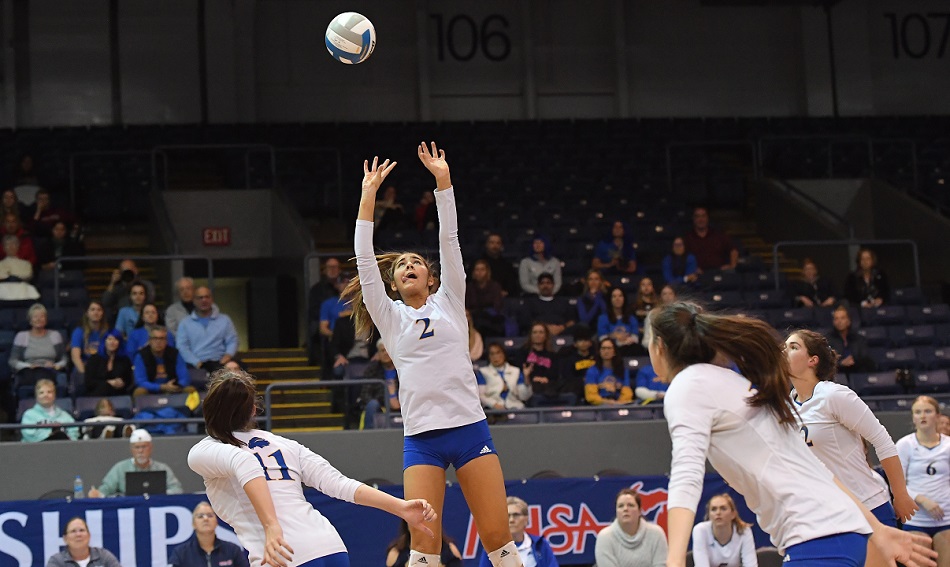
Marian’s Ava Sarafa (2) sets as a pair of Mustangs hitters begin their moves toward the net during their team’s 25-23, 25-16, 25-19 sweep of Grand Rapids Forest Hills Northern, which finished 44-5-1. Sarafa totaled with 36 assists.
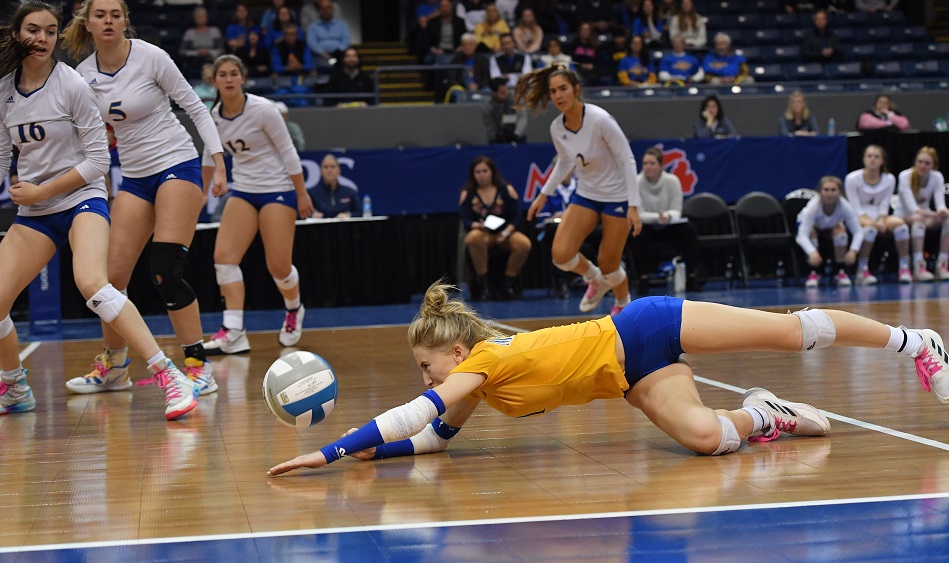
Mustangs libero Lauren Heming (1) dives to keep the ball in play. She finished with six digs and eight aces as the back-to-back reigning champions advanced.
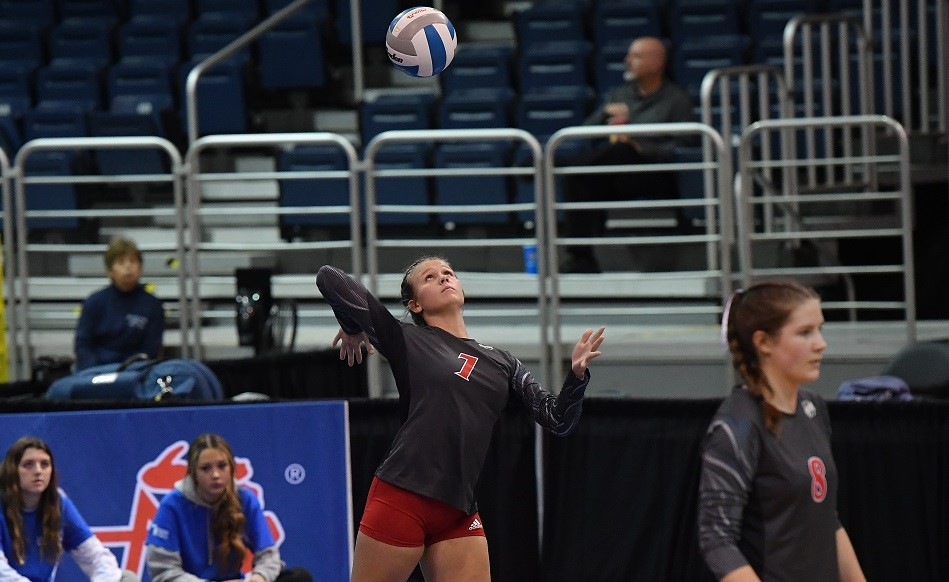
Kate Lipscomb (7) serves for Mount Pleasant Sacred Heart during its 25-11, 25-10, 25-22 sweep of Crystal Falls Forest Park on Thursday.
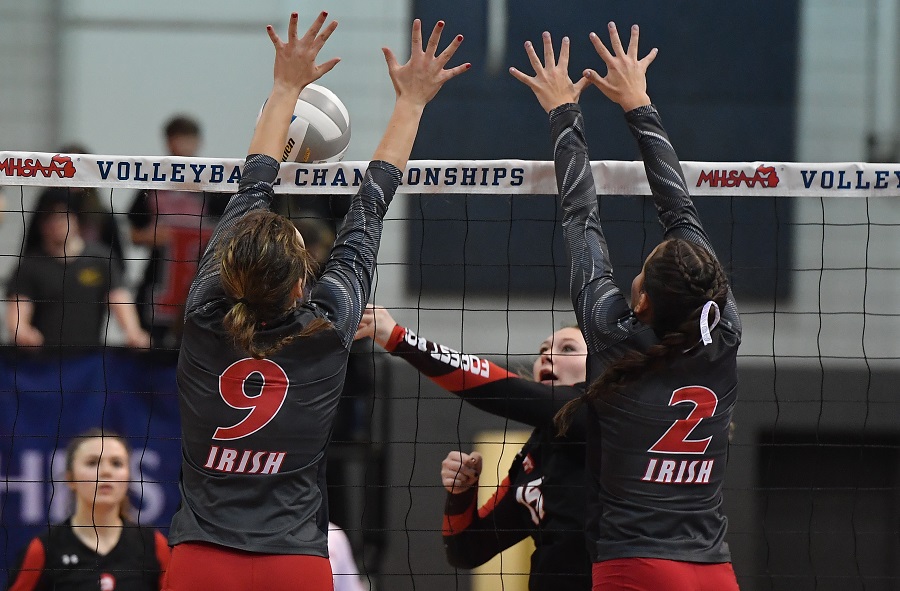
Sacred Heart’s Lillie Laney (9) and Sophie Hauck (2) put up a block on Forest Park’s Leah Feldhausen (15). Laney had a match-high 16 kills and Hauck led the team with 19 assists. Feldhausen had eight kills for the Trojans, who finished 16-5.
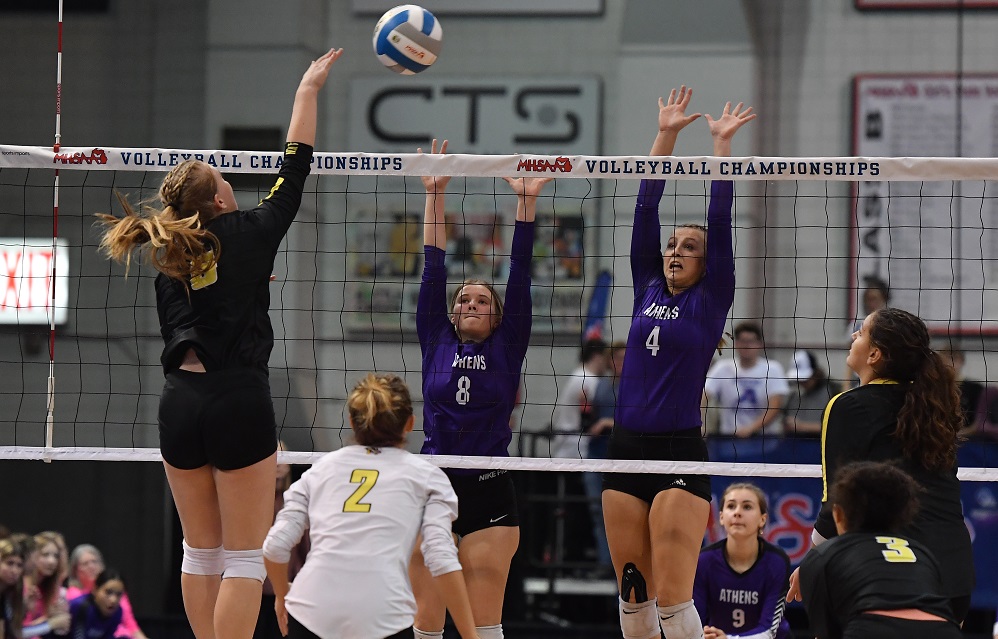
Athens’ Kamryn Parlin (4) and Alaina Brubaker (8) put up a block as Lansing Christian’s Anna Jackson (5) looks for an opening in the defense. Athens swept the Division 4 Semifinal 25-18, 25-20, 25-23.
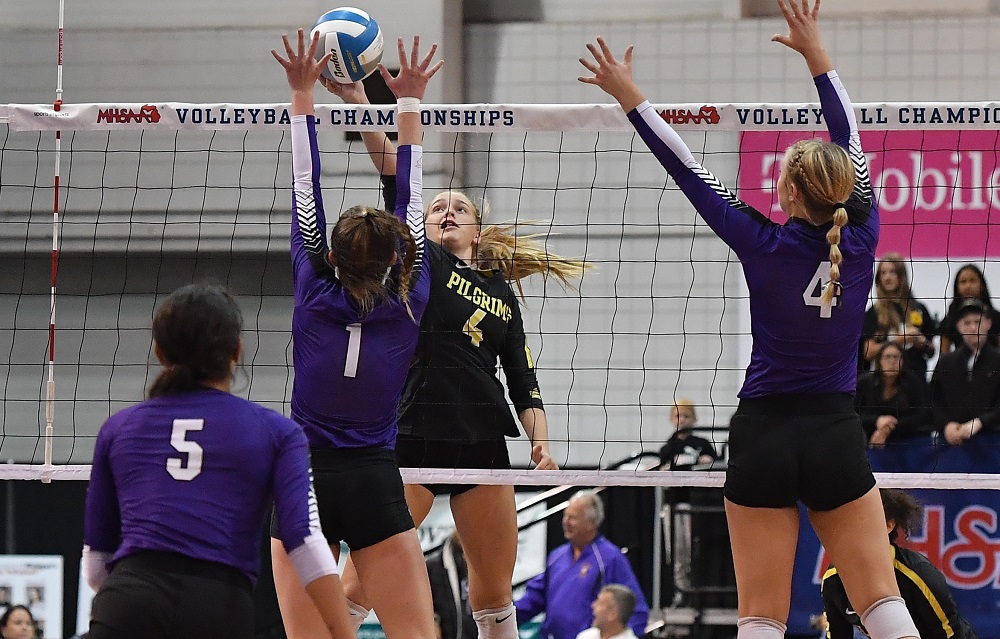
Lansing Christian’s Lydia Brogan (4) attempts to tip the ball over the net with Brubaker and Kylie Quist (1) defending. Quist led Athens with a match-high 11 kills, and Brubaker had a match-high 29 assists. The Pilgrims ended the season 30-12-1.
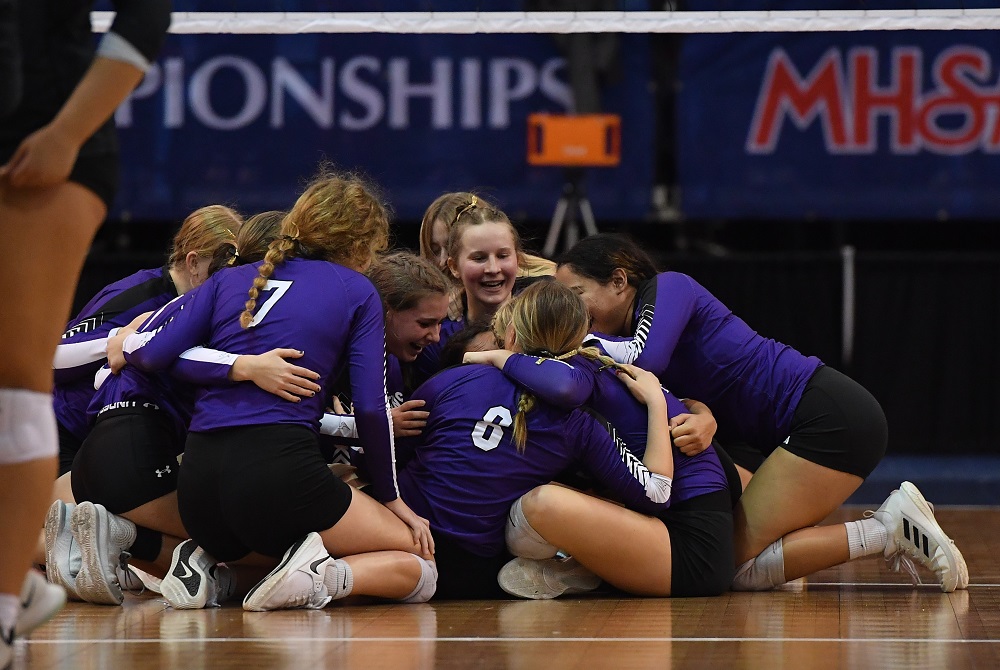
TOP PHOTO Athens players engulf each other after clinching their first trip to Finals day by sweeping Lansing Christian at Kellogg Arena.