

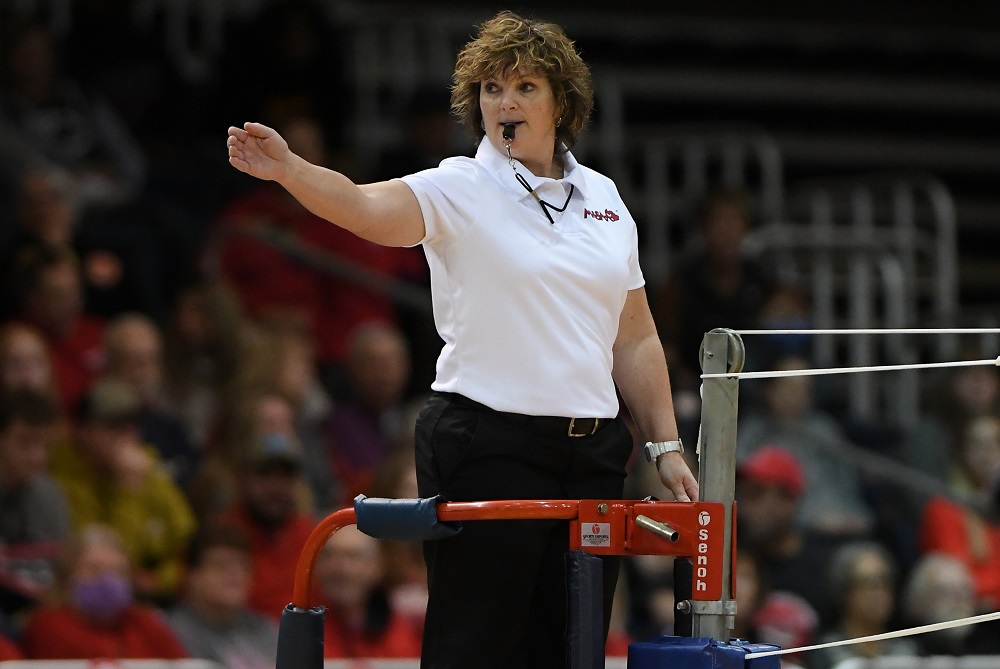
Be the Referee: Switching Sides
By
Sam Davis
MHSAA Director of Officials
September 6, 2022
Be The Referee is a series of short messages designed to help educate people on the rules of different sports, to help them better understand the art of officiating, and to recruit officials.
Below is this week's segment – Switching Sides - Listen
In volleyball, a rules modification that came about during COVID has been instated as a permanent change - with overwhelming support from coaches and officials.
Previously, teams would switch sides after each set, sometimes creating a traffic jam as players and coaches move benches from side to side. Unless there is a clear competitive advantage, there is no switching now. Coaches like having a dedicated home bench and the improved pace of the match.
Things that would necessitate teams switching would be less serving room on one end of the court, a window on one side with the sun shining in, or an overhead obstruction on one end.
It’s up to the official to determine if an advantage exists and if teams will switch at the end of each set – or stay on the same side for the entirety of the match.
Previous Editions:
Aug. 30: Play Clock - Listen
Aug. 23: Intentional Grounding Change - Listen
What's My Why: Official Murray Rose
May 26, 2026
Murray Rose, Zeeland
After a wrestling coaching career that began in 1985-86 and stretched over 31 years, Rose immediately became a wrestling official with the start of the 2017-18 season. He remains ranked ninth for coaching wins in the sport after building a 767-167-2 record at Allegan, where he led teams to two Finals championships.
After 30 years of coaching wrestling, I decided to become a wrestling official. My wife asked me, “Why would you ever want to do that?”
I said the answer is simple: I’m a wrestling guy. It’s what I do. It’s been my passion my whole life. It’s time for me to give back to the sport that’s given so much to me through the year.
Think about it. I get to work out, get paid and have fun, all at the same time. I get to be in the middle of the action, and I get the best seat in the house. I get to shake hands with thousands of student-athletes, coaches, and I get to make hundreds of new officiating friends.
For me, officiating is a way of life – and it’s been a wild ride for nine years now. I encourage all of you young men and women out there to jump on this officiating train and challenge yourself – because I want you to have as much fun officiating as I am.
“What’s My Why” is a weekly feature telling the stories of MHSAA-registered officials in their own words. If you’re an MHSAA official and would like to share your reason why, please submit a 15 to 45-second video, taken horizontally, to director of officials Sam Davis at [email protected].
Don't miss Officiate Michigan Day 2026, July 25 in Grand Rapids! Check out MHSAA.com/OMD to register and learn more.
What's My Why
May 22: Mike VanLaan, Alto - Watch
May 18: Clint Abbott, Newaygo - Watch