

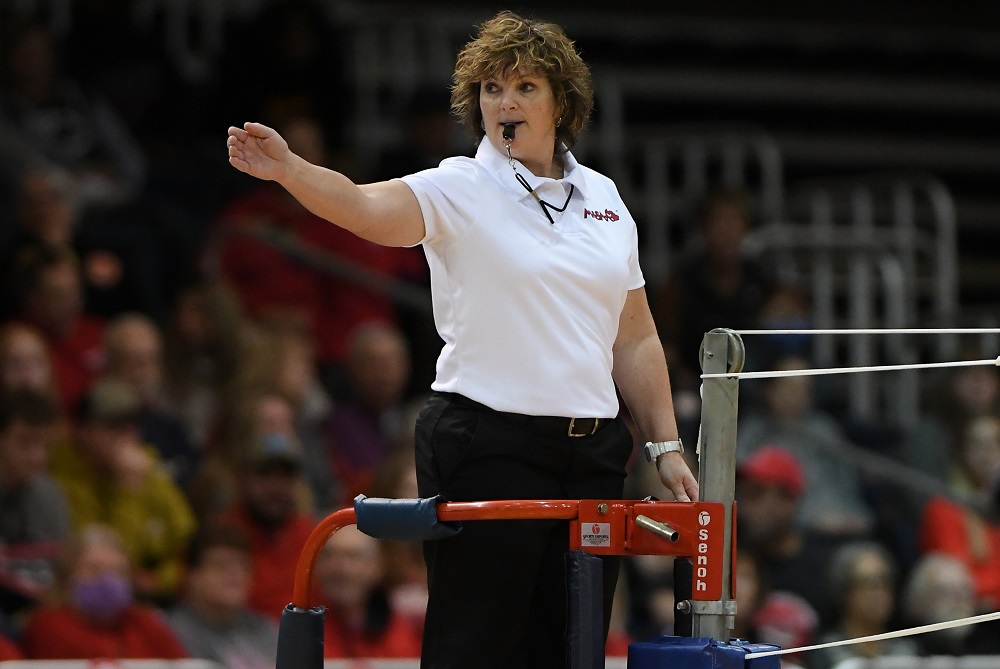
Be the Referee: Switching Sides
By
Sam Davis
MHSAA Director of Officials
September 6, 2022
Be The Referee is a series of short messages designed to help educate people on the rules of different sports, to help them better understand the art of officiating, and to recruit officials.
Below is this week's segment – Switching Sides - Listen
In volleyball, a rules modification that came about during COVID has been instated as a permanent change - with overwhelming support from coaches and officials.
Previously, teams would switch sides after each set, sometimes creating a traffic jam as players and coaches move benches from side to side. Unless there is a clear competitive advantage, there is no switching now. Coaches like having a dedicated home bench and the improved pace of the match.
Things that would necessitate teams switching would be less serving room on one end of the court, a window on one side with the sun shining in, or an overhead obstruction on one end.
It’s up to the official to determine if an advantage exists and if teams will switch at the end of each set – or stay on the same side for the entirety of the match.
Previous Editions:
Aug. 30: Play Clock - Listen
Aug. 23: Intentional Grounding Change - Listen
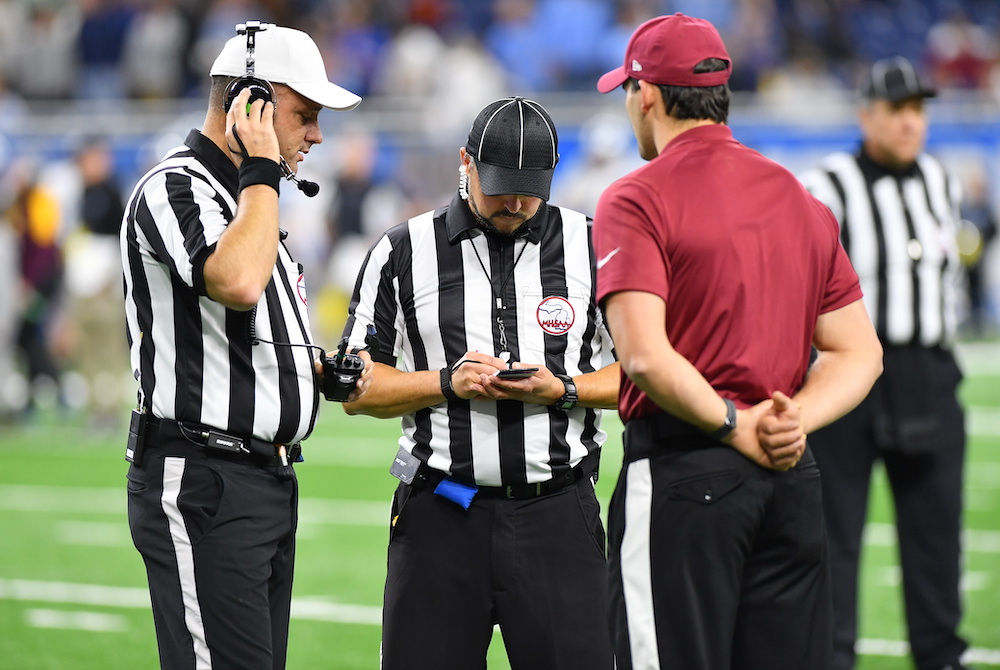
Be the Referee: Instant Replay
By
Brent Rice
MHSAA Assistant Director
November 26, 2021
Be The Referee is a series of short messages designed to help educate people on the rules of different sports, to help them better understand the art of officiating, and to recruit officials.
Below is this week's segment – Instant Replay - Listen
The use of instant replay in football varies at each level. But at the high school level in Michigan, replay is not used for any regular-season or postseason games, except for the Football Finals at Ford Field.
Unlike the professional and college leagues, however, the only plays that are reviewed are potential scoring plays and potential turnovers. On those plays, the officials in the replay booth will look at the various angles provided by the television broadcast and either confirm or overturn the play.
For each game at Ford Field, there are three replay officials in the booth – all with experience at higher levels. Over the years, replay has rarely been used, but it’s always in an effort of getting the correct call made.
Previous editions
Nov. 11: Tourney Selection - Listen
Nov. 4: Receiver Carried Out of End Zone – Listen
Oct. 28: Volleyball Back-Row Block – Listen
Oct. 21: Soccer Disallowed Goal – Listen
Sept 30: Field Goal Falls Short – Listen
Sept. 23: Volleyball Obstruction – Listen
Sept. 16: Catch or No Catch – Listen
Sept. 9: Intentional Grounding – Listen
Sept. 2: Pass Interference – Listen
Aug. 26: Protocols and Mechanics – Listen