

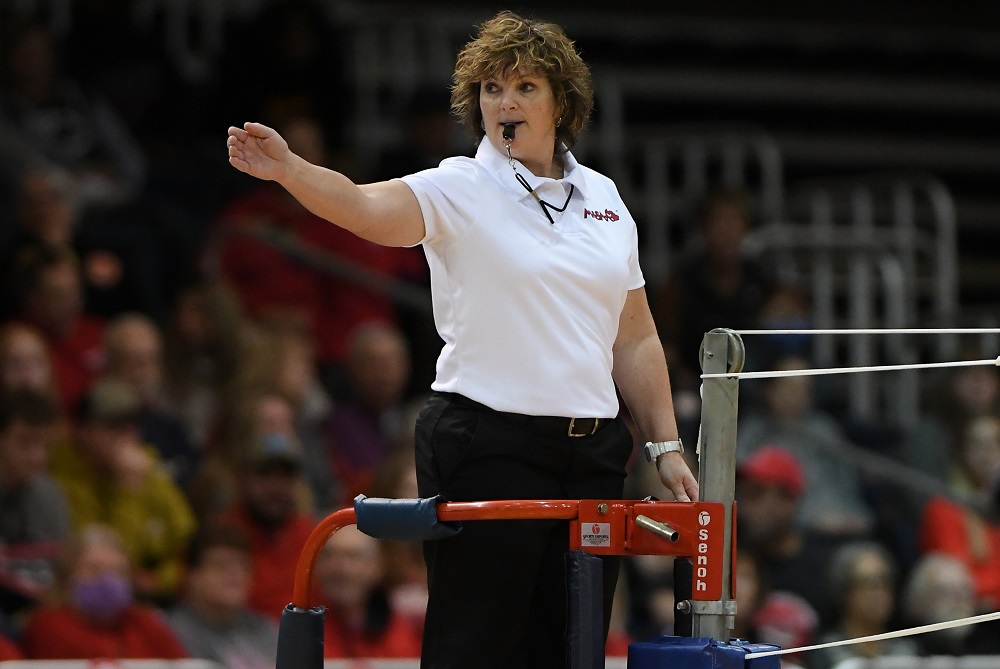
Be the Referee: Switching Sides
By
Sam Davis
MHSAA Director of Officials
September 6, 2022
Be The Referee is a series of short messages designed to help educate people on the rules of different sports, to help them better understand the art of officiating, and to recruit officials.
Below is this week's segment – Switching Sides - Listen
In volleyball, a rules modification that came about during COVID has been instated as a permanent change - with overwhelming support from coaches and officials.
Previously, teams would switch sides after each set, sometimes creating a traffic jam as players and coaches move benches from side to side. Unless there is a clear competitive advantage, there is no switching now. Coaches like having a dedicated home bench and the improved pace of the match.
Things that would necessitate teams switching would be less serving room on one end of the court, a window on one side with the sun shining in, or an overhead obstruction on one end.
It’s up to the official to determine if an advantage exists and if teams will switch at the end of each set – or stay on the same side for the entirety of the match.
Previous Editions:
Aug. 30: Play Clock - Listen
Aug. 23: Intentional Grounding Change - Listen
What's My Why: Official Clint Abbott
May 18, 2026
Clint Abbott, Newaygo
Abbott is completing his 43rd year as an MHSAA registered official and this school year officiated basketball and volleyball. He's also been registered in baseball, soccer, softball and track & field for a season or more since beginning with the MHSAA in 1975-76.
I really enjoy it. What I love about it is just getting out, working with the crew, teamwork, giving back to the game.
I really enjoy the student-athletes today. It’s a little different world than when I first started out, but I still enjoy it, still enjoy giving back to them. Love to watch them compete and participate, and then just love to see new officials come in – and we hope we can have more that we can train and we can mentor.
So, absolutely love this game. I hope we can keep going for many years.
“What’s My Why” is a weekly feature telling the stories of MHSAA-registered officials in their own words. If you’re an MHSAA official and would like to share your reason why, please submit a 15 to 45-second video, taken horizontally, to director of officials Sam Davis at [email protected].
Don't miss Officiate Michigan Day 2026, July 25 in Grand Rapids! Check out MHSAA.com/OMD to register and learn more.