

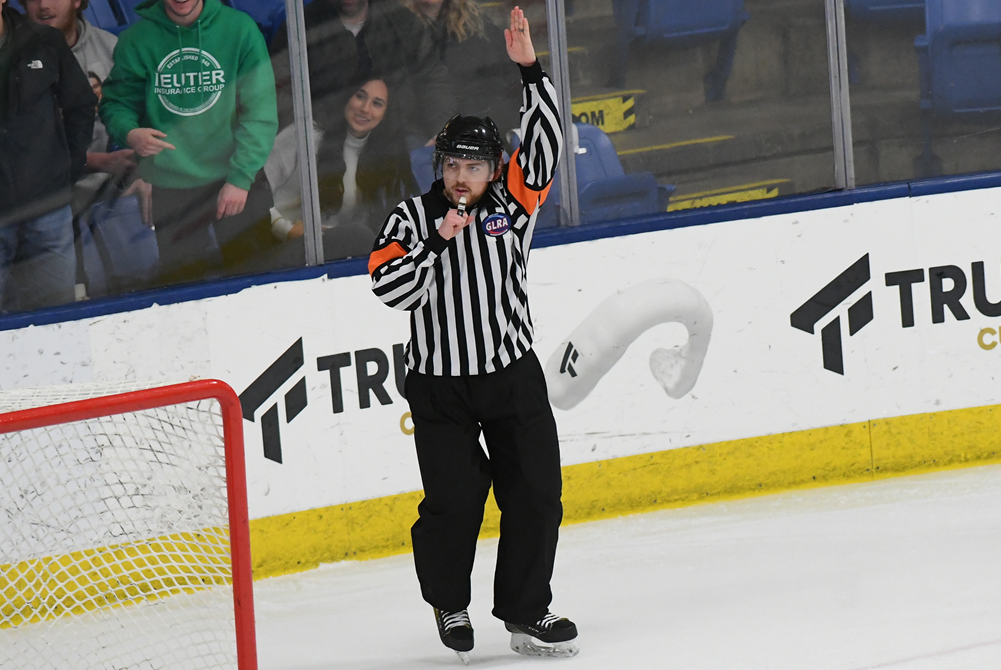
Be the Referee: Hockey Penalties
By
Paige Winne
MHSAA Marketing & Social Media Coordinator
February 6, 2024
Be The Referee is a series of short messages designed to help educate people on the rules of different sports, to help them better understand the art of officiating, and to recruit officials.
Below is this week's segment – Hockey Penalties - Listen
The three most common penalties in high school hockey are tripping, slashing, and hooking. What’s the difference between them?
It’s pretty self-explanatory.
Tripping is when a player uses the stick to make another player fall.
Slashing is when a player swings the stick at another player, whether contact is made or not.
And hooking is using your stick to slow an opponent down, usually the puck handler.
Hooking differs from holding in that hooking involves the use of the stick to slow an opponent down, while holding is done with the hands.
All of these penalties – tripping, slashing, hooking and holding – will result in at least two minutes in the penalty box.
Previous Editions
Jan. 30: Wrestling Tiebreakers - Listen
Jan. 23: Wrestling Technology - Listen
Jan. 9: 3 Seconds - Listen
Dec. 19: Unsuspecting Hockey Hits - Listen
Dec. 12: No More One-And-Ones - Listen
Nov. 21: Football Finals Replay - Listen
Nov. 14: Volleyball Unplayable Areas - Listen
Nov. 7: Pass/Kick Off Crossbar - Listen
Oct. 31: Cross Country Interference - Listen
Oct. 24: Soccer Overtime - Listen
Oct. 17: Tennis Spin - Listen
Oct. 10: Blocked Kick - Listen
Oct. 3: Volleyball Double & Lift - Listen
Sept. 26: Registration Process - Listen
Sept. 20: Animal Interference - Listen
Sept. 13: Feet Rule on Soccer Throw-In - Listen
Sept. 6: Volleyball Jewelry - Listen
Aug. 30: Football Rules Similarities - Listen
Aug. 23: Football Rules Differences - Listen
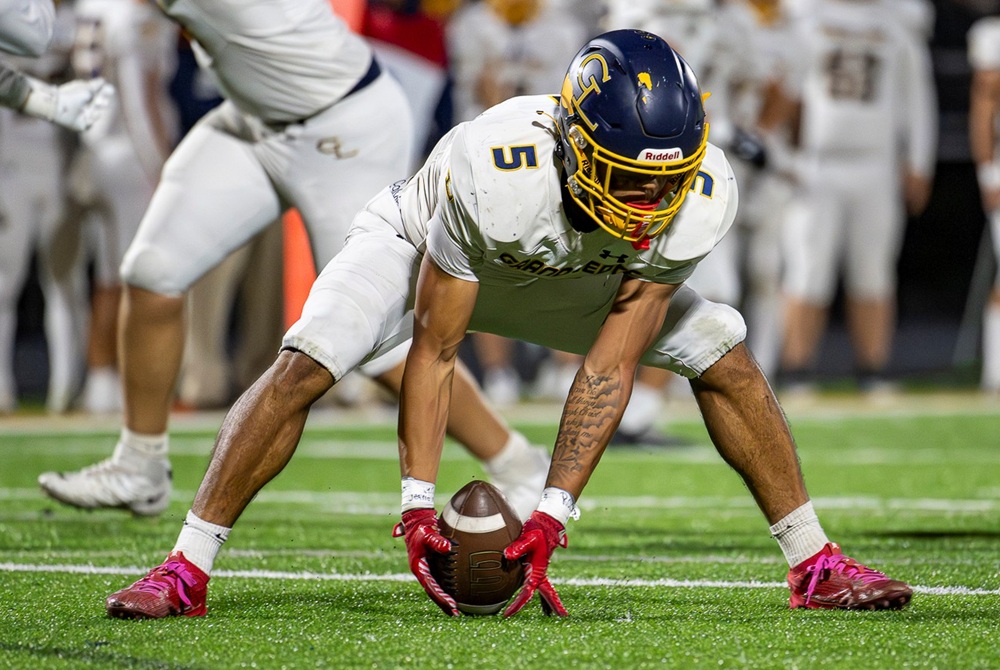
Be the Referee: Fumble Out of Bounds
By
Paige Winne
MHSAA Marketing & Social Media Coordinator
August 25, 2026
Be The Referee is a series of short messages designed to help educate people on the rules of different sports, to help them better understand the art of officiating, and to recruit officials.
Below is this week's segment – Fumble Out of Bounds - Listen
We are on the football field today, where the offense has the ball on their own 20-yard line. It’s 3rd-and 10. They run a draw play, with the running back gaining nine yards before fumbling at the 29 yard-line.
The fumbled ball goes forward to the 35-yard line before another offensive player recovers. Where should the ball be marked?
Because the ball was recovered in-bounds, it’s first down for the offense at the point of recovery, the 35-yard line.
If the ball had rolled out of bounds at the 35-yard line, before anyone could recover it, it would have been brought back to the spot of the fumble – the 29-yard line – making it 4th-and-1 for the offense.
(Photo by Larry Arreguin/Team Arreguin Photos.)