


Classes Still Create Hoosier Hysteria
July 27, 2017
By Rob Kaminski
MHSAA benchmarks editor
This is the fourth part in a series on MHSAA tournament classification, past and present, that will be published over the next two weeks. This series originally ran in this spring's edition of MHSAA benchmarks.
Twenty years ago, Bloomington North High School won the Indiana High School Athletic Association boys basketball championship, defeating Delta 75-54 at the RCA Dome in Indianapolis.
The date, March 22, 1997, is at the same time revered and disdained by traditionalists in the state who saw it as the last schoolboy championship game the state would ever host.
That’s how devout the game of basketball, particularly interscholastic basketball, had become in the Hoosier state during the 87 years a state champion – one state champion, to be precise – was crowned.
Following that 1997 season, the IHSAA moved to a four-class system for its roundball tournaments, like so many of its state association counterparts had done years earlier.
It would be shocking to find more than a small percentage of current high school basketball players around the country unfamiliar with the iconic movie Hoosiers, even though the film is now more than 30 years old.
And, the storyline for that blockbuster unfolded more than 30 years prior to its release, when small-town, undermanned Milan High School defeated Muncie Central High School 32-30 in the 1954 IHSAA title game.
Perhaps it’s because of the David vs Goliath notion, or the fame of the movie that replaced Milan with the fictional Hickory and real-life star Bobby Plump with Hollywood hero Jimmy Chitwood, or the simple fact that Indiana had something other states didn’t.
Whatever the reason, plenty of opposition remains to this day to basketball classification in the state.
The fact is, the small rural schools were regularly being beaten handily by the much larger suburban and city schools as the tournament progressed each season.
Small schools also were closing at a rapid rate following the state’s School Reorganization Act in 1959, as students converged on larger, centralized county schools. From 1960 to 2000, the number of schools entering the tournament dropped from 694 to 381, and in 1997 a total of 382 schools and 4,584 athletes began competition at the Sectional level (the first level of the IHSAA Basketball Tournament).
It was at the entry level of the tournament where school administrators felt the pain of the new class system, but not necessarily for the same nostalgic reasons as the fans who either attended or boycotted the tournament.
At the Sectional round of the tournament, the IHSAA was culling just 2 percent of the revenue, with the participating schools splitting the balance. So, when Sectional attendance dropped by 14 percent in that first year of class basketball, many schools realized a financial loss. It was money they had grown to count on in prior years to help fund various aspects of the department.
Schools cumulatively received more than $900,000 from Sectional competition in 1998, but that total was down from more than $1 million in the last year of the single-class tournament.
Yet, the current format provides a great deal more opportunity and realistic chances at championship runs for schools of all enrollments.
To date, 60 additional teams have championship or runner-up trophies on display in school trophy cases around Indiana.
That was the mission in front of then-IHSAA commissioner Bob Gardner (now National Federation executive director) once the board made its decision: to give thousands more student-athletes the opportunity for once-in-a-lifetime experiences.
As any statistician knows, figures can be manipulated to tell any side of a story. Declining attendance in year one of class basketball is such a number.
The truth is tournament attendance had been on a steady downward spiral since its peak of just over 1.5 million in 1962. By the last single-class event in 1997, the total attendance was half that.
The challenge then and today, as it is for all state associations, is to find that delicate balance for those holding onto tradition, those holding onto trophies, and the number of trophies to hand out.
Editor’s Note: Stories from the Fort Wayne Journal Gazette in 1998 and from a 2007 issue of Indianapolis Monthly provided facts in this article.
Mattawan's Novaks Claim League Titles, Ready to Pursue Next Championship Goals
By
Pam Shebest
Special for MHSAA.com
May 17, 2022
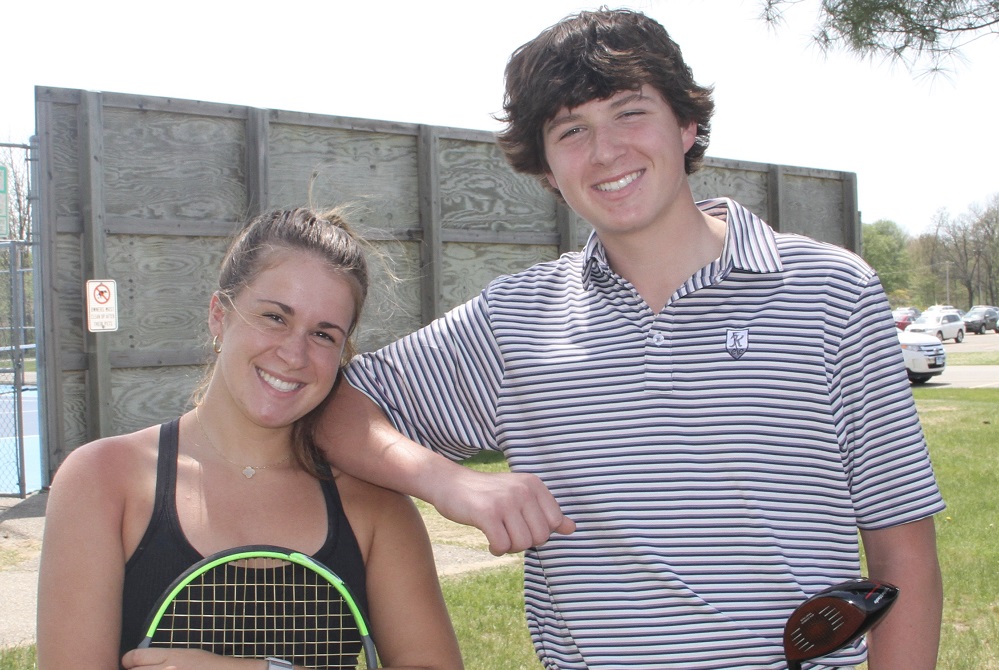
MATTAWAN — In a family steeped in tennis history, one member is forging his own path.
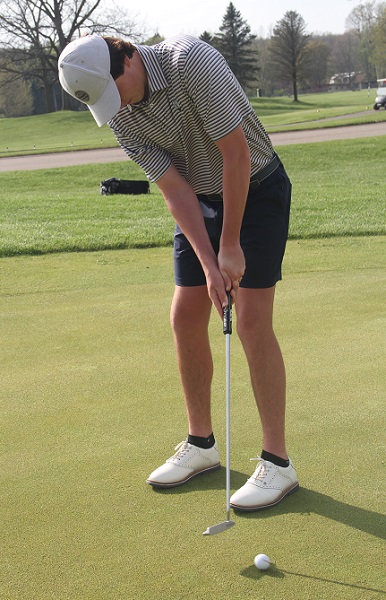
 Matt Novak has been tearing up the course as Mattawan’s top golfer.
The sophomore won the individual medalist honor in the 36-hole Southwestern Michigan Athletic Conference Championship two weeks ago and carded the best nine-hole average in SMAC West matches this season.
“He’s having quite a year so far, and we are just very excited to take this ride with him,” Mattawan’s first-year coach Troy Pelak said.
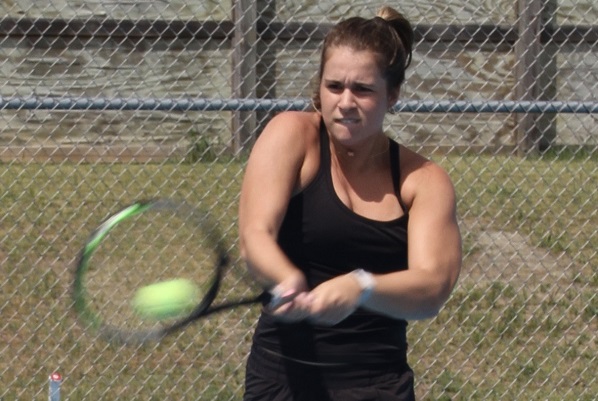
Novak’s sister, Lizzie, is also having a stellar season as the Wildcats’ top tennis player.
She, too, won the SMAC Championship last weekend and, after recovering from an early-season injury, takes a 9-0 record into this week’s Regional.
“Her big win (this year) was vs. Forest Hills Northern (ranked No. 1 in the state in Lower Peninsula Division 2),” said Matt Boven, in his 24th season coaching the Wildcats.
Mattawan tennis is ranked sixth.
As a freshman, Lizzie Novak won the LPD2 Finals No. 2 singles title playing behind her sister, Kate, who is now playing tennis at Bucknell (Pa.) University.
COVID-19 caused Lizzie Novak’s sophomore season to be canceled, and she opted to play USTA tournaments her junior year but hopes to add one more MHSAA title to her resume.
 If she does, she will finish with just one fewer than her dad, David Novak, who won three state titles at Hackett Catholic Central, one at No. 2 singles in 1983 and two at No. 1 singles (1985, 1986).
Matt Novak played tennis at a young age, but “I didn’t like it as much as my sisters did, so I decided to pursue golf more in the summer,” he said.
“I like that you’re really out there by yourself, and you’re playing against the course and not a specific person. You push yourself every single time you’re out there.”
The sophomore also plays hockey during the winter, which has helped his golf game.
“A couple of my coaches taught me how to be a good leader,” he said. “I think I translated a lot of my leader skills from hockey into golf.”
That includes his slap shot which “definitely helps with power off the tee in that long ball,” he said.
Pelak said although Matt is the youngest on the team, he is the team leader.
“We had an event earlier in the year and we took third of 21 teams,” Pelak said. “The team said, ‘This is pretty good,’ and Matt said, ‘Guys, we’re here to win, not place third.’ That’s the message he sent right away.”
Junior Will Kuiper said teammates have a lot of respect for Novak.
“He knows a lot about golf, and he wants to help the team get better,” Kuiper said. “He’ll help you after practice.
“He’ll be hard on us sometimes, but he just wants us to get better. He just wants the team to win.”
That passion for golf sometimes leaves Novak out of family chatter.
“I feel singled out at the dinner table when they’re all talking about their tennis and I’m over here just thinking about golf,” he said, laughing.
His sister agrees.
 “We’ll go full tennis and Matt will go, ‘What about me?’ We’ll try to turn to him, but no one can relate to him as much,” she said.
“I think he has the attitude for tennis, but I think it’s kinda fun that he has something different from tennis. Golf is more exciting for him.”
The senior, who is headed to University of Richmond in the fall, is also a team leader.
“I feel I bring a lot of leadership and energy and excitement,” she said. “Some of these players are so much more inexperienced.
“I’m trying to get everyone together on and off the court. I’ve been having a blast. We’ve improved every week, and I hope we can make it to State.”
Tennis suits her, Lizzie Novak said.
“I feel like I’m kind of a control freak,” she said. “I like everything a certain way, and I don’t want someone else to mess up. I can mess up.”
She thanks her sister for steering her to tennis.
“I was obsessed with my sister when I was younger, and she started playing tennis, so that’s what I’ll do,” she said. “She quit dance, I quit dance. It worked, and I love it. It’s just like breathing to me at this point.”
The senior has one more weapon to help her: She’s a lefty which, at times, gives her an advantage since most players are used to facing righties.
“When I play someone left-handed, I’m like, this is terrible, but I like it,” she laughed.
Boven said Lizzie Novak brings power to the team.
“Having a star at No 1 singles puts her other teammates in a position to win,” he said. “It gives other opportunities and actually strengthens other flights.
“To have someone who’s basically a guaranteed point really does a great deal for the team.”
Other seniors on the tennis team are Romika Shokohi, Ashley Goding, Adelaide Douglass and Sloane Lohroff; juniors are Emma Coleman and Madison Pratt. Sophomores are Madison Engel and Kendall Coon, while freshmen are Sienna Watts, Nadia Baird and Emma Pratt.
 Boven said it will be strange not having a Novak on a tennis team next year, but he still has hope.
Talking about trying to convince Matt Novak to play tennis, he said, “Absolutely I did, and I’m still trying to talk him into it. I hear he’s a natural, and tennis is in his blood.
“I love his personality. I think he could bring charisma and some talent to the team. So, yes, on a daily basis I’m trying to talk Matthew into playing tennis.”
That may be wishful hoping on Boven’s part.
Novak is totally focused on golf.
“We made it to Regionals but did not qualify for states last year, and I, sadly, didn't qualify (individually),” he said. “(This year) we’re strong, and we have to work on consistency.
“We definitely have a couple guys who can go low. It just matters if we can do it more than once, shoot a good round and the next day shoot a good round again.”
Pelak has six seniors on varsity: Logan McClish, Andrew Keorkunian, Jared Yetter, Zach Sylvester, Seth Reeves and Brady Weller.
Juniors include Blake Welch and Cameron Graver, and the other sophomore is Eason Haller.
Pelak said Novak possesses the qualities of a top golfer.
“In addition to scoring, which is obviously very important in golf, he plays with tremendous poise. His course management skills are off the chart,” Pelak said.
“He does a good job of not getting too high or low and really manages himself on the course with a lot of poise. He’s not emotional, which is perfect for a golfer.”
With two top athletes usually competing on the same day, the Novaks have come up with a plan.
“My mom (Meredith) usually likes to take the tennis and my dad likes golf,” Matt Novak said. “It gets too stressful watching my sister.”
 Pam Shebest served as a sportswriter at the Kalamazoo Gazette from 1985-2009 after 11 years part-time with the Gazette while teaching French and English at White Pigeon High School. She can be reached at [email protected] with story ideas for Calhoun, Kalamazoo and Van Buren counties.
PHOTOS (Top) Sister Lizzie and brother Matt Novak are among Mattawan athletes with high aspirations as their sports approach postseason play this spring. (2) From left, Mattawan girls tennis coach Matt Boven, boys golf coach Troy Pelak and golfer Will Kuiper. (3) Lizzie Novak returns a volley during a recent tennis practice. (4) Matt Novak putts during a golf practice. (Boven head shot courtesy of Mattawan’s girls tennis program; all other photos by Pam Shebest.)