

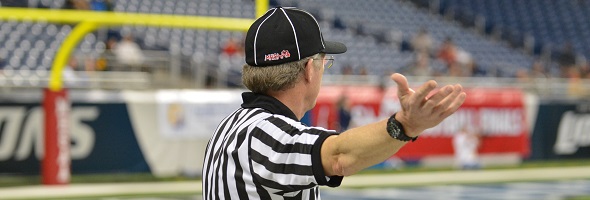
Be the Referee: 7-Person Football Crews
November 12, 2015
This week, MHSAA assistant director Mark Uyl discusses why seven-person football crews are used for MHSAA Semifinals and Finals.
Be The Referee is a series of short messages designed to help educate people on the rules of different sports, to help them better understand the art of officiating, and to recruit officials.
Below is this week's segment - 7-Person Football Mechanics - Listen
Last fall, the MHSAA used seven-person football officiating crews at the Semifinal and Final levels of our tournament for the very first time. These larger crews replaced the traditional five-person crews in the 24 most important games of the football season.
Seven-person crews, which for many years were the size of NCAA and NFL crews, provide for much better coverage in the passing and running games with all of the spread offenses and wide-open attacks that have become commonplace with football in the year 2015 and beyond. By adding the two extra officials on each deep sideline, coaches have now two officials to communicate with on each sideline to answer questions and address concerns.
Past editions:
Nov. 5: Make the Call: Personal Fouls - Listen
Oct. 29: Officials Demographics - Listen
Oct. 15: Make the Call: Intentional Grounding - Listen
Oct. 8: Playoff Selection - Listen
Oct. 1: Kick Returns - Listen
Sept. 24: Concussions - Listen
Sept. 17: Automatic First Downs - Listen
Sept. 10: Correcting a Down - Listen
Sept 3: Spearing - Listen
Aug. 27: Missed Field Goal - Listen
From MSP Post to Postgame: Lieutenants Return to the (Football) Field
September 27, 2023
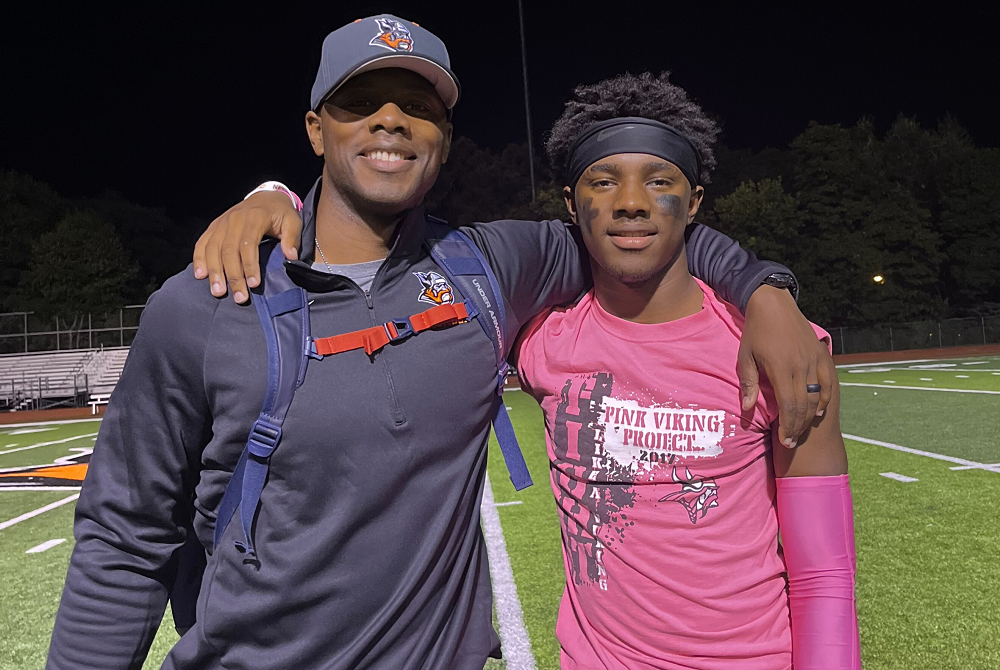
While fans are settling into another season, Michigan State Police Lt. Tedric Gibbs has been fully immersed in football for months.
The Jackson Post’s assistant post commander serves as assistant coach for Jackson High School’s varsity football team and for the team at Parkside Middle School.
“I started coaching when my older son was in youth sports, as a way to do something together that we both love,” Gibbs said. “My younger son followed the same path, so I joined his team too. I grew up in Jackson and am grateful to be able to serve my hometown from the sidelines and at our post.”
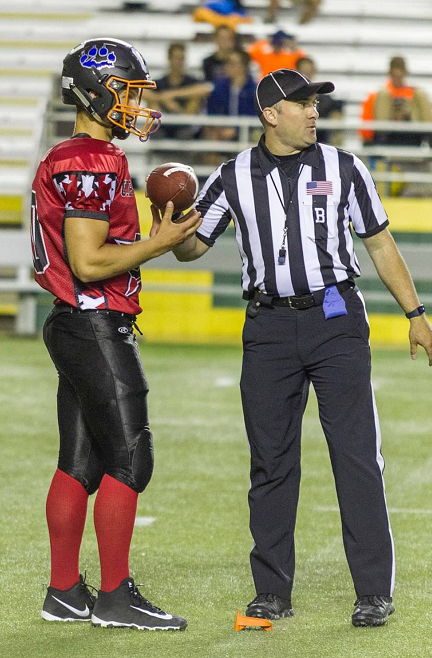 Some 400 miles north, Lt. Mark Giannunzio is also a familiar face in and on the field. The MSP Negaunee Post assistant post commander and Eighth District public information officer enforces the rules of the game as a high school and college football official, the latter for the Great Lakes Intercollegiate Athletic Conference.
“I started at the high school level to stay involved in athletics and make authentic connections in the community,” Giannunzio said. “It’s rewarding to help teach the game and share knowledge of the rules. I currently have a full 11-game schedule in the GLIAC Division II college conference, with high school games interspersed during the year.”
The correlation among coaching, officiating and policing translates.
“With my fellow troopers, I want to inspire, motivate and encourage to get the most out of them,” Gibbs said. “I take the same approach with my players to figure out what they need from me, as their designated leader, to be as successful as they can. In both capacities, I do the work alongside them. We do it together.”
This approach is especially important when tough times surface. Lieutenant Gibbs’ high school team experienced tragedy right before its first game when a player died in a car crash.
“We focused on adversity,” said Gibbs, who was in a unique position to talk from a police perspective too. “It’s a benefit to have that insight and background and share it with what they can control – make good decisions and wear your seatbelt.”
Lieutenant Gibbs incorporates his coworkers when he can, like during spring conditioning when fellow troopers join him and his players, helping all involved to make new connections and build strong bonds between the students and officers.
 “One of the most important attributes in both careers is communication,” Giannunzio said. “Communication can make or break an official and a police officer. Much like selling a citation to a motorist, I need to be able to sell the penalty in a calm and professional manner. Demeanor and attitude go together on both the football field and when we are out patrolling in the Blue Goose.”
Treating everyone with dignity and respect is something Lieutenants Gibbs and Giannunzio commit to as members of a modern police agency and in their areas of expertise on the football field.
“Both roles afford so many opportunities to develop culture and cultivate teamwork,” Gibbs said. “The best part is watching others flourish and playing a part in their growth.”
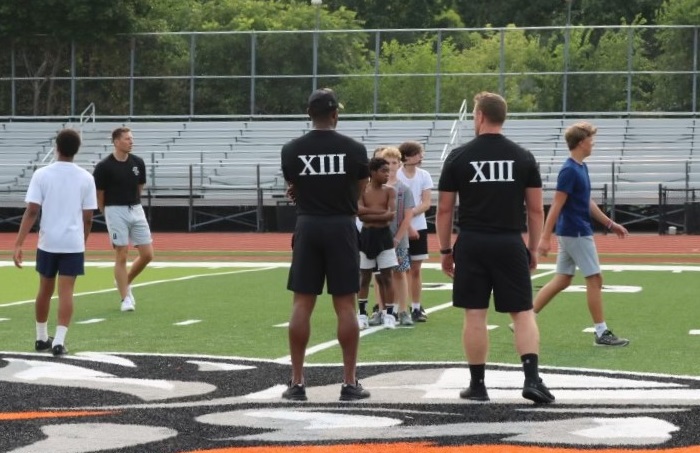
PHOTOS (Top) Michigan State Police Lt. Tedric Gibbs, left, serves as an assistant football coach for the Jackson High varsity. (Middle) Lt. Mark Giannunzio officiates at the high school and college levels. (Below) Gibbs also coaches at Jackson Parkside Middle School. (Photos provided by the Michigan State Police.)