

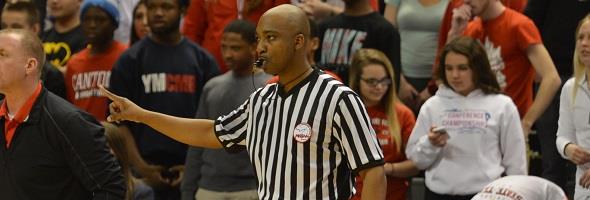
Be the Referee: Calling Intentional Fouls
February 1, 2018
In this week's edition, assistant director Mark Uyl discusses when basketball officials should call an intentional foul.
Be The Referee is a series of short messages designed to help educate people on the rules of different sports, to help them better understand the art of officiating, and to recruit officials.
Below is this week's segment – Calling Intentional Fouls - Listen
At the end of any close basketball game, it’s an accepted part of basketball strategy for the team that’s behind to foul and send the team in the lead to the foul line.
This year there is a point of emphasis nationally dealing with intentional fouls. Intentional fouls should be called whenever a player obviously neutralizes an opponent’s obvious advantage, or when contact occurs with an opponent who is clearly not in the play, or when that contact is not an attempt to play the ball.
Certainly excessive contact remains as one of the types of intentional fouls. A team merely trying to foul on purpose does not make it an intentional foul.
Past editions
January 25: Points at the Edge of the Mat - Listen
January 18: Behavior Warning - Listen
January 11: Ice Hockey Safe & Sound - Listen
January 4: Why No Shot Clock - Listen
December 21: Coaches Responsible for Equipment - Listen
December 14: Mentoring New Officials - Listen
December 7: Dive on the Floor - Listen
November 30: Wrestling Weight Monitoring - Listen
November 23: Ejections - Listen
November 16: Toughest Call - Listen
November 9: Hurdling - Listen
November 2: The Survey Says - Listen
October 26: Helmet Comes Off - Listen
October 19: Goal Line Rules - Listen
October 12: No 1st-Year Fee - Listen
October 5: Athletic Empty Nesters - Listen
September 28: Misunderstood Football Rules: Kicking - Listen
September 21: Preparation for Officials - Listen
September 14: Always Stay Registered - Listen
September 7: Other Football Rules Changes - Listen
August 31: Pop-Up Onside Kicks - Listen
August 24: Blindside Blocks - Listen
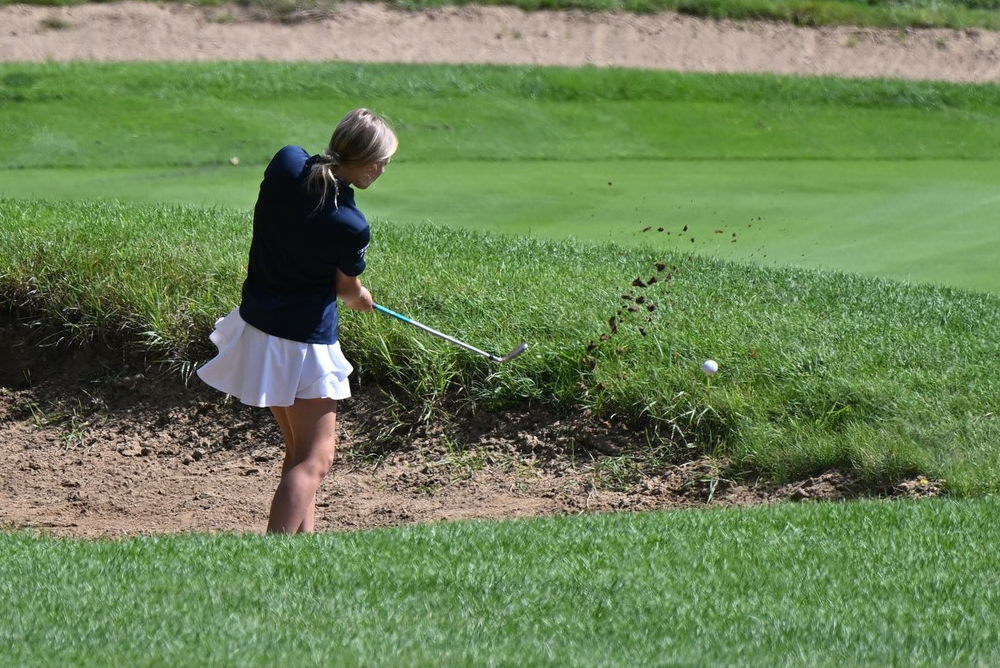
Be the Referee: Animal Interference
By
Paige Winne
MHSAA Director of Brand Management
September 20, 2023
Be The Referee is a series of short messages designed to help educate people on the rules of different sports, to help them better understand the art of officiating, and to recruit officials.
Below is this week's segment – Animal Interference - Listen
In golf – it’s common to hear about birdies, eagles, maybe even an albatross. Or in my case, a snowman. But what if an actual animal interferes with your ball while in play?
There are two kinds of interference.
The first involves a ball still in motion. If you are putting and a squirrel darts out and stops or redirects your putt, you simply get a do-over from the original spot.
Off the green, if a moving ball is stopped or re-directed, you play the ball from where it ultimately stops.
If your ball is stopped and a seagull picks it up and carries it off – you just replace the ball to its original spot and proceed.
It doesn’t happen often, but now you know how to deal with squirrels and seagulls … in addition to birdies and eagles.
Previous Editions
Sept. 13: Feet Rule on Soccer Throw-In - Listen
Sept. 6: Volleyball Jewelry - Listen
Aug. 30: Football Rules Similarities - Listen
Aug. 23: Football Rules Differences - Listen
(PHOTO by Gary Shook.)