

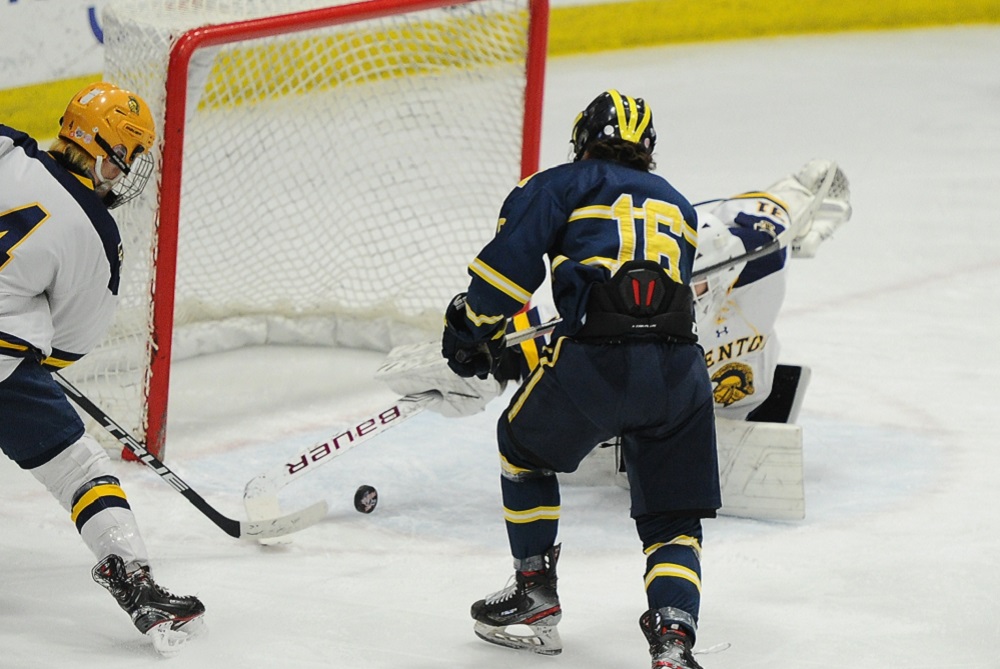
Be the Referee: More Lines
By
Sam Davis
MHSAA Director of Officials
January 17, 2023
Be The Referee is a series of short messages designed to help educate people on the rules of different sports, to help them better understand the art of officiating, and to recruit officials.
Below is this week's segment – More Lines - Listen
Lines, lines, everywhere lines. But as we learned last week, different lines mean different things.
To recap, on the line in basketball and football is out of bounds. But in soccer, tennis, volleyball, baseball and softball – on the line is in bounds.
But what about other sports?
In hockey – the puck has to be all the way over the line to be considered a goal or to be in the next zone.
In golf, a ball on the line is in play, not out-of-bounds.
Lacrosse is like football – a ball touching the line is out.
How about a track example? In the long jump – if your foot touches the line, it’s a foul.
And in bowling, if you completely cross the line – it’s a foul.
Know the lines and you’ll always know if you are in … or out.
Previous Editions:
Jan. 10: On the Line - Listen
Jan. 3: Basketball Measurements - Listen
Dec. 13: Pregame Dunks - Listen
Dec. 6: Gymnastics Judges - Listen
Nov. 22: Football Finals Replay - Listen
Nov. 15: Back Row Illegal Blocker - Listen
Nov. 8: Swim Turn Judges - Listen
Nov. 1: Soccer Referee Jersey Colors - Listen
Oct. 25: Cross Country Tie-Breaker - Listen
Oct. 18: Soccer Shootouts - Listen
Oct. 11: Safety in End Zone - Listen
Oct. 4: Football Overtime Penalty - Listen
Sept. 27: Kickoff Goal - Listen
Sept. 20: Soccer Timing - Listen
Sept. 13: Volleyball Replays - Listen
Sept. 6: Switching Sides - Listen
Aug. 30: Play Clock - Listen
Aug. 23: Intentional Grounding Change - Listen
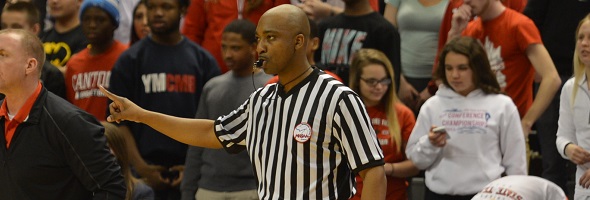
Be the Referee: Primary Areas
March 5, 2015
This week, MHSAA assistant director Mark Uyl explains how seeing the right angle is the most important part of officials making the right call.
Be The Referee is a series of short messages designed to help educate people on the rules of different sports, to help them better understand the art of officiating, and to recruit officials.
Below is this week's segment - Primary Areas - Listen
In just about every single basketball game ever played, there are times where fans will turn to each other and wonder, “why did that official make the call when there was another member of the crew that was a whole lot closer to the play?”
The most important thing in all of officiating and especially basketball officiating is: angle is the most important element for an official.
There will be many times during the game that the official that is closest to the play actually has the worst look or the worst angle. Many times the player is going up in the lane for that shot, and the whistle will come from one of the two outside officials because they had the perfect angle to see all the elements of the play and can rule correctly.
Past editions
Feb. 23 - Too Much TV - Listen
Feb. 16 - Video Clip Library - Listen
Feb. 9 - Cheer Safety - Listen
Feb. 2 - Basketball PA Announcers - Listen
Jan. 26 - Wrestling Health Concerns - Listen
Jan. 19 - Basketball Physical Contact - Listen
Jan. 12 - Video Review Part 2 - Listen
Dec. 29 - Video Review Part 1 - Listen
Dec. 17 - Registration Part 2 - Listen
Dec. 10 - Registration Part 1 - Listen
Dec. 3 - Legacy Program - Listen
Nov. 26 - Sideline Management - Listen
Nov. 19 - 7-Person Mechanics - Listen
Nov. 12 - Blocking Below the Waist - Listen
Nov. 5 - Tournament Selection - Listen
Oct. 29 - Uncatchable Pass - Listen
Oct. 22 - Preparation for Officials - Listen
Oct. 15 - Automatic First Downs - Listen
Oct. 8 - Officials & Injuries - Listen
Oct. 1 - Overtime - Listen
Sept. 25 - Field Goals - Listen
Sept. 18 - Tackle Box - Listen
Sept. 11 - Pass Interference - Listen
Aug. 25 - Targeting - Listen