


Be the Referee: Playoff Selection
October 7, 2015
This week, MHSAA assistant director Mark Uyl explains how officials are chosen to work football playoff games.
Be The Referee is a series of short messages designed to help educate people on the rules of different sports, to help them better understand the art of officiating, and to recruit officials.
Below is this week's segment - Playoff Selection - Listen
As the regular season reaches the halfway point, the MHSAA begins to look ahead to the five weeks of the football playoffs. Crews and officials are selected at mid-season for the tournament based on a number of factors.
Each official receives a rating from both schools following every game worked, and this rating average serves as the starting point for selection with the highest rated crews being considered first. The MHSAA also considers experience of the crew, recommendations for leagues and officials associations, football rule exam score (from a test) each official completes as well as the strength of the schedule the crew has worked during the season.
All of these factors are considered when selecting the very best officials to work the most important games of the season.
Be the Referee: Registration Process
By
Sam Davis
MHSAA Director of Officials
September 26, 2023
Be The Referee is a series of short messages designed to help educate people on the rules of different sports, to help them better understand the art of officiating, and to recruit officials.
Below is this week's segment – Registration Process - Listen
We talk a lot about the need for registered officials. But how do you sign up? What does it take to become a referee, umpire, or judge?
The steps are simple. Go to MHSAA.com to the “Officials” tab and identify the sport or sports you are interested in. Next, complete the MHSAA Principals of Officiating and the Officials Guidebook Exams.
The Officials Guidebook covers basic elements and procedures for becoming a sports official. This first step of the process covers playing rules, ejection protocols, game assignments, and payment of game fees.
Once you pass the exams, it’s time to connect with a locally-approved officials association. The local associations are the ones that provide the training – whether it’s on the court, on the field, on the mats, or video training – to get that person completely immersed in the rules, mechanics, and coverages of what it takes to become a good official.
Previous Editions
Sept. 20: Animal Interference - Listen
Sept. 13: Feet Rule on Soccer Throw-In - Listen
Sept. 6: Volleyball Jewelry - Listen
Aug. 30: Football Rules Similarities - Listen
Aug. 23: Football Rules Differences - Listen
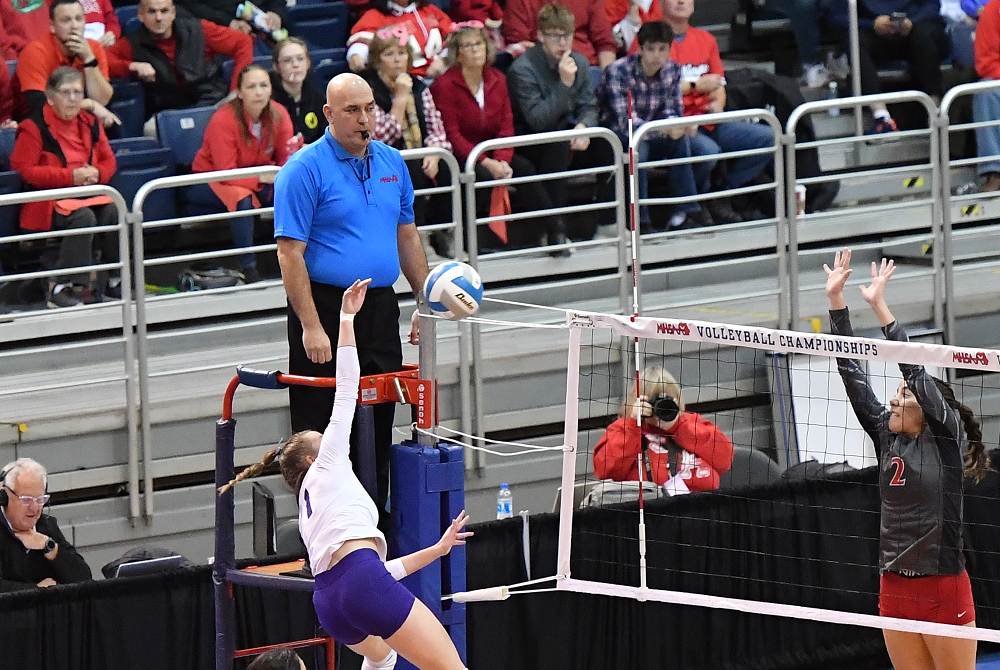
(PHOTO by Gary Shook.)