

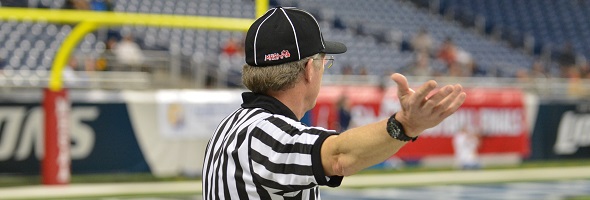
Be the Referee: Preparation for Officials
September 21, 2017
This week, MHSAA assistant director Mark Uyl explains how football officials also prepare all week for Friday's big games, while lending their talents to various levels every weekend.
Be The Referee is a series of short messages designed to help educate people on the rules of different sports, to help them better understand the art of officiating, and to recruit officials.
Below is this week's segment – Preparation for Officials - Listen
Football is a game of preparation. During the week, the teams involved, the cheerleading squads and members of the marching band put in a great deal of work to be ready for Friday night. Officials are no different.
All across the state on Monday nights, referees attend local association meetings where they review film from the previous week’s game, talk about rules, coverages and mechanics, so that our team of officials are just as prepared and ready to go as the teams playing each and every Friday night.
In addition to Friday nights, many officials also work freshman and junior varsity games on Thursday, and will often work games on the weekend – whether it be small college all the way down to youth games – to give those young people on the field the best officiating possible.
Past editions
September 14: Always Stay Registered - Listen
September 7: Other Football Rules Changes - Listen
August 31: Pop-Up Onside Kicks - Listen
August 24: Blindside Blocks - Listen
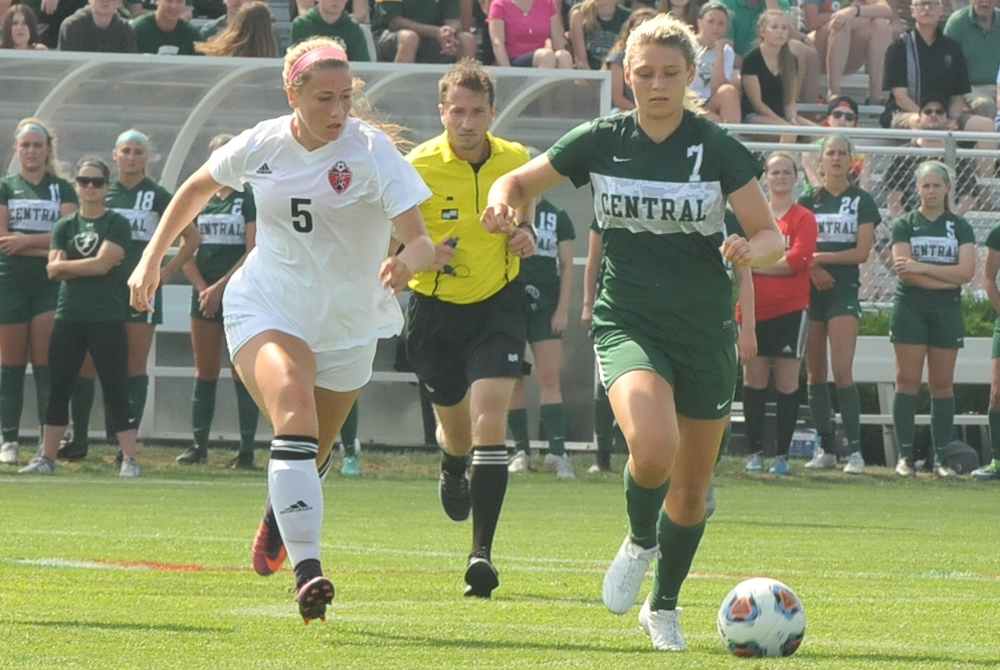
Be the Referee: Soccer Referee in Play?
By
Sam Davis
MHSAA Director of Officials
April 18, 2023
Be The Referee is a series of short messages designed to help educate people on the rules of different sports, to help them better understand the art of officiating, and to recruit officials.
Below is this week's segment – Soccer Referee in Play? - Listen
In soccer – the home team attempts a pass, but the ball deflects off the referee and right into the path of an away team forward who has a clear run at the goal. What should happen next?
a) Play continues – referees are in play and part of the game.
b) Stop play and award an indirect free kick to the home team.
c) Stop play and give a drop ball to the team that last touched the ball prior to hitting the referee – the home team in this example.
d) Or, award a drop ball to the team that benefitted from the deflection.
The correct answer is a drop ball to the home team.
If a ball hits a referee that starts a promising attack, changes possession, or goes directly into goal, play should stop and re-start with a drop ball to the team that last touched the ball.
Previous Editions:
April 11: Softball Strikeout - Listen
March 14: Basketball Instant Replay - Listen
March 7: Hockey Overtime - Listen
Feb. 28: Baker Bowling - Listen
Feb. 21: Ski Finish - Listen
Feb. 14: Swimming Touchpads - Listen
Feb. 7: In or Out-of-Bounds in Wrestling - Listen
Jan. 31: Over the Back - Listen
Jan. 24: Competitive Cheer Judges - Listen
Jan. 17: More Lines - Listen
Jan. 10: On the Line - Listen
Jan. 3: Basketball Measurements - Listen
Dec. 13: Pregame Dunks - Listen
Dec. 6: Gymnastics Judges - Listen
Nov. 22: Football Finals Replay - Listen
Nov. 15: Back Row Illegal Blocker - Listen
Nov. 8: Swim Turn Judges - Listen
Nov. 1: Soccer Referee Jersey Colors - Listen
Oct. 25: Cross Country Tie-Breaker - Listen
Oct. 18: Soccer Shootouts - Listen
Oct. 11: Safety in End Zone - Listen
Oct. 4: Football Overtime Penalty - Listen
Sept. 27: Kickoff Goal - Listen
Sept. 20: Soccer Timing - Listen
Sept. 13: Volleyball Replays - Listen
Sept. 6: Switching Sides - Listen
Aug. 30: Play Clock - Listen
Aug. 23: Intentional Grounding Change - Listen