

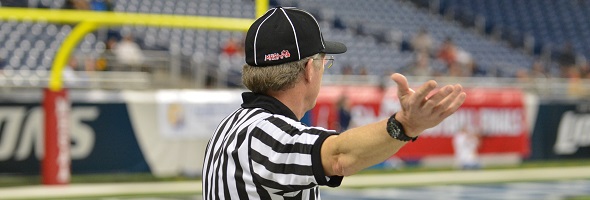
Be the Referee: Tournament Selection
November 6, 2014
This week, MHSAA assistant director Mark Uyl explains how officials are selected to work MHSAA football playoff games.
"Be the Referee" is designed to help educate people on the rules of different sports, to help them better understand the art of officiating and to recruit officials. The segment can be heard on Mondays, Wednesdays and Fridays during the school year on The Drive With Jack Ebling on WVFN-AM, East Lansing.
Below is this week's segment - Tournament Selection - Listen
Today we are going to talk about how officials are selected for the MHSAA Football Playoffs.
Just as the best teams advance in the tournament week after week, the best officiating crews advance in the tournament in much the same way.
For a crew to be eligible for assignment, many requirements have to be met prior to the season. Verification that the crew has worked a full schedule, making sure that the crew has completed the annual rules meeting, as well as a football rules test. Much weight is given to ratings -- each crew is rated by schools on a 1-5 scale following each game -- as well as observation reports where officiating experts go out and either watch crews work live or on video to make sure that the best crews advance throughout the tournament.
Past editions
Oct. 29 - Uncatchable Pass - Listen
Oct. 22 - Preparation for Officials - Listen
Oct. 15 - Automatic First Downs - Listen
Oct. 8 - Officials & Injuries - Listen
Oct. 1 - Overtime - Listen
Sept. 25 - Field Goals - Listen
Sept. 18 - Tackle Box - Listen
Sept. 11 - Pass Interference - Listen
Aug. 25 - Targeting - Listen
Be the Referee: Track & Field Exchange Zones
By
Sam Davis
MHSAA Director of Officials
May 16, 2023
Be The Referee is a series of short messages designed to help educate people on the rules of different sports, to help them better understand the art of officiating, and to recruit officials.
Below is this week's segment – Track & Field Exchange Zones - Listen
Let’s work in an exchange zone today – and see how much we know about this area during relay races at track & field events.
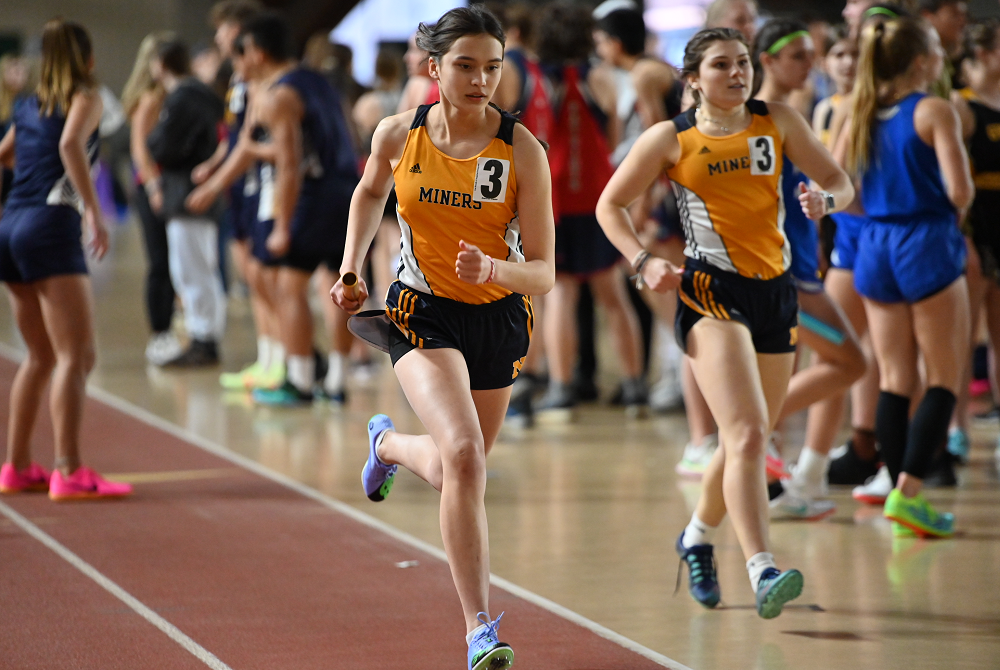
First: Exchange zones are now 30 meters in length. Previously, they were 20 meters with a 10-meter acceleration zone. But now, it’s just one 30-meter area. Runners must start inside the zone.
Now, what happens if the baton is dropped during an exchange? There are a couple of outcomes:
► If the baton is passed or dropped outside of the exchange zone – that relay team is disqualified.
► If the baton is dropped inside the zone, the runner can pick it up and re-join the race.
► If it’s dropped inside the zone but rolls out of the zone, either runner can retrieve it, return to the exchange zone and then restart his or her race – provided they don’t interfere with an opponent.
Previous Editions:
May 9: Girls Lacrosse Self-Start - Listen
May 2: Baseball/Softball Overthrow - Listen
April 25: Fifth-Quarter/Third-Half Rule - Listen
April 18: Soccer Referee in Play? - Listen
April 11: Softball Strikeout - Listen
March 14: Basketball Instant Replay - Listen
March 7: Hockey Overtime - Listen
Feb. 28: Baker Bowling - Listen
Feb. 21: Ski Finish - Listen
Feb. 14: Swimming Touchpads - Listen
Feb. 7: In or Out-of-Bounds in Wrestling - Listen
Jan. 31: Over the Back - Listen
Jan. 24: Competitive Cheer Judges - Listen
Jan. 17: More Lines - Listen
Jan. 10: On the Line - Listen
Jan. 3: Basketball Measurements - Listen
Dec. 13: Pregame Dunks - Listen
Dec. 6: Gymnastics Judges - Listen
Nov. 22: Football Finals Replay - Listen
Nov. 15: Back Row Illegal Blocker - Listen
Nov. 8: Swim Turn Judges - Listen
Nov. 1: Soccer Referee Jersey Colors - Listen
Oct. 25: Cross Country Tie-Breaker - Listen
Oct. 18: Soccer Shootouts - Listen
Oct. 11: Safety in End Zone - Listen
Oct. 4: Football Overtime Penalty - Listen
Sept. 27: Kickoff Goal - Listen
Sept. 20: Soccer Timing - Listen
Sept. 13: Volleyball Replays - Listen
Sept. 6: Switching Sides - Listen
Aug. 30: Play Clock - Listen
Aug. 23: Intentional Grounding Change - Listen
PHOTO: Negaunee's Nori Korsman gets the handoff from teammate Olivia Lunseth to run the third leg of the winning 1,600 relay at April's Superior Dome Invitational. (Photo by Cara Kamps.)