


Be the Referee: Video Review - Part 2
January 15, 2015
This week, MHSAA assistant director Mark Uyl explains further the use of video replay during MHSAA tournament events and why it is difficult to expand use at the high school level.
Be The Referee is a series of short messages designed to help educate people on the rules of different sports, to help them better understand the art of officiating, and to recruit officials.
Below is this week's segment - Video Review Part 2 - Listen
In last week’s segment, we talked about the expanded use of instant replay for officials at both the collegiate and professional levels. The question is often asked of the MHSAA, “When are you going to use more instant replay at the high school level?”
Currently, there are a number of obstacles that prevent this, the first dealing with volume. With over 700 member schools in the MHSAA, hundreds of games and contests are played on virtually every night of the week. The second deals with cost and camera angles. At the high school level, most games are typically filmed or videoed using only a single camera from a set location, which precludes the use of various angles that would assist in getting the call correct.
Past editions
Dec. 29 - Video Review Part 1 - Listen
Dec. 17 - Registration Part 2 - Listen
Dec. 10 - Registration Part 1 - Listen
Dec. 3 - Legacy Program - Listen
Nov. 26 - Sideline Management - Listen
Nov. 19 - 7-Person Mechanics - Listen
Nov. 12 - Blocking Below the Waist - Listen
Nov. 5 - Tournament Selection - Listen
Oct. 29 - Uncatchable Pass - Listen
Oct. 22 - Preparation for Officials - Listen
Oct. 15 - Automatic First Downs - Listen
Oct. 8 - Officials & Injuries - Listen
Oct. 1 - Overtime - Listen
Sept. 25 - Field Goals - Listen
Sept. 18 - Tackle Box - Listen
Sept. 11 - Pass Interference - Listen
Aug. 25 - Targeting - Listen
Be the Referee: Soccer Overtime
By
Paige Winne
MHSAA Director of Brand Management
October 24, 2023
Be The Referee is a series of short messages designed to help educate people on the rules of different sports, to help them better understand the art of officiating, and to recruit officials.
Below is this week's segment – Soccer Overtime - Listen
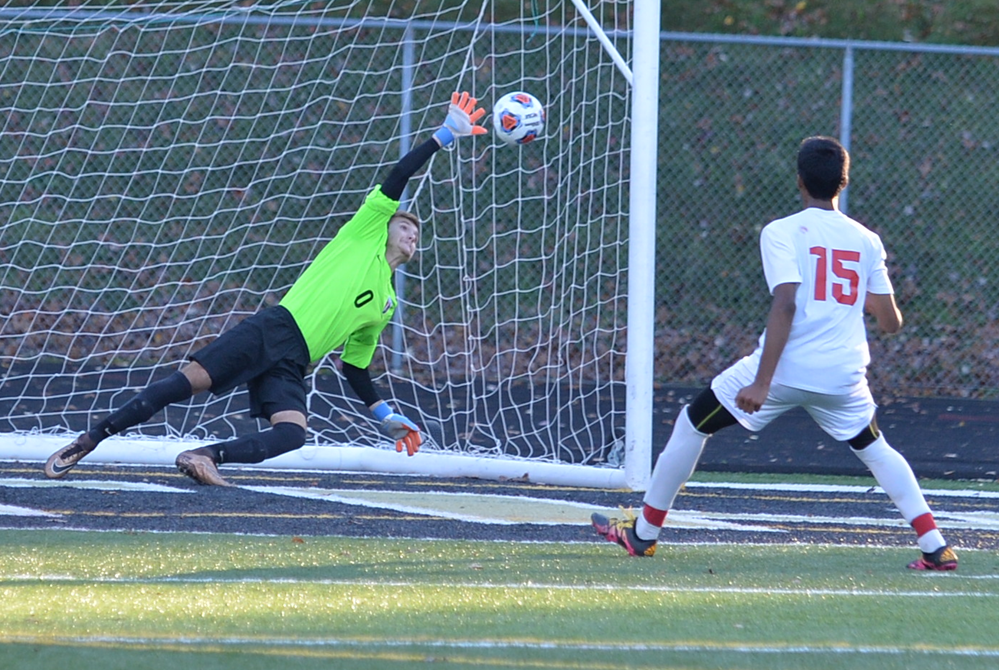
Soccer games in the postseason have one big noticeable difference from the regular season. In the postseason, games cannot end in a tie – so games go to overtime and possibly a shootout.
Here’s how that works:
If the game is tied at the end of regulation, it will go to overtime, which is two 10-minute periods played in its entirety. There is no sudden death or golden goal winner. If there is a winner at the end of the 20 minutes, that team wins and advances to the next round. If there’s still a tie, we move to a shootout.
In the shootout, the teams alternate taking five penalty kicks. If it’s still tied after five kicks, they each kick until the tie is broken.
Previous Editions
Oct. 17: Tennis Spin - Listen
Oct. 10: Blocked Kick - Listen
Oct. 3: Volleyball Double & Lift - Listen
Sept. 26: Registration Process - Listen
Sept. 20: Animal Interference - Listen
Sept. 13: Feet Rule on Soccer Throw-In - Listen
Sept. 6: Volleyball Jewelry - Listen
Aug. 30: Football Rules Similarities - Listen
Aug. 23: Football Rules Differences - Listen