


Official Feedback
June 10, 2014
We receive much unsolicited comment about the performances of officials and the conduct of spectators. Here’s some of what the MHSAA does to actively solicit input from its key constituents.
Since 1956, the MHSAA has required member schools to provide numerical ratings of officials who work their contests. Since 1998, the system has also allowed schools to cite particular areas of perceived weakness; and doing so is required whenever a school provides a rating of “5” (worst) on the 1-to-5 scale.
There are many deficiencies in a system like this, including that it sometimes means that coaches or administrators are doing the rating, and some of them have never officiated and may not know the rules and mechanics as well as the officials. The rating can also be affected by whether the school won or lost.
Nevertheless, the system has value, not as a true evaluation of an official’s performance for any particular contest, but – when the ratings of all schools are combined over a three-year average – as a number that the official can use to understand his or her abilities relative to all other officials. And it’s a number the MHSAA can use, along with recommendations of local officials associations and assigners, when considering assignments to various levels of MHSAA tournaments.
It is also noteworthy that for 25 years, the MHSAA has used a reporting form allowed in some cases and required in others, whereby officials report unusual events to the MHSAA office immediately after contests. During a typical fall season, about 300 such reports will be filed; about 250 each winter season; about 200 each spring season. Any school which receives three or more negative reports over three seasons receives a letter of concern from the MHSAA and the school’s name is published in benchmarks; and any school that receives no such reports over three seasons receives a letter of praise.
In 2008-09, the MHSAA also began a program whereby officials could rate school sportsmanship. During the winter season of 2013-14, there were approximately 4,000 reports filed, including 2,400 in basketball. The Basketball Coaches Association of Michigan honors the best 100 schools where BCAM members are coaching.
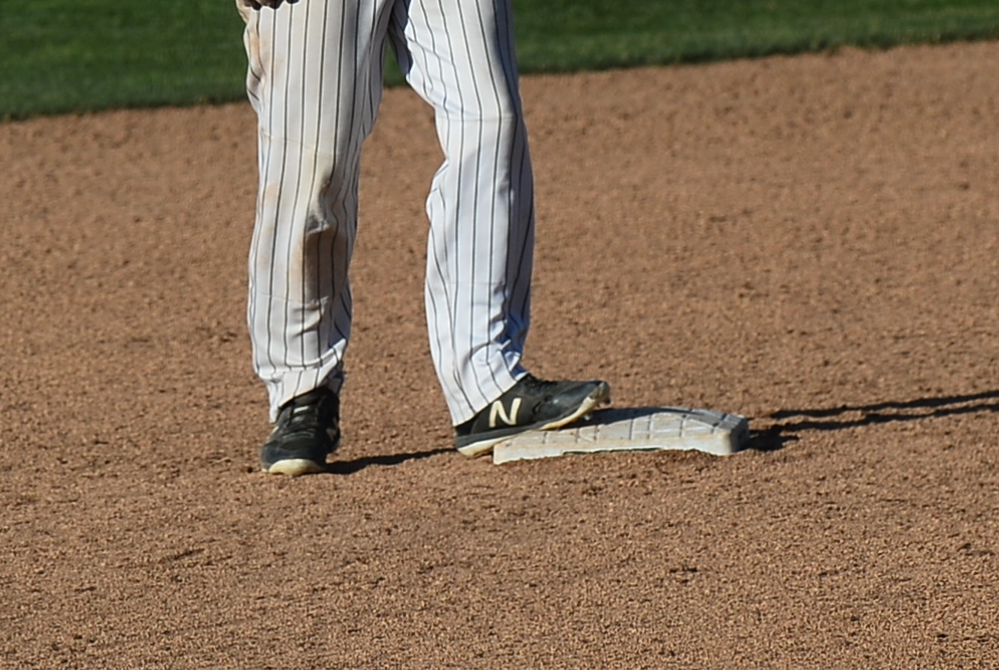
Be the Referee: Missing the Base
By
Sam Davis
MHSAA Director of Officials
June 13, 2023
Be The Referee is a series of short messages designed to help educate people on the rules of different sports, to help them better understand the art of officiating, and to recruit officials.
Below is this week's segment – Missing the Base - Listen
We’re on the baseball diamond today for a “You Make the Call.”
Here’s the situation: Runners are on the corners with two outs. The batter hits a long home run. The runner on first base misses second base – and the infraction is properly appealed by the defense.
How many runs score on this play?
If you said none, you got it right. Even if the runner on third crossed home plate before the other runner missed second, no runs count. A run is not scored if the preceding runner is declared out upon appeal for failure to touch one of the bases or if they left too soon on a caught fly ball.
A potential three-run homer is now no runs and the end of the inning.
Previous Editions:
June 6: Softball Interference - Listen
May 30: Officials Registration - Listen
May 23: Soccer Offsides or Goal? - Listen
May 16: Track & Field Exchange Zones - Listen
May 9: Girls Lacrosse Self-Start - Listen
May 2: Baseball/Softball Overthrow - Listen
April 25: Fifth-Quarter/Third-Half Rule - Listen
April 18: Soccer Referee in Play? - Listen
April 11: Softball Strikeout - Listen
March 14: Basketball Instant Replay - Listen
March 7: Hockey Overtime - Listen
Feb. 28: Baker Bowling - Listen
Feb. 21: Ski Finish - Listen
Feb. 14: Swimming Touchpads - Listen
Feb. 7: In or Out-of-Bounds in Wrestling - Listen
Jan. 31: Over the Back - Listen
Jan. 24: Competitive Cheer Judges - Listen
Jan. 17: More Lines - Listen
Jan. 10: On the Line - Listen
Jan. 3: Basketball Measurements - Listen
Dec. 13: Pregame Dunks - Listen
Dec. 6: Gymnastics Judges - Listen
Nov. 22: Football Finals Replay - Listen
Nov. 15: Back Row Illegal Blocker - Listen
Nov. 8: Swim Turn Judges - Listen
Nov. 1: Soccer Referee Jersey Colors - Listen
Oct. 25: Cross Country Tie-Breaker - Listen
Oct. 18: Soccer Shootouts - Listen
Oct. 11: Safety in End Zone - Listen
Oct. 4: Football Overtime Penalty - Listen
Sept. 27: Kickoff Goal - Listen
Sept. 20: Soccer Timing - Listen
Sept. 13: Volleyball Replays - Listen
Sept. 6: Switching Sides - Listen
Aug. 30: Play Clock - Listen
Aug. 23: Intentional Grounding Change - Listen
PHOTO by Gary Shook.