

Century of School Sports: MHSAA Over Time
December 17, 2024
The Olympics in Paris have just completed. A presidential election was held in November. The information technology industry rolls out new products impacting everyday life for years to come. And, there was an MHSAA Representative Council Meeting in December.
The year is 1924.
History, indeed, repeats itself. Yet, each time it does, history is also made.
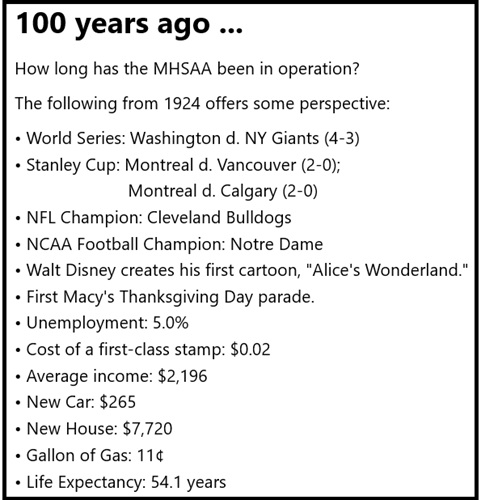 Johnny Weissmuller, later of Tarzan fame, won three swimming gold medals and a bronze medal in water polo at the VIII Olympiad. Calvin Coolidge defeated John W. Davis in the 1924 presidential election. International Business Machines Corp. took over a small company with sights set on becoming an international force, creating what we know as IBM that February.
Fast forward 100 years, and Simone Biles, Trump v. Harris, and SpaceX and AI have taken the place of those before them for their rightful place in history.
The MHSAA? Well, it’s still rolling intact 100 years after that groundbreaking, inaugural meeting on Dec. 13, 1924.
Not that there haven’t been changes, challenges, and gymnasiums and fields full of history along the way. There have been plenty. Following is a timeline highlighting some of the important dates, personnel and battles outside the athletic boundaries that have us where we are today.
OPENING DAYS (1800s) – A new form of secondary education – the public high school – started to sweep the state in 1848. In 1895, the High School Section of the Michigan State Teachers Association deemed that conditions required a cooperative effort to supervise and regulate inter-school athletic contests.
A NEW GAMEPLAN (Early 1900s) – Athletics in Michigan high schools spread rapidly during the early 1900s, often following the collegiate model that emphasized winning over sportsmanship. Such behavior endangered the future of school sports, before educational leaders – seeing the positive side of these additional activities in school settings – gathered to formulate rules for regulating games.
BIRTH OF THE MHSAA (1924) – From 1909-1924, the Michigan Interscholastic Athletic Association set forth eligibility rules and administrative regulations for school sports. When the office of the state Superintendent sought to take control in 1924, the MIAA resisted, seeking to maintain its autonomy and authority. Negotiations ensued and ultimately resulted in the creation of a Representative Council for the new Michigan High School Athletic Association. The first Council meeting on Dec. 13, 1924, included representation of schools large and small, public and private, and from both peninsulas – much as the Association operates today.
FOUNDING FATHER (1924-42) – A driving force behind the new MHSAA was Lewis L. Forsythe, an educator from Ann Arbor who twice served as president of the Michigan Interscholastic Athletic Association. He was elected as president of the first MHSAA Representative Council, serving from 1924-42, during which time he joined colleagues from Wisconsin, Illinois and Iowa to found what is now the National Federation of State High School Associations. His book “Athletics in Michigan High Schools: The First Hundred Years” provides us with much of the historical record and context we point to today.
UNITED WE STAND (1933) – Michigan's two peninsulas make it unique among states. Recognizing that, the Upper Peninsula was one of four designated Representative Districts at the MHSAA’s conception in 1924. Tournament travel, expenses and weather – often more extreme in the UP – led to the creation of the Upper Peninsula Athletic Committee in 1933. For a time, the UP and LP conducted separate postseasons in all sports. In 1948, UP teams returned to postseason competition with LP schools in select sports. That arrangement continues to this day, with the UP Athletic Committee recommending the mix of statewide and UP-only championships.
WRITING THE BOOK (1931-68) – Charles E. Forsythe (L.L. Forsythe’s nephew) became the MHSAA’s first full-time executive director in 1931 and would literally and figuratively write the book on athletic leadership. His college textbook, “The Administration of High School Sports,” continued to be published even after his time as the longest-serving director in Association history concluded in 1968. Interest in school sports thrived during his tenure, highlighted by growth in MHSAA Basketball Tournament attendance from 126,000 to 775,000 at his retirement. “Charlie” also championed methods to make the games safer by collecting injury data and focusing on equipment. Notably, Forsythe took a three-year leave to direct physical fitness activities for the U.S. Navy during WWII.
 LOCALLY GROWN (1958) – A close working relationship between the MHSAA and the state’s athletic directors has long been key to the administration of school sports in Michigan, and 1958 saw the creation of the Michigan Association of Physical Education and Athletics. Renamed the Michigan Interscholastic Athletic Administrators Association in 1982, the MIAAA still works hand-in-hand with MHSAA staff to foster growth in statewide school athletic programs through local educational leaders.
GIRLS BEGIN CHAMPIONSHIP RUN (1972) – Women’s athletics gained steam nationally with the passage of Title IX on June 23, 1972. In Michigan, the law only furthered participation growth, as girls had been playing sports as early as 1898. The first Girls Regional, in skiing, took place in 1952. The first MHSAA girls championship also predates Title IX, as a statewide MHSAA Final in gymnastics was held on March 11 of that year – and girls were competing for Finals titles in nine sports by the end of the 1975-76 school year. Competitive Cheer, created by the MHSAA in 1994, continues to be the country’s only variety of cheerleading that meets the federal criteria for sport under Title IX. This trailblazing spirit continues as Michigan consistently ranks among the top 10 states nationally in girls sports participation.
INDEPENDENCE DAY (1972) – The MHSAA’s hard-earned status gained during the mid-1920s again was challenged nearly 50 years later, in 1972. A Michigan Attorney General ruling determined private organizations lacked legal grounds for eligibility matters and that authority for athletics rested with the State Board of Education. A battle for control of school sports made its way to the state legislature, where the House and Senate voted to give the authority to the MHSAA. On April 18, 1972, new Articles of Incorporation officially made the Association a non-profit 501(c)(3), untethered from state government, and affirmed the independence of the MHSAA.
FRIDAY NIGHT LIGHTS (1975) – Despite being a staple of Michigan fall Friday nights for decades, football was the last existing sponsored sport added to the postseason menu, first offering pigskin Finals in 1975. Now a Thanksgiving weekend tradition, the Pontiac Silverdome served as host from 1976-2004, with Detroit’s Ford Field welcoming the event in 2005. The 8-player variety came to the table in 2011, most often showcased at Northern Michigan University’s Superior Dome. Football remains the most-played and most-attended sport among MHSAA offerings.
MAKING – AND ANSWERING – THE CALL (1980) – Officials have been a core constituency of the MHSAA throughout its century-long history. Nearly 10,000 register every year so that students can play the games they love, with the total growing to a high of 12,722 during the 2008-09 school year. Since 1980, the MHSAA has honored officials who reach milestone years of service and annually presents the Norris Award to recognize a veteran official's involvement in mentoring and education.
ON THE COURTS v. IN THE COURTS (1986- 2004) – School sports are the lifeblood of the MHSAA, but occasionally games on our courts have shifted to contests in courts. Victories there have further strengthened the MHSAA’s leadership position for schools. In 1986, it was determined that school sports are a privilege and not a right, with transfer regulations created by member schools and not outside entities. The MHSAA Restitution Rule was upheld in 1991, allowing the association to defend its rules. That same year the Maximum Age and Semester rules also received a positive verdict. The Michigan Supreme Court further stamped the MHSAA’s authority in 2004 in a ruling that helped set legal standards for all private, nonprofit associations in Michigan.
THE FUTURE IS THE PRESENT (1990s and 2000s) – Leadership is passed from generation to generation. The 1990s and 2000s introduced dedicated programs to train and educate student leaders. The first Women In Sports Leadership Conference was held in 1990 and remains the largest and longest-running of its kind. Other student-centered programs, including Sportsmanship Summits, online Captains Courses, the Scholar Athlete Award and the Student Advisory Council, also came to prominence during these years.
SAFE AT HOME (2010s) – As Executive Director John E. “Jack” Roberts entered the final decade of his 32-year tenure, Michigan became a national leader in school sports health and safety initiatives. His “Four Hs” – Health Histories, Heads, Heat and Hearts – yielded programs aimed at a safer environment. This focus included a more comprehensive preparticipation physical exam questionnaire, heightened concussion reporting and care protocols, creation of a heat management policy for practices and contests, and CPR requirements for coaches with a goal of placing AEDs in every school. The MHSAA also provided catastrophic and concussion care insurance free of charge to all student-athletes, which is yet another additional benefit of MHSAA membership.
TELLING OUR STORY (2010s) – For most of the MHSAA’s history, school sports enjoyed comprehensive media coverage at the local and statewide levels. During the early 21st century, a seismic shift in mediums led to instant, electronic coverage with multitudes of entertainment options all vying for attention. MHSAA staff kept pace through enhanced pages on MHSAA.com which featured stories, scores and schedules, and video and audio productions, and promoted this new content through a robust presence on social media. These efforts contribute to ensuring school teams, coaches, administrators, officials and fans are celebrated on the public stage.
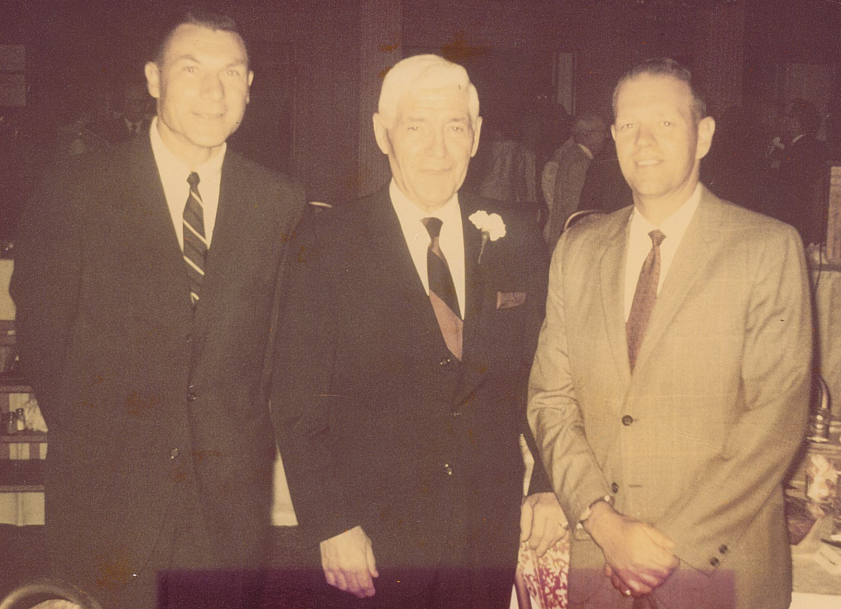
CONTINUITY COUNTS (1931-Today) – The strength of any association is its leaders. Continuity is vital, too, transitioning seamlessly from one era to the next. With only five fulltime executive directors in its history, the MHSAA has checked those boxes. That exclusive roster is as follows: Charles E. Forsythe (1931-68), Allen W. Bush (1968-78), Vern L. Norris (1978-86), John E. “Jack” Roberts (1986-2018) and current director Mark Uyl.
ROSTER EXPANSION – The additions of MHSAA Tournament sponsorship for bowling in 2004 and lacrosse in 2005, and a court-mandated switching of eight sports seasons to begin the 2007-08 school year, have produced the current MHSAA sports calendar. A girls individual wrestling bracket was added to the MHSAA Tournament in 2022, while girls field hockey and boys volleyball were added for 2025-26. These may not be the last as the evolution of sports, changing student interests, and a continued focus on participation will drive our future.
Longtime communications director John Johnson said the following upon his recent retirement: “Being the voice, and often having to be the face (of the MHSAA), is something that came with the territory – somebody had to be the storyteller. And while you can be prideful about that, the important thing is still the story. I’ve said it a lot: I was the lucky guy who got the job. Because the story was there to be told.”
Yes, the Association’s missions remain largely unchanged since the winter of 1924. But, it’s the stories of our students, coaches, officials and administrators that always have been – and will continue to be – the motivation for the MHSAA’s efforts.
Previous "Century of School Sports" Spotlights
Dec. 10: On This Day, December 13, We Will Celebrate - Read
Dec. 3: MHSAA Work Guided by Representative Council - Read
Nov. 26: Finals Provide Future Pros Early Ford Field Glory - Read
Nov. 19: Connection at Heart of Coaches Advancement Program - Read
Nov. 12: Good Sports are Winners Then, Now & Always - Read
Nov. 5: MHSAA's Home Sweet Home - Read
Oct. 29: MHSAA Summits Draw Thousands to Promote Sportsmanship - Read
Oct. 23: Cross Country Finals Among MHSAA's Longest Running - Read
Oct. 15: State's Storytellers Share Fall Memories - Read
Oct. 8: Guided by 4 S's of Educational Athletics - Read
Oct. 1: Michigan Sends 10 to National Hall of Fame - Read
Sept. 25: MHSAA Record Books Filled with 1000s of Achievements - Read
Sept. 18: Why Does the MHSAA Have These Rules? - Read
Sept. 10: Special Medals, Patches to Commemorate Special Year - Read
Sept. 4: Fall to Finish with 50th Football Championships - Read
Aug. 28: Let the Celebration Begin - Read
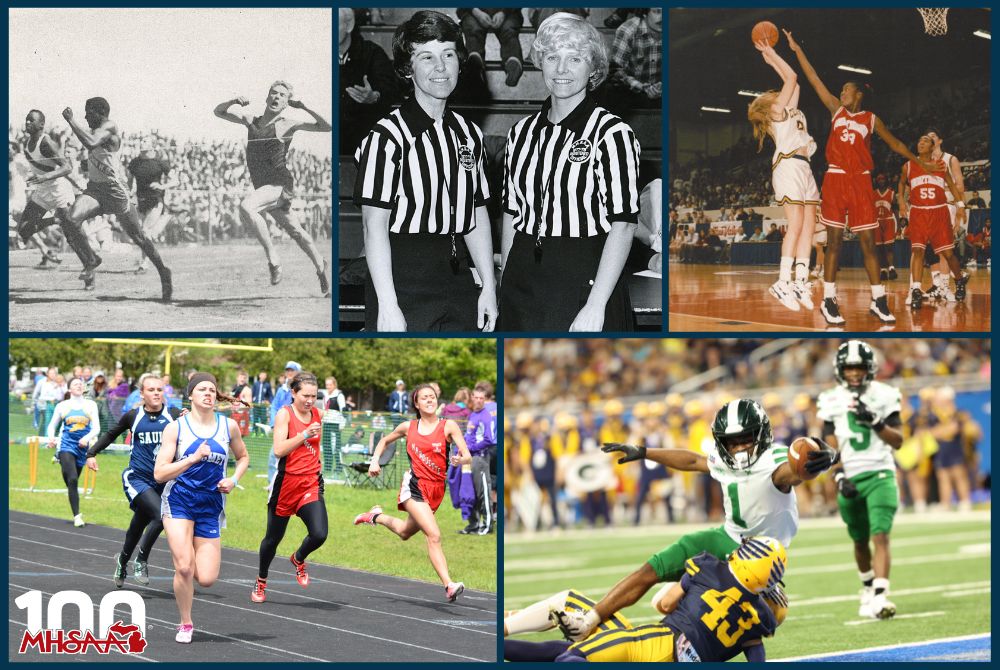
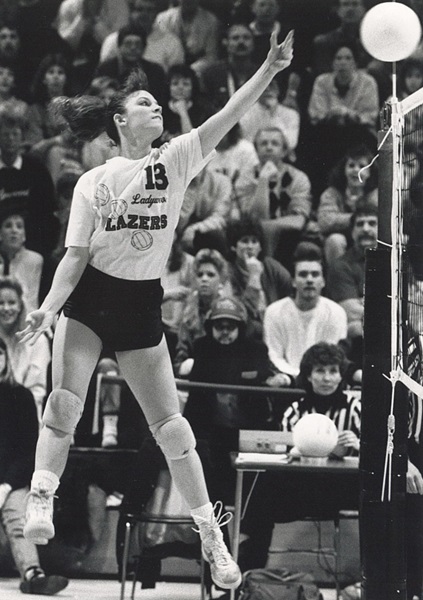
PHOTOS (Top) Clockwise from left: Runners approach the finish line during a race at the 1950 Lower Peninsula Boys Track & Field Finals at Michigan State College. A pair of officials take a photo during the 1977-78 school year. Flint Northern's Tawana McDonald (33) gets a hand up on a shot by Walled Lake Central's Nicole Mullins during the 1996 Girls Basketball Finals. Racers sprint toward the finish during the 2015 Upper Peninsula Girls Track & Field Finals at Kingsford. Detroit Cass Tech's Corey Sadler Jr. (1) stretches for the end zone during the 11-Player Division 1 Final last month. (Middle) Livonia Ladywood's Jenny Belcher tips the ball during her team's 1988 Class A Volleyball Semifinal win over Lake Orion. (Below) Past MHSAA executive directors (from left) Allen W. Bush, Charles E. Forsythe and Vern L. Norris take a photo together. (MHSAA file photos.)
This Week in High School Sports: 12/4/25
By
Jon Ross
MHSAA Director of Broadcast Properties
December 4, 2025
This week's edition reviews the 11-Player Football Finals and awards Game Balls to high achievers in ice hockey and basketball.
 The 5-minute program each week includes feature stories from MHSAA.com or network affiliates, along with "Be the Referee," a 60-second look at the fine art of officiating.
"This Week in High School Sports" is powered by MI Student Aid, a division within the Department of Lifelong Education, Advancement, and Potential (MiLEAP).
Listen to this week's show by Clicking Here.
Previous 2025-26 editions
Nov. 26: Girls Volleyball, 8-Player Football, Lower Peninsula Girls Swimming & Diving Finals review - Listen
Nov. 20: NFHS Network championship schedule, Sportsmanship Summits - Listen
Nov. 13: Performance of the Week, Shelby football - Listen
Nov. 6: Lower Peninsula Cross Country Finals, Boys Soccer Finals review - Listen
Oct. 30: Mendon football's Owen Gorham, MHSAA Girls Volleyball Tournament primer - Listen
Oct. 23: Lower Peninsula Girls Golf Finals review, LP Boys Tennis Finals - Listen
Oct. 16: MHSAA Football Playoff selection, Field Hockey Finals week primer - Listen
Oct. 9: Upper Peninsula Girls Tennis Finals review, 2025 Sportsmanship Summits - Listen
Oct. 2: 2026 MHSAA/Farm Bureau Insurance Scholar-Athlete Awards, Boys Soccer Tournament - Listen
Sept. 25: Saline's record-approaching performance, SAC sportsmanship statement - Listen
Sept. 18: Athletic director training, "Block Party" volleyball report - Listen
Sept. 11: Football coaching legend Al Fracassa, MHSAA Student Advisory Council - Listen
Sept. 4: MHSAA participation rising, Harbor Springs soccer's Henry Juneau - Listen
Aug. 28: Field hockey's first season, changes to Football Playoffs, Tennis Finals - Listen