

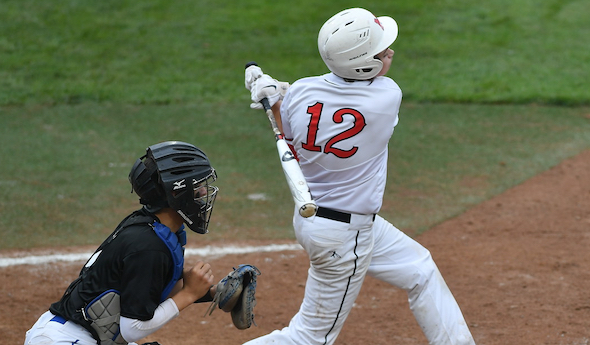
Play it Safe: Basics of Proper Helmet Use
February 4, 2020

Henry Ford Health System
If you or your child plays sports or participates in physically risky activities, wearing a helmet could be lifesaving. While no helmet is concussion-proof, wearing one can help reduce the risk of serious head injuries.
"Helmets are made with materials that help reduce impact to the head, protecting the skull from damage," says Jeffrey Kutcher, M.D., a sports neurologist who treats athletes at the Henry Ford Kutcher Clinic for Concussion and Sports Neurology. "You should be wearing a helmet whether you're playing a contact sport or riding something on a hard surface, such as a bike, scooter, skateboard or rollerblades."
Head Injury Prevention 101: Helmet Buying Basics
All helmets are certified at the same level for multi-use recreational activities. So there's no need to search for a specific seal or rating. Instead, when you're purchasing a helmet — or getting one second-hand — focus on these four factors:
How you’ll use it:
Pay attention to the risks involved with the activity you're doing. If you're biking, skiing or snowboarding, for example, you're wearing a helmet in case you get hit, not because you'll get hit.
There are two types of helmets: single-impact and multiple-impact. Single-impact helmets are made with foam materials that break down when hit as part of their force mitigating strategy. These helmets work well for bicycling, skateboarding, skiing or snowboarding. Multiple-impact helmets, such as those designed for sports like football, hockey and lacrosse, can withstand many hits over an entire season. The materials in these helmets don't break down, but rather compress and regain their original form.
"A helmet may perform better in the lab — for example, the dummy brain will experience 98Gs of force instead of 100Gs — but 2Gs of force probably won't make enough of a difference with a one-time injury," Dr. Kutcher says. "But 2Gs less force per hit for a linebacker who suffers multiple blows on a daily basis for many years? That could make a big difference.”
If football is your sport, the National Football League provides a helmet rating system that assesses helmets based on their ability to mitigate force over time.
How it fits:
Helmets fit differently depending on the make, style and type of sport they’re made for. "The key is making sure the helmet covers the entire skull and doesn't move around when in use," Dr. Kutcher says. The helmet should sit on the head without falling forward or backward. If you're relying only on a chinstrap to keep it in place, you don't have the right fit.
How comfortable it is:
Not all helmet brands fit every head. Helmet designs vary just like running shoes do. When you're shopping for a helmet, make sure it's snug, but not tight or uncomfortable. Comfort is critical, especially for kids. "You don't want a child to develop a negative association with wearing a protective helmet," Dr. Kutcher says.
What condition it’s in:
To get the most protection, your helmet should be in top condition. Do not wear a cracked or broken helmet, or one that has been involved in a crash or similar event (unless it's a multiple-impact design). An impact can crush foam materials. And don't allow the helmet to get too hot or cold — that can cause the materials to break down over time.
Get the Best Helmet Fit for Your Head
Properly wearing a helmet provides the greatest defense against injury — more than any style or brand. To make sure your helmet is secure, follow these rules:
· Measure head circumference: Every helmet brand provides a size chart, along with instructions about how to select the best fit. To get the best measurement, use a cloth tape to measure your head circumference. Place the tape about an inch above the eyebrows, keeping it level from front to back. If the measurement falls between sizes, select the smaller size.
· Pay attention to hairstyles: Make sure to try the helmet on with the hairstyle you'll have during the activity. A long-haired bike rider who gets a short haircut may require a helmet adjustment.
· Watch your vision: The helmet should not block your vision. You should be able to see straight ahead and side to side.
To Wear a Helmet or Not To Wear a Helmet: When to Play It Safe
There are several sports that don't require wearing a helmet. But if you or your child is involved in rugby or soccer, or another sport where helmets are optional, that doesn’t mean you're in the clear.
"It's important to base any decision about whether or not to wear a helmet in conjunction with your sports neurologist," notes Dr. Kutcher. "Your past medical history and current health status may still warrant the use of a helmet."
Unsure whether you're at risk of sustaining a head injury? Get a brain health baseline evaluation. Proper consideration of your brain health includes a physical examination, along with a personal and family medical and neurological history. It also offers you an opportunity to learn how to best protect your head.
Related Topic: 7 Tips for Recovering Mentally After a Sports Injury
Dr. Jeffrey Kutcher is a sports neurologist at the Henry Ford Concussion and Sports Neurology Clinic and the global director of the Kutcher Clinic.
Want to learn more? Henry Ford Health System sports medicine experts are treating the whole athlete, in a whole new way. From nutrition to neurology, and from injury prevention to treatment of sports-related conditions, they can give your athlete a unique game plan.
Visit henryford.com/sports or call (313) 972-4216 for an appointment within 24 business hours.

Century of School Sports: Together, We are the MHSAA
By
Geoff Kimmerly
MHSAA.com senior editor
July 9, 2025
A primary mission of the MHSAA’s 100-year anniversary has been to connect today’s athletes, administrators, coaches, game officials and spectators with their roles in the ever-growing story of school sports in Michigan.
Indeed, together, we are the MHSAA.
Over the last 10 months and with today’s 44th and final installment, our “Century of School Sports” series also has sought to tell a deeper and more detailed story of how the MHSAA has arrived at this moment. As our work becomes new with the start of every school year, and with every family experiencing educational athletics for the first time, it’s a story that must always be updated, expanded and retold.
But at the heart of most organizations is a fundamental statement. So to close this celebration, we below break down what is literally the “About” of the MHSAA – as we prepare to build on these values in adding to our story again and again during the century to come.
The MHSAA is a private, not-for-profit corporation …
Although the MHSAA has built a thriving relationship with the Michigan Department of Education over the last many decades – and, in fact, the state superintendent or designee has a non-voting position on the Representative Council – the MHSAA also has maintained its autonomy since its start and even before, as a legislative takeover attempt of the former Michigan Interscholastic Athletic Association led to the MHSAA’s formation in December 1924.
The MHSAA was first incorporated in 1972 and is classified as a 501(c)(3) organization. In the most basic terms, as a non-profit corporation the MHSAA must reinvest all revenue it receives back into its mission of administering school sports. Put another way, whatever money the MHSAA makes must be spent to conduct its tournament events and the several other educational, leadership, etc., programs the MHSAA provides for students, coaches, officials and others who contribute to educational athletics.
… of voluntary membership …
Through their boards of education, member schools voluntarily join the MHSAA each and every year, vowing by formal school board resolution to abide by and enforce the MHSAA’s rules for educational athletics. Membership is optional; schools may conduct a complete program of interscholastic athletics and may participate against MHSAA member schools in regular-season competition without joining the MHSAA. But the great majority of high schools in Michigan approve that membership annually.
… by more than 1,500 public and private senior high schools and junior high/middle schools …
Over the last several years, the MHSAA has counted about 750 high schools and 800 junior high or middle schools, or elementary schools with 6th-grader participation, among its membership. For 2024-25, those totals were 754 high schools, 777 junior high/middle schools and 63 elementary schools with participating sixth graders.
… which exists to develop common rules for athletic eligibility and competition.
This drove the original formation of school sports associations across the nation going back to the late 1800s, including the Michigan State Teachers Association’s first inroad into athletic administration in 1895. The MHSAA Handbook, updated annually with rules and other changes voted upon by the Representative Council, is the rulebook for all MHSAA member schools – public and nonpublic – with rules for general topics like student eligibility but also specific to each sport to regulate scheduling and other intricacies.
No government funds or tax dollars support the MHSAA …
In maintaining that independence noted above, the MHSAA receives no funding from local, state or federal governments. The MHSAA’s income is derived primarily from ticket sales at postseason events, with smaller portions from sponsors and advertising, officials and coaches education registration fees – and again, with all money brought in by the MHSAA going back into those tournament events and programs to support students, athletic directors, coaches and officials.
… which was the first such association nationally to not accept membership dues or tournament entry fees from schools.
These have long been points of pride for the MHSAA; membership remains and has been completely free since the mid-1940s, after the end of World War II, and member schools may enter MHSAA Tournaments for free.
Member schools which enforce these rules are permitted to participate in MHSAA tournaments …
In adopting and upholding MHSAA rules as their own, school districts agree to promote a standard of competitive equity necessary to keep MHSAA Tournament events fair for all involved.
… which attract more than 1.4 million spectators each year.
Over the last 35 years, attendance at MHSAA Tournament events has reached at least 1.1 million spectators annually (not counting the COVID-affected 2019-20 and 2020-21 school years), with a high of 1.68 million during the 2005-06 school year. Attendance during the 2022-23 and 2023-24 school years began climbing again toward 1.5 million spectators, those last two years’ ticket totals ranking among the highest over the last 15.
School sports have a massive footprint in Michigan, which has a population just above 10 million residents. Sure, attendance figures likely count the same spectators several times – the same person might buy tickets for several rounds of several sports over the course of a school year – but a one-to-one comparison using athlete totals also is powerful.
Conservatively, Michigan has at least 160,000 high school athletes. Add in parents of those athletes, grandparents, other relatives with significant interest, and that’s a huge block – let’s say at least 5 percent of the state’s population have some current tie to the athletes playing at the local high school. That’s not even covering athletes at MHSAA junior highs and middle schools, coaches and athletic directors at all levels, and more than 8,000 game officials who make those contests possible. And our groups of athletes are rolling over at least every four years, meaning many tens of thousands more have had at least recent direct contact as participants in our programs.
The MHSAA always has provided opportunities to compete and win championships, but more importantly to learn life lessons gleaned from simply taking part in the process.
This work is important; its impact is significant. And just as our predecessors surely felt beginning this endeavor 100 years ago, we remain eager and enthused to play our part.
Previous "Century of School Sports" Spotlights
June 25: All-Time 'Parade of Champions' - Read
June 17: Top Performers Tell Us What High School Sports Mean to Them - Read
June 10: 'The Mitten' Becomes Sought-After Symbol of MHSAA Greatness - Read
June 3: MHSAA's Move to TV, Now Internet, 60 Years Old & Growing - Read
May 27: Upper Peninsula Helps Make Michigan's School Sports Story Unique - Read
May 20: From Nearly A to Z, Schools Repped by 221 Nicknames - Read
May 13: These Record-Setters were Nearly Impossible to Defeat - Read
May 6: 200+ Representatives Fill All-Time Council Roster - Read
April 29: MHSAA Programs Prioritize Health & Safety - Read
April 23: Patches Signify Registered Officials' Role in MHSAA Story - Read
April 16: Student Advisory Council Gives Voice to Athletes - Read
April 9: State's Storytellers Share Spring Memories - Read
April 2: Sharp Leadership Synonymous with MHSAA Success - Read
March 25: Athletic Directors Indispensable to Mission of School Sports - Read
March 18: 2025 Finals Begin Next Half-Century of Girls Hoops Championships - Read
March 11: Boys Basketball's Best 1st to Earn MHSAA Finals Titles - Read
March 5: Everything We Do Begins with Participation - Read
Feb. 25: Slogans & Logos Remain Unforgettable Parts of MHSAA History - Read
Feb. 19: MHSAA Tickets Continue to Provide Fan-Friendly Value - Read
Feb. 11: We Recognize Those Who Make Our Games Go - Read
Feb. 4: WISL Conference Continues to Inspire Aspiring Leaders - Read
Jan. 28: Michigan's National Impact Begins at NFHS' Start - Read
Jan. 21: Awards Celebrate Well-Rounded Educational Experience - Read
Jan. 14: Predecessors Laid Foundation for MHSAA's Formation - Read
Jan. 9: MHSAA Blazes Trail Into Cyberspace - Read
Dec. 31: State's Storytellers Share Winter Memories - Read
Dec. 17: MHSAA Over Time - Read
Dec. 10: On This Day, December 13, We Will Celebrate - Read
Dec. 3: MHSAA Work Guided by Representative Council - Read
Nov. 26: Finals Provide Future Pros Early Ford Field Glory - Read
Nov. 19: Connection at Heart of Coaches Advancement Program - Read
Nov. 12: Good Sports are Winners Then, Now & Always - Read
Nov. 5: MHSAA's Home Sweet Home - Read
Oct. 29: MHSAA Summits Draw Thousands to Promote Sportsmanship - Read
Oct. 23: Cross Country Finals Among MHSAA's Longest Running - Read
Oct. 15: State's Storytellers Share Fall Memories - Read
Oct. 8: Guided by 4 S's of Educational Athletics - Read
Oct. 1: Michigan Sends 10 to National Hall of Fame - Read
Sept. 25: MHSAA Record Books Filled with 1000s of Achievements - Read
Sept. 18: Why Does the MHSAA Have These Rules? - Read
Sept. 10: Special Medals, Patches to Commemorate Special Year - Read
Sept. 4: Fall to Finish with 50th Football Championships - Read
Aug. 28: Let the Celebration Begin - Read