

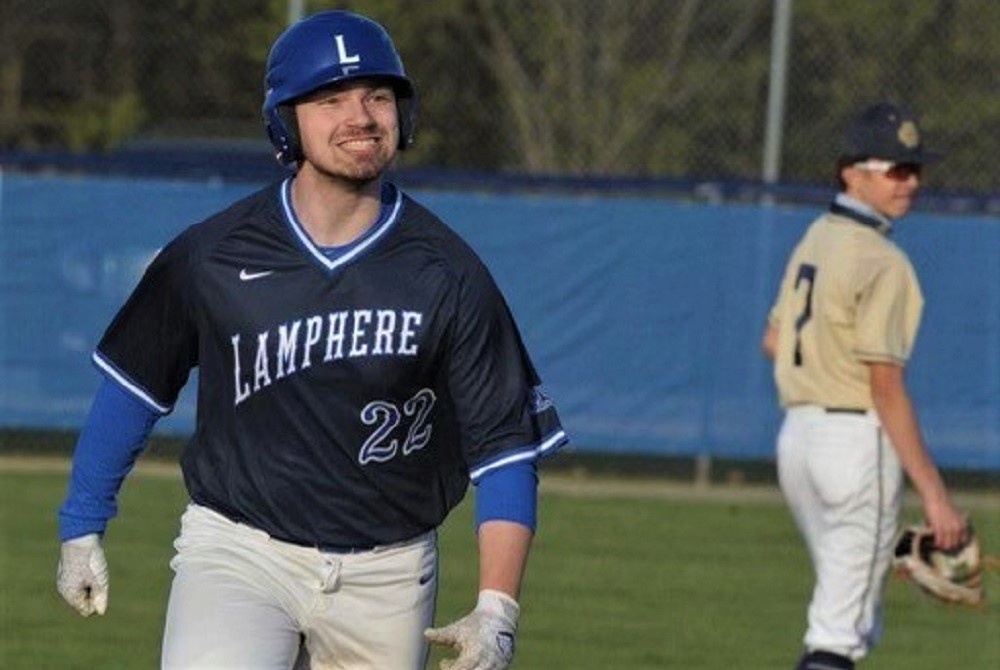
Balanced, Gritty Lamphere Back Among Baseball's Best
By
Tom Markowski
Special for Second Half
May 27, 2021
Two walk-off home runs defined the success of the Madison Heights Lamphere baseball team’s regular-season championship run this spring.
 The next two games will determine the success of the Rams’ postseason.
Lamphere – 22-3 and ranked No. 7 in Division 2 this week – is in the midst of one of the program’s best seasons, as the Rams captured the Macomb Area Conference Gold title outright posting a 13-2 mark. On May 19, Lamphere faced St. Clair Shores Lakeview in the last division game of the season. If Lakeview had won, it would have created a shared title with Lamphere (the teams also shared in 2019). But with one out in the bottom of the seventh inning, Nick Krstich, a junior catcher-third baseman, hit the first pitch he saw for a home run to give Lamphere a 4-3 victory and the outright championship.
“It was probably the greatest moment in my baseball life, and I’ve been playing since I was 8 (years old),” Krstich said. “It took me a few steps to realize it was out. All game they were starting me off with a curveball. They brought in a new guy. He threw a fastball, and it was in my happy zone. As I came around third, all the guys were waiting for me and they all jumped on me as I crossed the plate.”
Rewind another month to April 23, shortly before the start of the league season, when Lamphere played traditional power Detroit Country Day. In a wild affair, junior Aiden McGinnis, a spot starting pitcher who works mainly in relief, came to bat in the bottom of the seventh inning with the score tied at 13-13. McGinnis sent an 0-1 pitch over the left field fence for a 14-13 victory.
“That got us going in the right direction,” Lamphere coach Adam Wooley said. “That was cool. It showed we could play with anybody.”
Wooley is in his 20th season as the program’s head varsity coach and his teams, for the most part, have been competitive. His best were headed by players like Greg Fettes, Ryan Horvath and others a decade ago. In 2010, Lamphere reached the MHSAA Division 2 Regional Finals before losing to eventual champion Dearborn Divine Child. The next season expectations were greater with the return of Fettes and Horvath, but Lamphere lost to Country Day in District play.
Full, clear video of @NickKrstich walk off HR to clinch outright MAC Gold title on Thursday for @LHShardball @statechampsmich please feel free to repost. pic.twitter.com/sQEQWQsbqs
— Lamphere Baseball (@LHShardball) May 22, 2021
“We had seven players who went on to play in college from those teams,” Wooley said. “We have five on this team. We won Districts in 2012 and 2014, and again in 2019. It probably sounds worn out, but I thought we’d be good this year. We had eight starters back (from two years ago) and they had had success. They were anticipating getting back together.
“I’m a lot different coach than I was 10 years ago. I was like a Kirk Gibson then, intense. Now I’m more like a Miguel Cabrera, more laid back.”
Wooley has 16 on his varsity roster, including nine seniors. There are no superstars – just a bunch of good players who pull for each other and have played a lot of baseball together over the years.
Wooley said he and his program hit a downturn for a few years following the 2014 season. Coaching had become a drudgery, not something Wooley looked forward to after teaching class (at Lamphere). Simply put, he got stale.
“I questioned myself,” he said. “It was getting to the point where I was getting frustrated. Then in 2017, I went to an aspiring principal program, as part of my wanting to become an administrator. I had a chance to look at myself. It made me look at my core values. Core values? What are they? I needed to change.”
Wooley redefined his role as a coach. He built his new approach on what he calls the three pillars of his program – trust, commitment and grit.
“The mantra is family,” he said. “We give up so much to be a part of this. You have to understand that we are working toward the same goal. That grit piece? I’m from Madison Heights. No one has succeeded in this town without hard work.”
After last season was cancelled due to COVID-19, Wooley knew there would be a transition period so he intentionally started the season late (April 9) to give his players time to get back to basics. And he’s convinced that extra time spent practicing paid off.
Lamphere’s strengths are hitting, one through nine in the order, and pitching. The players are patient at the plate, and they’re not afraid to fail.
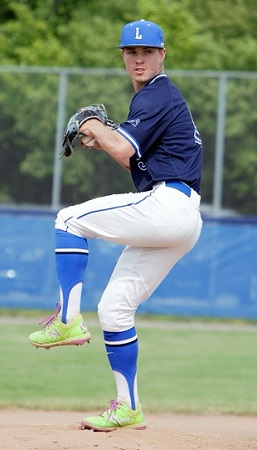 One of Lamphere’s top players is Jake Malak, a pitcher-catcher-outfielder, who will play at St. Clair Community College next season. Malak is batting over .400 and is 4-0 as the team’s No. 2 starter.
The third starter is Dylan Chargo, who’s 3-0 with an ERA below 2.50. He’s batting .350 with 10 extra-base hits.
Defensively, Lamphere makes the routine plays. K.J. Whitman covers a lot of ground in center field, and shortstop Noah Hurst earned the nickname “dirtball” because he’s always diving for ground balls and dirtying his uniform.
And Wooley has the luxury of rotating three catchers on a weekly basis – Chargo, Malak and Krstich.
Malak is one of the leaders and, like Krstich, was a starter on the football team. Malak comes from a family of catchers. His father, Ricky Malak, was a catcher at Madison High. His grandfather, Ronald Malak, also caught and his cousin Billy Malak was a catcher-third baseman on the Madison Heights Bishop Foley teams that claimed a Finals three-peat with Division 3 titles in 2011, 2012 and 2013.
“I love catching,” Jake Malak said. “I like being the leader on the field. I honestly love everything about it. You’re always doing something.”
To stay on top of his game during the cancelled 2020 season, Malak continued to do “something.” He worked with his father one-on-one on catching drills and hitting. Malak also joined a health club nearby to maintain his conditioning.
On Tuesday, Lamphere will play Bloomfield Hills Cranbrook Kingswood in a Division 2 District opener at Orchard Lake St. Mary’s. Cranbrook handed Lamphere its only nonconference loss, 9-4. The winner will play Country Day on June 5 in a District Semifinal. Should Lamphere win, the Rams will likely play the host team, top-ranked St. Mary’s, for the championship that same afternoon.
It’s a daunting task but one the Rams have been preparing for since the start of the season. And should they reach the District Final and play St. Mary’s which, by virtue of its title in 2019, is the reigning Division 2 champion, Lamphere would be a decided underdog.
So be it.
“Hey, it’s baseball,” Krstich said. “Anything can happen.”
 Tom Markowski is a correspondent for the State Champs! Sports Network and previously directed its web coverage. He also covered primarily high school sports for the The Detroit News from 1984-2014, focusing on the Detroit area and contributing to statewide coverage of football and basketball. Contact him at [email protected] with story ideas for Oakland, Macomb and Wayne counties.
PHOTOS: (Top) Aiden McGinnis (22) and his Lamphere teammates have had plenty to smile about this spring. (Middle) KJ Whitman makes his move toward the plate Friday against Madison Heights Bishop Foley. (Photos courtesy of Allison Minowa and the Lamphere baseball program.)
Still 'Loose' Swan Valley Loaded Again As Well
By
Paul Costanzo
Special for MHSAA.com
April 3, 2019
Mitch Jebb and his teammates on the Saginaw Swan Valley baseball team had plenty of fun a year ago as they made their run to the MHSAA Division 2 Final.
 The young Vikings surprised plenty of people with their runner-up finish, and a crucial part of that was how loose the team played. Even with a larger target now on their back, don’t expect them to tighten up.
“If you come to one of our games, we’re always loose,” said Jebb, a junior shortstop who earned all-state first-team honors as a sophomore. “We’re just out there having fun, and why would you play baseball if you’re not having fun? That’s how we look at things – play your game, but have fun doing it. This year, we’re probably more loose than we were last year.”
Swan Valley is still plenty young, with a roster comprised mostly of juniors and sophomores, but another deep postseason run wouldn’t come as a surprise to anyone. The Vikings were ranked No. 6 in Division 2 in the Michigan High School Baseball Coaches Association preseason rankings, and they opened the season Tuesday with a pair of mercy-rule victories (13-0 and 11-0, both in five innings) at Chesaning.
“I think we surprised quite a few people because we were so young and they had never heard of us before,” Swan Valley coach Craig Leddy said. “They were just playing and winning, and they were loose. That’s not going to happen this year. People have us on the radar.”
The runner-up finish is likely the biggest reason the Vikings are on the radar, but it also doesn’t hurt to have three players on the roster who have committed to Big Ten baseball programs – none of whom are seniors.
Jebb and classmate Brian Ross, a 6-foot-8 pitcher, have committed to Michigan State, while sophomore Avery Goldensoph, a 6-foot-2 pitcher, is committed to Michigan. Goldensoph, a first-team all-state selection as a freshman, opened the season by throwing a no-hitter against Chesaning.
“I knew the group coming, and we have some more kids coming next year as sophomores, so I’m excited about what we have,” said Leddy, who was a longtime assistant before taking over the Swan Valley program a year ago. “This is a special group that’s played a lot of travel ball, and that’s huge.”
 There’s plenty of quality depth to go along with those stars, both in the lineup and the pitching rotation. Junior infielder Victor Mancini had 46 RBI through the team’s first 42 games a year ago, while junior catcher Easton Goldensoph had nine doubles and 26 RBI. Senior pitcher Conner Sika was the team leader in earned-run average, coming in at 0.51 while striking out 53 and allowing 26 hits and nine walks in 54 2/3 innings. He was superb on opening night, allowing just one hit in his shutout victory against Chesaning.
“I think we can do it this year,” Avery Goldensoph said of making another deep run. “We’ve got me, Brian and Conner Sika who pitched (in the opening series), he’s really good. Our lineup put up 13 runs and 11 runs, that’s a great start.”
With a tough Tri-Valley Conference Central schedule ahead, the games figure to get more difficult. But the Vikings view that challenge as a good way to prepare for the postseason, and invite the daily pressure playing in that league brings.
Because even as they try to avoid it, the pressure of greater expectations is a reality they have to face.
“I think we have a really good team, in my opinion,” Ross said. “Last year we were kind of going after everybody, and now we’re being looked at like they want us. So I would say it’s a little more pressure, but it’s nothing we can’t handle.”
The best way to handle any pressure that may seep in? By going back to what worked so well a year ago – staying loose. That starts with the coaching staff.
“We’re a little more relaxed; we’re not screaming and hollering,” Leddy said about his staff, which includes assistants Mark Jebb and David Finzel, as well as pitching coaches Chris and Nick Sarmiento. “I remember what it was like when I was a young kid; the last thing you wanted was a coach kicking you in the (behind) all the time. You want someone encouraging you to be a better person and a better ballplayer. I’m blessed to have some great coaches on staff that know a lot about baseball and care about the kids.”
The attitude of the coaches has certainly gotten through to the players.
“What happens, happens, right?” Mitch Jebb said. “If we win, we win. The goal is to win, but it’s not like Coach is saying, ‘You better win a state championship.’ We’re all playing the game we love, and it’s fun. It’s fun playing. If we can win, we want to win – you always want to win. But the overall picture is to go out there and play your game and have fun.”
 Paul Costanzo served as a sportswriter at The Port Huron Times Herald from 2006-15, including three years as lead sportswriter, and prior to that as sports editor at the Hillsdale Daily News from 2005-06. He can be reached at [email protected] with story ideas for Genesee, Lapeer, St. Clair, Sanilac, Huron, Tuscola, Saginaw, Bay, Arenac, Midland and Gladwin counties.
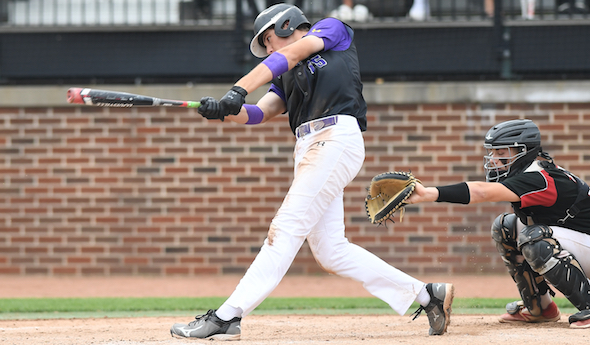
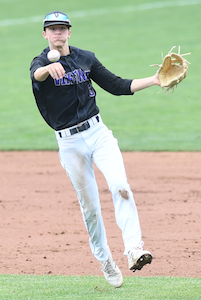
PHOTOS: (Top) Swan Valley’s Victor Mancini drives a pitch during last season’s Division 2 championship game against Stevensville Lakeshore. (Middle) Shortstop Mitch Jebb fires a throw to first.