

Ewen-Trout Creek Grad Rekindles Memories of 'The Barn' in 8-Part Docu-Series
By
Jon Ross
MHSAA Director of Broadcast Properties
February 7, 2023
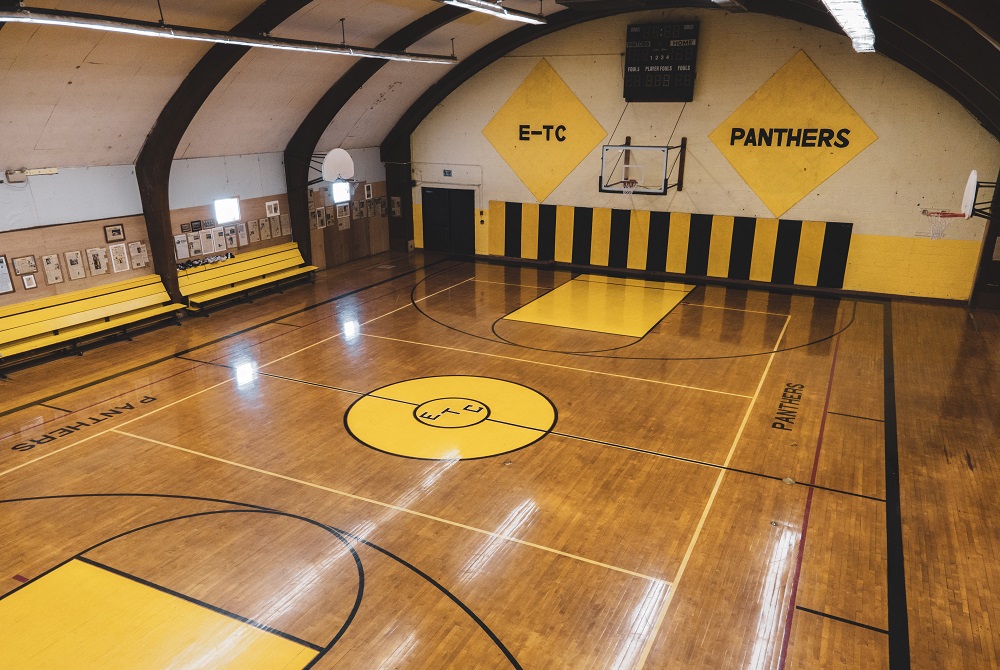
It was known as “The Barn.” And it was home to the 1972 Class D boys basketball champion, the 1973 Class D girls basketball champion and the 1982 Class D boys basketball runners-up.
The Upper Peninsula’s all-time winningest female basketball coach coached at The Barn, as did the Upper Peninsula’s all-time winningest male basketball coach. And when Ewen-Trout Creek advanced to the 2022 Division 4 Final, its roster was littered with names from E-TC’s past:
► Leading scorer Jaden Borseth’s dad played on the 1995 team that advanced to the Class D Regional Final.
► Kelsey Jilek’s dad played on the 1992 team.
► Brendan Polkky’s dad is currently an assistant coach for E-TC and played on the 1991 team that also advanced to the Class D Regional Final.
► Caden Besonen’s dad Dave starred on the 1982 state runner-up team. Caden’s uncle Brad is the E-TC head coach. And Brad’s dad, Bryan, played on the 1972 championship team.
The Barn hosted its final E-TC game in 1998 and is now owned by Gary Fors, who also played on the 1972 title team. It’s now a community gym of sorts, and many members of the 2022 team worked out there growing up.
E-TC grad Kristin Ojaniemi – an award-winning documentary film maker and photographer, and the TV producer and host of “Discovering” for 906 Outdoors – is taking a look at the history of “The Barn” as well as its ties to the 2022 team in an eight-part series called “Born in the Barn.” The first two parts are complete, and the entire series will be available to view at KristinOjaniemi.com.
I had a chance to ask Ojaniemi about the project and why it’s so special to so many people.
Kristin, how did you come up with the idea to document the history of The Barn?
The idea to document the history of The Barn and E-TC basketball developed over time. Five years ago I had a conversation with Dan Truckey of the Beaumier Heritage Center at Northern Michigan University, and when I told him where I went to high school, we got on the topic of basketball and how E-TC was a powerhouse and that "there must be something in the water" here. Fast forward to 2021, and I saw on Facebook some photos of the inside of The Barn and all the newspapers Gary Fors had lined the walls with, sort of like a museum. February of 2022 I realized it was 50 years since the 1972 boys state championship and 40 years since the 1982 state runner-up seasons. I like anniversaries in history and thought it would be the perfect time to do some sort of documentary. Originally my focus was Gary and The Barn and more of the 70s and 80s boys and girls seasons, but once the 2022 boys started advancing in the tournament, that obviously changed.
What did the 2022 team’s run to the Finals mean to the players from the ’72 and ’82 teams?
The 2022 run meant a lot to the players of '72 and '82 because many of those boys are sons, grandsons, great-nephews of those guys. Bryan Besonen of the '72 team is coach Brad Besonen's father. Many of them traveled to every tournament game, and watching the 2022 season brought back memories of their glory days. They're definitely very proud of the 2022 team and the tradition that E-TC has continued through the years. Watching them watch those games was just as fun as watching the court. The 2022 team's run to the Finals meant a lot to the whole community. So many others traveled all the way to Lansing to cheer them on, and there is just a ton of pride in this team. I went to the banner unveiling a few weeks ago, and it was a huge crowd at the game to watch those few seconds of history being made.
What is your history with The Barn?
I graduated from Ewen-Trout Creek in 2000. We were in the "new" school then, but I spent four years – seventh-10th grade – in the "old" school, which had so much more character than the new one! I did play basketball seventh-10th – junior high and junior varsity. I was a benchwarmer most of those years. I loved the game but didn't spend any time offseason playing or practicing like others. I was also a cheerleader those years too, and if you look closely at one of the newspaper photos from the last game in the Barn, I'm in the background. Ha ha! This was back when girls basketball was in the fall and boys in the winter, so you could do both. As others in the documentary mention, The Barn was also where you hung out at lunch, and gym class was in there, and homecoming activities. Filming in there brought back a lot of memories.
What did Nancy Osier (U.P.’s winningest female basketball coach) and Tom Caudill (U.P.’s winningest male basketball coach) think made The Barn such a difficult place for opposing teams to play?
Thinking back to Nancy and Tom's interviews, I think the difficulty for other teams really boiled down to the atmosphere and the E-TC fans and that intimidation factor. E-TC had the ultimate homecourt advantage in The Barn, and their players spent hours upon hours practicing on that floor. And the school's history and tradition of rarely losing a home game is also intimidating.
There’s obviously a lot of family ties from the 2022 team to earlier teams – and it was the 50th anniversary of the ’72 win – did they feel more pressure along the way because of that?
I think the 2022 boys had this feeling that they wanted to one-up their grandfathers/fathers. I think it was Kelsey Jilek that told his grandfather, George Hardes (1972), that they had one more game in their schedule so they could potentially have a better record if they won all their games. But none of them came out and mentioned that the anniversary put pressure on them, but I’m sure it was there. They set out to win it all from the beginning and put the work in, and it paid off. There are a lot of parallels in these winning seasons.
When will the next part of the series be released?
Part 3, I should have done by the end of February. Part 3 focuses on the 1973 girls state champs; 1973 was the first year there was a state final for girls basketball after Title IX, and E-TC won the Class D title. And then I plan to release each part every two months with the final, Part 8, done by the end of 2023. This is just a fun hobby/personal project, I guess you'd say, so I only have so much time to dedicate to it after all my "real" work.
(PHOTOS of "The Barn" courtesy of Kristin Ojaniemi.)
Basketball Takes 'The Judge' Worldwide, Home Again as Love of Game Lives On
By
Doug Donnelly
Special for MHSAA.com
August 13, 2026
He’s been everywhere, man.
 Antoine Joubert, one of the best-known high school basketball players to come out of Michigan during the 1980s, has retired as a day-to-day basketball coach, but still gives back while continuing his lifelong dedication to the sport.
From being one of the most heavily recruited high school basketball players in the state, to playing four years at the University of Michigan and being drafted by the Detroit Pistons, to more than a decade of playing professionally overseas and in South America, Joubert remains humble and a fan of the game that has brought him so much in life.
“All of these things happened in my life because of basketball,” he said.
Joubert, who lives in Farmington, retired after the 2023-24 season after spending more than a decade coaching at Oakland Community College. He continues to host basketball camps – something he has done since 1992 – and has operated an AAU basketball program known as The Judge’s Court since 2006.
“The Judge” got the nickname from his older brother long before he was dominating opponents at Detroit Southwestern High School.
“My brother gave me that nickname,” he said. “I was in the locker room after a game and the media heard him call me that, and it stuck. ‘Here comes The Judge.’”
Joubert graduated in 1983 from Detroit Southwestern. He was Michigan’s Mr. Basketball Award winner and a McDonald’s All-American and recruited by nearly everyone from Indiana to Kentucky to UCLA before choosing Bill Frieder and Michigan.
As a high school junior, he averaged 30 points a game. He was even better as a senior, averaging 31.3 points, 14 rebounds and seven assists per contest. In his team’s 1983 Class A Semifinal, he scored 44 points. Two days later he scored 47 in the championship game against Flint Central, a tough 84-80 loss by the Prospectors that still ranks as one of the greatest Finals performances in state history.
“I was trying so hard to win that game,” Joubert said. “It was tough. Flint Central was a tough team.
“Playing in Michigan back those days was really great. The basketball was great, and there were some great coaches throughout the state. We’d go to camps and go play all over. We knew everybody, from Battle Creek to Lansing to Detroit, Ann Arbor, Traverse City. There was great basketball all over, and the kids all knew one another. I’ll never forget my high school career. I really loved it.”
Detroit Southwestern coach Perry Watson had coached Joubert’s uncle.
“He was like family,” Joubert said. “I knew him from when I was really young. He could play, too. He was a good ball player.”
The early 1980s were before the explosion of travel basketball, AAU programs and summer camps and shootouts. Joubert said while he did attend a few camps, including a national event in Indiana, he refined his skills at the Boys Club in Detroit and the legendary St. Cecilia gym that was a stopping point for some of the all-time greatest players from Michigan, from Dave Bing to Magic Johnson.
“That’s where our summer leagues were,” Joubert said. “Those were some great times.”
 As his stock rose nationally, he was able to play against high school players like Patrick Ewing and Doc Rivers.
“That really opened my eyes to a lot of things about how tough basketball is,” he said.
He remembers some tremendous battles in the Public School League as well.
“That was a rough league at the time,” he said. “I mean, the talent that came through Detroit was amazing. Every PSL school had two or three guys that were going on to play Division I or Division II basketball. It was so competitive and they had really good coaches, guys that cared and helped players back then.”
Watson helped forge Joubert’s game, but it was his brother, Ezekiel Joubert Jr., who was perhaps Antoine’s greatest influence. He’s also who gave Antoine the nickname Judge, which stuck and continues to live on to this day.
“He was five years older than me, so he put it on me more than a few times,” Joubert said. “I wanted to be like him and do everything like him in sports. Once I could beat him, I thought I could beat anybody in the world.”
While Joubert gravitated to basketball, his first love in sports was baseball.
“That was the first sport I was really good at,” he said. “I had letters from the Tigers, the Cincinnati Reds and Boston Red Sox at 15 years old. Then, I stopped playing.”
After high school, he took his talents to Ann Arbor. His teammates during his four years included Roy Tarpley, Gary Grant and Glen Rice. He was a starter beginning his freshman season and twice was named honorable mention all-Big Ten.
Joubert was drafted by the Detroit Pistons in the sixth round of the 1987 draft but injured his knee during training camp and was released. He was signed by teams from a variety of leagues but found a home when he went to Belgium. In 1990 he went to Mexico to play and made that league’s all-star game. In 1992 he played in Venezuela, where he earned league MVP honors.
“I got lucky,” he said. “My career took off.”
While playing in Europe, Joubert said he got a firsthand look at 7-foot players who could dribble like guards and shoot 3-pointers.
“I could see where the NBA was going to be, and that’s what it is like today,” he said.
Thanks to basketball, Joubert travelled the world.
“It was great. I played in Belgium, France, Spain, Poland, Italy, all through South America, Venezuela, Mexico, in Asia. Ball took me all around the world. I visited Egypt and Africa. I visited Jerusalem and Israel. I mean, I’ve been everywhere. I learned so many other languages and other cultures and made so many friends. It was all because of basketball. I got to travel the world and see how beautiful the world is.”
Because of basketball, he also got an education. He has a master’s degree.
“Basketball has meant a lot to me, still does,” he said.
After retiring as a player, Joubert returned home and started his AAU program. Soon after, he was hired to coach men’s basketball at Oakland Community College.
“It was challenging,” he said. “But I loved it, loved helping kids. I had players that played for years overseas and kids that are really doing well in life. It’s a blessing to see them grow up and become men, get their degrees and move on.”
Joubert remains a big fan of basketball – especially high school basketball.
“I go to games all of the time,” he said. “I love the tournaments and spending all day in the gym, talking to my friends and watching basketball. I’ll travel. I’m really enjoying myself.”
2026 Made In Michigan
Aug. 11: Nearly 25 Years After Leading Unexpected Run, Morton Directing Life-Changing Mission - Report
Aug. 7: Significance of Historic Run, Relationships Formed Live On for 1973 Unity Champs - Report
Aug. 4: Work Ethic Continues to Drive Van Dyk's Endeavors as Co-Owner of Family Farm - Report
July 24: Hackett Mentor's Care Sparked Lifetime in Hoops for BCAM President White - Report
July 24: Mackey Leaving Court with 500+ College Hoops Wins, Many More Lessons Shared - Report
July 16: Country Day Two-Time Champ Moore Building Perennial Winner at Harvard - Report
July 9: Multi-Sport Career at TC West Helps Gillis Thrive as Pro in Game She Once Left Behind - Report
July 2: Inspired by Home, Eager to Give Back, Spencer Hosts Hoop City Alumni Games - Report
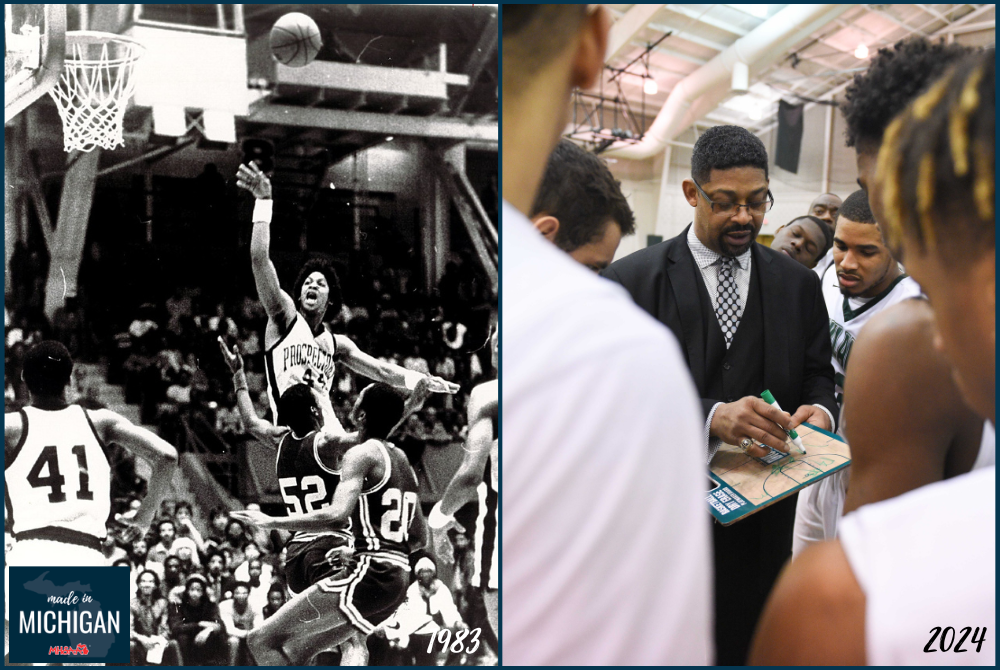
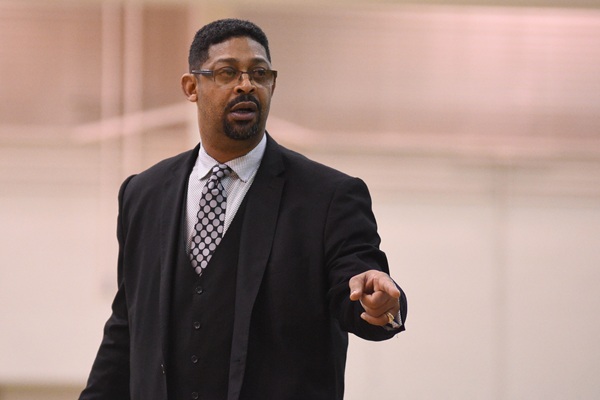
PHOTOS (Top) At left, Antoine Joubert puts up a shot during his highlight-filled career at Detroit Southwestern. At right, Joubert coaches Oakland Community College’s men’s basketball team. (Middle) Joubert finished his tenure at OCC in 2023-24. (Southwestern photo courtesy of the Detroit News. OCC photos courtesy of the OCC athletic department.)