

'Retro' Award Rewards 1st Hoops Legends
January 4, 2017
By Ron Pesch
Special for Second Half
Before the start of the MHSAA’s 2009 Boys Basketball finals, Basketball Coaches Association of Michigan director Tom Hursey stopped by my seat at Michigan State University’s Breslin Center to say hello.
Our chat would alter a decade of my Michigan winters.
Somewhere between hello and goodbye, our chat included conversation on one of my favorite BCAM ventures. In 1981, the Michigan High School Basketball Coaches Association, as BCAM was once known, named its first “Mr. Basketball.” I was two years out of high school when Lansing Eastern’s Sam Vincent edged Eric Turner of Flint Central for that first award. Designed to honor the state’s top senior, the award was named in honor of Detroit Free Press writer Hal Schram. “The Swami,” as he was nicknamed, Schram began covering high school sports for the newspaper in 1945.
The 2009 selection was 6-foot-9 Derrick Nix of Detroit Pershing. I mentioned my affinity for the Mr. Basketball program to Tom, but stated that I always thought it a crime that the award didn’t start years earlier, at least when Michigan hoop fans became infatuated with a kid nicknamed “Magic.”
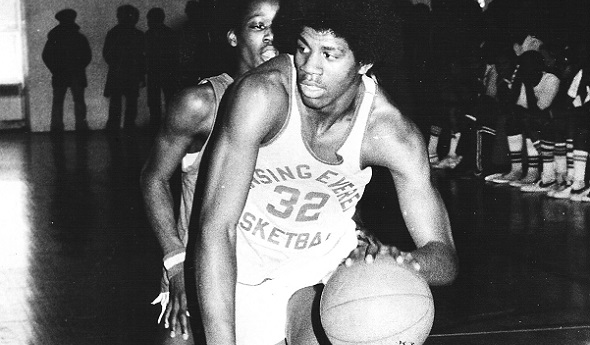
Earvin Johnson prepped at Lansing Everett and was the talk of the state in basketball circles before becoming a household name during his time at Michigan State and with the Los Angeles Lakers. Earlier this year, ESPN named Johnson the greatest point guard to ever play the game. Tom noted that “Magic” was really the inspiration for the “Mr. Basketball” award.
Then I posed a question to Tom.
What about creating a “new” award, designed to honor those greats from the past?
As my hobby of researching the history of high school sports in Michigan and beyond had grown over the years, I’d found the Great Lakes state had always produced shining stars on the basketball court. The crime was that the “Mr. Basketball” award hadn’t been launched many years before.
Harry Kipke, was perhaps the state’s first true basketball star. He won 12 varsity letters at Lansing Central and guided the basketball team to the semifinal round of the state tournament in 1920 as a senior, before heading to the University of Michigan where he earned letters in football, basketball and baseball. After stops at the University of Missouri and Michigan State, Kipke would serve as Michigan’s football coach, guiding the Wolverines to two national gridiron championships.
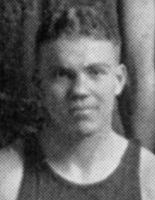 As a junior, the basketball antics of Grand Rapids Union’s Royal “Red” Cherry captured the state’s attention when he led Union to the state basketball championship. Considered the best all-around player of the tournament, Cherry led the team to a second consecutive title as a senior. He, too, attended Michigan, earning laurels on the basketball court and the baseball diamond.
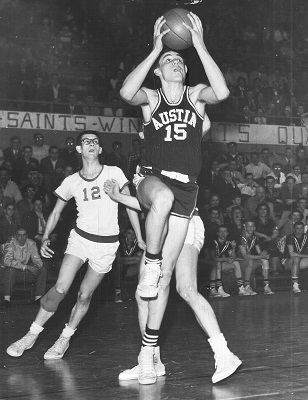
Many other legends of the hardcourt populated Michigan’s past: Saginaw’s Ernie Thompson; the Burton brothers, M.C. and Ed, of Muskegon Heights; Detroit Pershing’s Ralph Simpson and Spencer Haywood; Dave DeBusschere of Detroit Austin Catholic; Willie Betts and Blanche Martin of River Rouge; Ron Kramer of East Detroit; Benton Harbor’s Chet Walker and L.C. Bowen.
After a few weeks of research, discussion and thought, Tom agreed, and over the next several months the framework for the “Retro Mr. Basketball” project was developed
The idea was to try and mimic the current model. Only seniors, and their high school basketball careers, should be considered. While any “senior” player would be eligible, a ballot of the state’s elite would comprise the candidates for the award. Like their modern-day equivalents, where the events of life that would follow high school graduation had yet to occur, post-high school life would be disregarded as much as possible for “Retro” candidates.
Finally, the program would follow a 10-year arc, kicking off in the spring of 2010. This December marks my eighth year of research tied to the mission. Two more will follow.
Since the Schram “Mr. Basketball” award began in 1981, the “Retro” award would honor basketball players from the years 1920 through 1980. That first year, a ballot comprised of players from the years that ended in zero - 1920, 1930, 1940, 1950, 1960, 1970 and 1980 – was created. A senior for each year would be named the winner of the “Retro” award. That meant with the selection of “Mr. Basketball” and the six “Retro” winners for the years 1929, 1939, 1949, 1959, 1969 and 1979, scheduled for the spring of 2019, BCAM would be able to point to a combined list of Mr. Basketballs totaling 100 of the state’s finest.
To identify each year’s award winner, a committee of veteran BCAM members was formed to study a ballot of candidates and select a winner.
Technology, combined with scanning old-fashioned reels of microfilm, has helped with research of potential candidates. In those very early years, personal statistics were rarely kept. Rather, an assessment of a player’s skills, tied to the position he played, often served as a means to identify an area’s top athletes. Tournament play was often the only time an athlete’s abilities were on display to a larger audience. Scouring newspaper articles for all-tournament teams and yearbooks for additional details and years of study helped uncover the state’s top senior players. Understanding the game and its evolution was important. The center jump after each basket emphasized the importance of a tall, skilled center in those games played before the winter of 1938-39.
Beginning in 1935, all-state teams began to appear in state newspapers. Eventually, the Detroit Free Press, the Detroit Times, the Detroit News, The Associated Press and even United Press International became involved in identifying the state’s top basketball players and naming all-state squads. Much work is involved in parsing the 15,811 names (not including honorable mentions) found in those lists. When duplicates are removed, the names of 8,430 prep players remain spread over the 61 years that mark the “Retro” field of possible candidates.
Research to identify seniors, players named by multiple media outlets, and mini biographies are compiled for the top players. The field of candidates is then narrowed to 10 or fewer. Over state championship weekend, the ballots are brought to the BCAM committee for discussion, and finalists are named for each year. Finally, one player is named for each eligible season.
Like the modern day award, the selection may create some controversy. Some amazing ballplayers have landed on the finalist list, but were denied the Hal Schram Mr. Basketball award: Traverse City’s Dan Majerle, Roy Marble of Flint Beecher, Detroit Southwestern’s Jalen Rose, Detroit Northern’s Derrick Coleman and Draymond Green of Saginaw are among a few.
 The same applies to the “Retro” list. Fennville’s Richie Jordan, Robert “Bubbles” Hawkins from Detroit Pershing, Dennis Bankey of Detroit St. Thomas, Bill Chmielewski of Detroit Redeemer, Highland Park’s Terry Duerod and Detroit Kettering’s Lindsay Hairston all have been honored on the finalist lists, but fell short of the top prize.
In many cases, Michigan was loaded with prep talent – it’s tough to name Roy Marble Mr. Basketball when Flint Northwestern’s Glen Rice was on the same ballot, or Rose the state’s best when Country Day’s Chris Webber was another candidate. While the “Fennville Flash” amazed the state with his eye-popping statistics in 1965, Bowen led Benton Harbor to back-to-back Class A titles. Named an all-state basketball player as a junior, Hairston grew an inch and improved his game as a senior, but Pontiac Central’s “Campy” Russell dominated headlines that season, and was the “Retro” Mr. Basketball selection for 1971.
In some cases, it’s a challenge to look at the final balloting results without judging selections based on future basketball success. That certainly is the case with 2008. That season, Michigan’s Mr. Basketball award went to 6-foot guard Brad Redford, who posted incredible back-to-back high school seasons at Frankenmuth. Runner-up to the award that year was Saginaw’s Green. Considering Green’s success in the NBA, that’s hard for many to believe.
While the debates may never be settled, the beauty of Schram and “Retro” Mr. Basketball balloting can be found in the argument. With those disputes, people recall, research and learn about Michigan’s incredible prep basketball past.
The remaining three years of the “Retro” project will include many more legends of Michigan High School basketball, including, among others, DeBusschere, Walker, Haywood and Simpson.
This season, that “Magic” kid will be one of the names among the mix. Forty years after high school graduation, will he earn the honor that eluded him in high school, only because the honor didn’t yet exist?
 Ron Pesch has taken an active role in researching the history of MHSAA events since 1985 and began writing for MHSAA Finals programs in 1986, adding additional features and "flashbacks" in 1992. He inherited the title of MHSAA historian from the late Dick Kishpaugh following the 1993-94 school year, and resides in Muskegon. Contact him at [email protected] with ideas for historical articles.
PHOTOS: (Top) Lansing Everett’s Earvin Johnson drives around a defender during his celebrated high school career. (Middle) Grand Rapids Union’s Royal “Red” Cherry. (Below) Detroit Austin Catholic’s Dave DeBusschere drives to the hoop as an opponent gets in position to rebound. (Photos from MHSAA and Ron Pesch historical files.)
Breslin Bound: Boys Quarterfinal Preview
March 12, 2019
By Geoff Kimmerly
Second Half editor
After nearly four months, we’ll know by the end of tonight which 16 Michigan boys basketball teams will be “Breslin Bound” this weekend to play for this season’s championships.
 We’re already guaranteed at least two new title winners when Saturday’s Finals are done, and there are plenty of storylines as a number of teams reached tonight’s Quarterfinals for the first time in a long time – or first time in their program’s histories.
Our final “Breslin Bound” report of 2018-19 – powered by MI Student Aid – takes a glance at all 16 Quarterfinals, which tip off at 7 p.m. unless noted. All Quarterfinals will be broadcast and viewable with subscription on MHSAA.tv. Come back Wednesday night for a more in-depth look at our 16 finalists as they head into this weekend.
DIVISION 1
Saginaw (22-3) vs. Howell (19-6) at Grand Blanc
After a rare down season a year ago, Saginaw is back at the Quarterfinals for the fourth time in eight seasons under coach Julian Taylor. Howell, coming off its first Regional title since 2014, follows talented senior guard Josh Palo (17.7 points, 4.8 rebounds, 3.7 assists per game).
Ypsilanti Lincoln (20-4) vs. Detroit Martin Luther King (20-4) at University of Detroit Mercy, 5:30 p.m.
Lincoln freshman Emoni Bates has been perhaps even more exciting than anticipated, with game-winning shots in both of last week’s Regional wins just the latest highlights as he’s led the team to its first Regional title. King rebounded from two losses to end the regular season to win a District title for the second straight season and first Regional title since 2000.
Detroit U-D Jesuit (23-2) vs. Roseville (20-4) at University of Detroit Mercy, 7:30 p.m.
Jesuit will play in a Quarterfinal for the sixth straight season, this team with senior forward Daniel Friday (16.9) leading an attack with four scorers averaging at least 9.6 ppg. Roseville also lost its final two games of the regular season, but has won all five of its postseason matchups by at least 11 points on the way to its first Regional title since 1952.
East Kentwood (16-9) vs. Okemos (22-2) at Caledonia
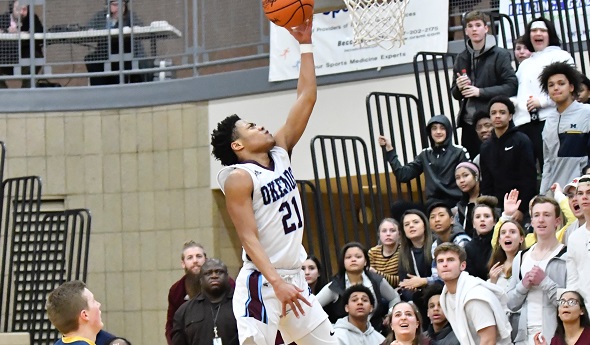
Led by junior guard Ja’moni Jones (17.6 ppg), East Kentwood has bounced back from four straight losses to end the regular season and defeated a pair of league champions last week in Muskegon and Hudsonville to reach the Quarterfinals for the first time since 1998. Okemos held off DeWitt for the third time this season in their Regional Final to advance to the final week for the first time since 2012. Senior Evan Thomas (17.3 ppg) is the lead scorer.
DIVISION 2
Ludington (13-10) vs. Alma (19-3) at Mount Pleasant
Alma stunned previously-undefeated Bridgeport in a Regional Semifinal last week and will play its first Quarterfinal since 1999. Senior guard Camden Sutherland (11.1 ppg) is the high scorer for a balanced attack. Ludington, the Class B runner-up two seasons ago, lost five of its last six regular-season games but rebounded by winning a third straight District title. Senior Joshua Laman (15.8 ppg) leads in most statistical categories.
Grand Rapids South Christian (22-3) vs. Hudsonville Unity Christian (23-2) at Calvin College
The Sailors are coming off their first Regional title since winning the Class B championship in 2005, thanks to a two-point win over Grand Rapids Catholic Central on Thursday. The Sailors have their share of 3-point aces, and senior guards Luke Schrotenboer and Peyton Vis both score between 13-14 ppg. South Christian won its Dec. 21 meeting with Unity Christian 63-61, but the Crusaders are riding high after downing 2018 Class B champ Benton Harbor to win their second Regional title in four seasons. Senior TJ VanKoevering (13.8 ppg) is the leading scorer and rebounder.
Haslett (20-5) vs. River Rouge (21-2) at Chelsea
Haslett, in its first Quarterfinal since 2006, beat league champions Williamston and Parma Western on the way to the final week. Senior guard Ty Andrades (14.1 ppg, 65 3-pointers) leads four players averaging double-digit scoring. River Rouge, a Class B semifinalist last season, has wins over Ypsilanti Lincoln and Flint Beecher among others. Senior guard Nigel Colvin (13 ppg) leads three scorers averaging in double figures.
Harper Woods Chandler Park (20-0) vs. New Haven (24-1) at Ortonville Brandon
Newly-awarded Mr. Basketball Romeo Weems (27.9 ppg, 11.3 rpg, 4.1 apg, 4.2 spg) is looking to lead New Haven to its third straight Semifinal and second title in three seasons as the Rockets won Class B in 2017. Senior guard Ronald Jeffery III (21.9) also is a major contributor. Chandler Park can claim impressive wins over Detroit Edison, Macomb Dakota, Detroit Henry Ford and Ferndale as it moves from its first Regional title into the final week.
DIVISION 3
Iron Mountain (25-0) vs. Sanford Meridian (23-1) at Petoskey, 6 p.m.
Iron Mountain won a Regional title for the second straight season and is now a combined 48-2 over the last two. Junior guard Marcus Johnson and sophomore guard Foster Wonders are both scoring just above 23 points per game. Meridian is also playing in a Quarterfinal for the second straight season, entering tonight a combined 44-5 over the last two winters after handing previously-unbeaten Oscoda a 21-point defeat in the Regional Final.
Detroit Edison (18-7) vs. Flint Beecher (23-2) at St. Clair County Community College
This Quarterfinal pits the Class C champions of the last two seasons, both with similar success this season. Reigning champ Edison has wins over Benton Harbor and Canton and is led by senior forward Brian Taylor (16.6 ppg). Beecher has beaten Detroit Renaissance, Grand Blanc and Flint Carman-Ainsworth among others, keyed by junior guard Jalen Terry, and is seeking its fourth MHSAA title in five seasons.
Hanover-Horton (23-1) vs. Erie-Mason (22-2) at Tecumseh
Hanover-Horton will play in its third Quarterfinal over the last five seasons and first since 2016, with its only defeat this winter to Ohio’s Toledo St. Francis de Sales. Junior Luc Laketa scores 14 ppg to lead five averaging at least 9.3. Erie Mason won its first Regional title since 1973 and has wins over league champs Detroit Loyola and Petersburg Summerfield over the last two weeks. Junior guard Joe Liedel pours in 28 points with 5.1 assists per game.
Pewamo-Westphalia (25-0) vs. Cassopolis (23-1) at Richland Gull Lake
P-W has emerged from winning a league that produced three District champs and then defeated league champions Morley Stanwood and Carson City-Crystal during these playoffs. Senior Andre Smith has helped the Pirates reach the final week for the first time since 2014 by averaging a team-high 14.1 ppg. After going 24-1 a season ago but falling in the Regional Final, Cassopolis has broken through to make its first Quarterfinal since 1989. Senior guard Tyrese Hunt-Thompson scores 22 points per game, and sophomore forward Brayden Saxton adds 18 ppg.
DIVISION 4
Dollar Bay (20-4) vs. Pellston (23-2) at Escanaba
Dollar Bay finished second in its league but has won 13 of its last 14 games and defeated that league champion, Chassell, on the way to reaching the Quarterfinals again after making the Semifinals in 2018. Junior forward Ashton Janke (16.4) leads three scorers at 12 ppg or higher. Pellston won its first Regional title since 2012, downing previously-unbeaten Brimley in last week’s Regional Semifinal. Senior guard Tanner Byard scores 25.9 ppg and junior guard Blake Cassidy adds 23.
Southfield Christian (18-6) vs. Burton Genesee Christian (18-7) at West Bloomfield, 6 p.m.
Southfield Christian is the reigning Class D champion and has won 16 of its last 17 games. Senior guard Jon Sanders and junior guard Da’Jion Humphrey both average 16.5 points per game. Genesee Christian is coming off its first Regional title since 2005 and is 17-3 after a slow start in December.
Frankfort (19-5) vs. Big Rapids Crossroads (23-1) at Cadillac
Frankfort fell in its regular-season finale and then won its District opener by just two points in overtime, but has surged ahead to claim its first Regional title since 2015. Senior guard Will Newbold and sophomore guard Jack Stefanski both average 14 points per game. Crossroads won its first Regional title last week, with its only defeat of the season all the way back on Dec. 5 to Manistee Catholic Central. Senior guard Britton Angell leads at 26 ppg.
Wyoming Tri-unity Christian (21-3) vs. Bellevue (24-1) at Charlotte
In its third straight season with at least 22 wins, Bellevue has reached the final week for the first time after claiming its first Regional title. Senior guard Wyatt Waterbury scored 16.4 ppg to lead the way. Tri-unity is a regular at this stage but also back after missing out on the Quarterfinals last season after three straight appearances. Senior forward Bennett Sinner and freshman guard Brady Titus both score 12 ppg to lead a balanced effort.
Second Half’s weekly “Breslin Bound” reports are powered by MI Student Aid, a part of the Student Financial Services Bureau located within the Michigan Department of Treasury. MI Student Aid encourages students to pursue postsecondary education by providing access to student financial resources and information, including various student financial assistance programs to help make college more affordable for Michigan students. MI Student Aid administers the state’s 529 savings programs (MET/MESP) and eight additional aid programs within its Student Scholarships and Grants division. Click for more information and connect with MI Student Aid on Facebook and Twitter @mistudentaid.
PHOTO: Okemos junior Noah Pruitt gets to the basket during the Chiefs’ Regional Final win over DeWitt last week at Holt. (Photo by Terry Lyons.)